阿莫西林的聚合物杂质:为什么药典拿青霉素当对照品,还要乘 0.1Amoxicillin Polymer Impurities: Why the Pharmacopoeia Uses Penicillin as the Reference Standard and Still Multiplies by 0.1
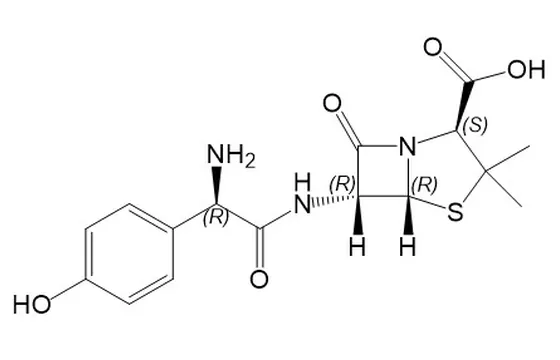
阿莫西林↗(CAS 26787-78-0)是 6-APA 母核接一条 D-(-)-对羟基苯甘氨酸侧链,分子式 C16H19N3O5S,分子量 365.40,市售多为三水合物(419.45)。它的杂质谱里有一类东西和别人不一样:不是某个编号杂质,而是一族分子量递增的寡聚物。这一族东西在 C18 的有关物质图谱上几乎看不见,却要和主成分分开测、单独定限度。这就是「阿莫西林聚合物」这一项存在的原因。
Amoxicillin↗ (CAS 26787-78-0) is a 6-APA nucleus with a D-(-)-p-hydroxyphenylglycine side chain, molecular formula C16H19N3O5S, molecular weight 365.40, sold mostly as the trihydrate (419.45). One class of material in its impurity profile is unlike the others: not a numbered impurity, but a family of oligomers of increasing molecular weight. This family is essentially invisible on the C18 related-substances chromatogram, yet it must be measured separately from the main component with its own limit. That is why the "amoxicillin polymer" test item exists.
Note: product names shown in red (marked with ↗) are clickable. Click to open the product page for structure, CAS number, purity and lead time.
一、一条 α-氨基侧链,把它和苄青霉素分成了两类1. One α-amino side chain is what separates it from benzylpenicillin
关键要点Key points
- 阿莫西林的侧链带一个Amoxicillin's side chain carries a 游离 α-氨基free α-amino group,这是它区别于苄青霉素的结构特征,也是它能形成高分子聚合物的化学前提, the structural feature that distinguishes it from benzylpenicillin and the chemical precondition for its ability to form high-molecular-weight polymers[1,3]。
- 聚合物不是「一个杂质」,而是二聚、三聚直至更高寡聚的同系物;二聚体本身已足以在动物被动皮肤过敏试验中呈阳性The polymer is not "one impurity" but a homologous series of dimers, trimers and higher oligomers; the dimer alone is sufficient to give a positive result in the passive cutaneous anaphylaxis test in animals[4]。
- 中国药典把它单列为「阿莫西林聚合物」,用葡聚糖凝胶 G-10 分子排阻法测,对照品是The Chinese Pharmacopoeia lists it as a separate test item, "Amoxicillin polymer", measured by size-exclusion chromatography on Sephadex G-10, with the reference standard being 青霉素penicillin而非阿莫西林,峰面积还要乘 0.1 的校正因子 rather than amoxicillin itself, and the peak area must be multiplied by a correction factor of 0.1[1]。
- 原料限度 0.15%、胶囊按标示量 0.2%,这两个数是专论值,不随日剂量档位按 ICH Q3A 折算The limits are 0.15% for the drug substance and 0.2% of the labelled amount for capsules; these are monograph values and are not scaled by daily-dose tier under ICH Q3A[1,5]。
β-内酰胺环张力大、羰基极化程度高,水解、氨解、醇解都走这一位点。区别在于「谁来攻」:苄青霉素的侧链是苯乙酰基,除 2-位羧基外没有别的亲核中心;阿莫西林的侧链是 D-(-)-对羟基苯甘氨酸,α-碳上挂着一个游离伯氨基,在任何含水条件下都是一枚待发的亲核弹头。The β-lactam ring is highly strained and its carbonyl strongly polarized, so hydrolysis, aminolysis and alcoholysis all converge on that site. What differs is "who does the attacking": benzylpenicillin's side chain is a phenylacetyl group with no nucleophilic centre apart from the 2-carboxyl; amoxicillin's side chain is D-(-)-p-hydroxyphenylglycine, whose α-carbon carries a free primary amino group, a primed nucleophilic warhead under any aqueous condition.
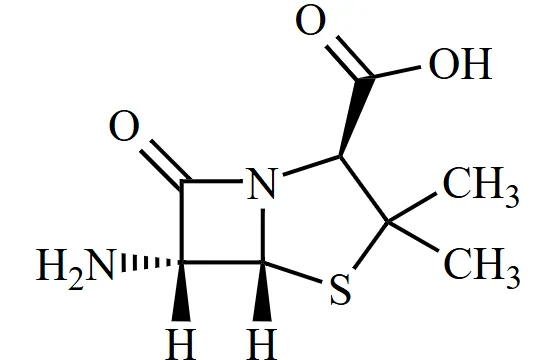
结构上最清楚:6-APA 母核(CAS 551-16-6)只有羧基和一个酰胺氮,接上对羟基苯甘氨酸之后,分子同时拥有了「亲核的氨基」与「亲电的 β-内酰胺羰基」——同一个分子里既有矛又有盾,聚合只是时间问题。Structurally it is clearest: the 6-APA nucleus (CAS 551-16-6) has only a carboxyl group and one amide nitrogen; once p-hydroxyphenylglycine is attached, the molecule possesses both a nucleophilic amino group and an electrophilic β-lactam carbonyl at the same time. Spear and shield in one molecule: polymerisation is only a matter of time.
本目录收录This catalogue contains 阿莫西林Amoxicillin相关条目 related entries 83 条,带编号杂质 47 个、编号覆盖 1 到 81;与欧洲药典字母建立映射的有 17 条,覆盖 EP 杂质 A 到 L 整个字母表。但翻遍这 83 条, ; 47 carry a numbered impurity designation covering numbers 1 to 81, and 17 are mapped to European Pharmacopoeia letters covering the entire alphabet from EP Impurity A through L. Yet searching all 83 entries, 找不到一条叫「阿莫西林聚合物」的产品not a single product called "amoxicillin polymer" can be found——不是漏了,是这类东西做不成单一对照品。 not an omission, but because this class of material cannot be made into a single reference standard.
二、聚合物是 2 到 n 聚的同系物,不是一条色谱峰2. The polymer is a homologous series from dimer to n-mer, not a single chromatographic peak
一分子阿莫西林的侧链氨基进攻另一分子的 β-内酰胺羰基,开环、成酰胺键,得到仍带游离氨基的二聚体;二聚体再去攻第三分子,得到三聚体,如此递推。Bundgaard 在 1970 年代用 DEAE-葡聚糖凝胶从氨苄西林的聚合样品里,正是这样分出了二聚到五聚体The side-chain amino group of one amoxicillin molecule attacks the β-lactam carbonyl of another, the ring opens and an amide bond forms, giving a dimer that still carries a free amino group; the dimer then attacks a third molecule to give a trimer, and so on. Working with DEAE-Sephadex on polymerised ampicillin samples in the 1970s, Bundgaard separated dimers through pentamers in exactly this way[4]。
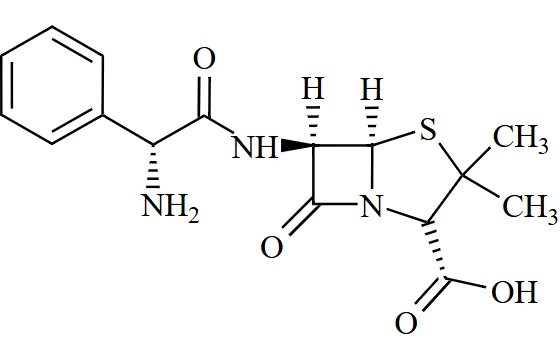
2022 年一项由中检院研究者完成的工作,用密度泛函计算加柱切换液质联用,把青霉素聚合拆成四条可能路径:① 一分子羧基攻另一分子的 β-内酰胺;② 开环产物的羧基攻 β-内酰胺;③ 侧链氨基攻 β-内酰胺;④ 氨基与羧基缩合。结论很干脆:A 2022 study by researchers at the National Institutes for Food and Drug Control used density functional calculations combined with column-switching LC-MS to decompose penicillin polymerisation into four possible pathways: (1) the carboxyl group of one molecule attacks the β-lactam of another; (2) the carboxyl of the ring-opened product attacks a β-lactam; (3) the side-chain amino group attacks a β-lactam; (4) amino and carboxyl condense. The conclusion is blunt: 侧链无氨基的苄青霉素走第 ① 条,侧链带氨基的氨苄西林走第 ③ 条benzylpenicillin, with no amino group on its side chain, takes pathway (1); ampicillin, whose side chain carries an amino group, takes pathway (3)[3]。阿莫西林与. Amoxicillin and 氨苄西林Ampicillin共享这条带氨基的侧链,走的是同一条路。 share that amino-bearing side chain and therefore the same route.
翻成工艺语言就是三个控制点:Translated into process language, this means three control points: 水分、pH、温度water content, pH and temperature。聚合是双分子反应,速率与浓度平方成正比,所以浓溶液比稀溶液危险得多——阿莫西林的聚合风险集中在溶解、结晶母液浓缩、口服混悬液配制这几步,而不是干燥成品里。. Polymerisation is a bimolecular reaction whose rate is proportional to the square of concentration, so concentrated solutions are far more dangerous than dilute ones. Amoxicillin's polymerisation risk concentrates in dissolution, mother-liquor concentration during crystallisation and preparation of oral suspensions, not in the dried finished product.
还有一个常被忽略的细节:侧链氨基的碱性不同,聚合速率也不同。Bundgaard 给出的二聚速率顺序是环己西林 < 氨苄西林 < 依匹西林 < 阿莫西林One detail is routinely overlooked: because side-chain amino basicity differs, so does the polymerisation rate. Bundgaard's dimerisation rate order is ciclacillin < ampicillin < epicillin < amoxicillin[4]。在这一组氨基青霉素里阿莫西林最容易聚合——侧链对羟基通过诱导效应微调了氨基碱性。这也解释了药典为何只在这几个品种上单列聚合物项。. Within this group of aminopenicillins amoxicillin polymerises most readily, because the p-hydroxyl on the side chain fine-tunes amino basicity through an inductive effect. This also explains why the pharmacopoeia establishes a separate polymer test item only for these few products.
三、分子内那条路:二酮哌嗪,还会分成两个构型3. The intramolecular route: diketopiperazine, and it splits into two configurations
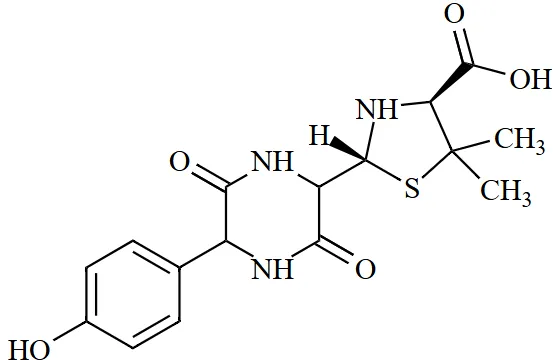
侧链氨基不只往外攻,也会回头攻自己分子的 β-内酰胺羰基。这是The side-chain amino group does not only attack outwards; it also turns back on the β-lactam carbonyl of its own molecule. This is a 分子内intramolecular反应,动力学上比分子间聚合占优,因为有效浓度不受稀释影响。产物是 2,5-二酮哌嗪:氨基与 β-内酰胺羰基成环、开环、再缩合,最终形成一个含两个酰胺的六元环。 reaction that is kinetically favoured over intermolecular polymerisation because its effective concentration is unaffected by dilution. The product is 2,5-diketopiperazine: the amino group and the β-lactam carbonyl close a ring, open it and re-condense to give a six-membered ring containing two amides.
两个实操后果。第一,There are two practical consequences. First, 它在浓溶液与高温下先出现it appears before the polymer in concentrated solutions at elevated temperature,早于聚合物;强制降解时如果只盯 G-10 图上的聚合物峰,会漏掉 C18 图上这一族。第二,二酮哌嗪 2 位是新生成的手性中心,产物是一对差向异构体——本目录里恰好有两条:(2R)-(CAS 10289-70-6)与 (2S)-(CAS 210289-71-7)。, ahead of the polymer; in forced degradation, watching only the polymer peak on the G-10 chromatogram will miss this whole family on the C18 chromatogram. Second, position 2 of the diketopiperazine is a newly generated stereocentre, so the product is a pair of epimers; this catalogue happens to carry both: (2R)- (CAS 10289-70-6) and (2S)- (CAS 210289-71-7).
分子内成环与分子间聚合是一对竞争反应,对条件响应方向却不同:稀释抑制聚合,基本不影响成环;升高 pH 同时加速两者,但碱性强到一定程后 β-内酰胺水解抢走主导权。这就是为什么阿莫西林碱破坏档的产物归属最难写——青霉噻唑酸、二酮哌嗪、聚合物的降解碎片混在一堆峰里。Intramolecular ring closure and intermolecular polymerisation are competing reactions, yet they respond to conditions in different directions: dilution suppresses polymerisation but barely affects ring closure; raising pH accelerates both, but beyond a certain basicity β-lactam hydrolysis takes over. That is why peak assignment for the alkaline-stress condition of amoxicillin is the hardest to write: penicilloic acid, diketopiperazine and polymer degradation fragments all sit together in one cluster of peaks.
四、G-10 分子排阻:真正靠的不是「分子筛」4. G-10 size exclusion: what actually does the work is not "molecular sieving"
中国药典对聚合物用分子排阻法的专用变体:葡聚糖凝胶 G-10(40 到 120 μm),玻璃柱内径 1.0 到 1.4 cm、柱长 30 到 40 cm,254 nm 检测,进样 100 到 200 μLThe Chinese Pharmacopoeia uses a dedicated variant of size-exclusion chromatography for the polymer: Sephadex G-10 (40 to 120 μm), a glass column of 1.0 to 1.4 cm internal diameter and 30 to 40 cm length, detection at 254 nm, injection volume 100 to 200 μL[1,2]。看似普通的体积排阻,实际有两个反常规设计。. What looks like ordinary size exclusion actually contains two counter-intuitive design choices.
第一,它用两套流动相。First, it uses two mobile phases.A 是 pH 8.0 的 0.05 mol/L 磷酸盐缓冲液( A is 0.05 mol/L phosphate buffer at pH 8.0 (磷酸氢二钠disodium hydrogen phosphate↗与磷酸二氢钠按 95:5 配),B 是纯水;供试品走 A,对照品走 B。原因在于 G-10 对 β-内酰胺寡聚物有明显非特异性吸附,纯水冲不动聚合物,必须靠 pH 8.0 的缓冲液占住吸附位点才能洗出来;而单体在缓冲液里保留又太弱。药典干脆把「测聚合物」与「测单体」拆成两次进样、两套系统。 and sodium dihydrogen phosphate at 95:5), while B is pure water; the test solution runs in A and the reference solution in B. The reason is that G-10 shows pronounced non-specific adsorption of β-lactam oligomers: pure water will not move the polymer, which is only eluted once pH 8.0 buffer occupies the adsorption sites, while the monomer is retained too weakly in buffer. The pharmacopoeia therefore splits "polymer determination" and "monomer determination" into two injections on two systems.
第二,它的系统适用性靠蓝色葡聚糖 2000。Second, its system suitability relies on blue dextran 2000.这是完全被排阻的高分子标记物,保留时间即外水体积。药典要求:理论板数按蓝葡聚糖峰计不低于 500、拖尾因子小于 2.0;对照溶液主峰与供试品中聚合物峰,相对相应系统中蓝葡聚糖峰保留时间的比值都要落在 0.93 到 1.07 之间 This is a fully excluded high-molecular-weight marker whose retention time equals the interstitial volume. The pharmacopoeia requires a theoretical plate count of not less than 500 calculated on the blue dextran peak and a tailing factor below 2.0; the ratio of the retention time of the principal peak in the reference solution, and of the polymer peak in the test solution, to that of the blue dextran peak in the corresponding system must both fall between 0.93 and 1.07[1]。用比值而非绝对时间,是为了让手工填装的玻璃柱在实验室之间可比。. Using a ratio rather than an absolute time is what makes hand-packed glass columns comparable between laboratories.
另有一个判据值得单独说:系统适用性溶液(2)要求One further criterion deserves separate mention: system suitability solution (2) requires that 高聚体峰高与单体和高聚体之间谷高的比值大于 2.0the ratio of the height of the polymer peak to the height of the valley between the monomer and the polymer be greater than 2.0,这是分离度的替代指标,专门卡柱子填太松、峰拖在一起的情况;以流动相 B 连续进对照溶液 5 针,峰面积 RSD 不得大于 5.0%。. This is a surrogate for resolution, aimed squarely at loosely packed columns where peaks merge; and five consecutive injections of the reference solution with mobile phase B must give a peak-area RSD of not more than 5.0%.
| 项目Parameter | 中国药典规定ChP requirement | 为什么这么定Rationale |
|---|---|---|
| 填料Packing | 葡聚糖凝胶 G-10,40 到 120 μmSephadex G-10, 40 to 120 μm | 排阻上限只有数百道尔顿;二聚体按两分子缩去一分子水算约 713 Da,正顶在分离上限附近,靠排阻与吸附共同作用The exclusion limit is only a few hundred daltons; the dimer, calculated as two molecules minus one water, is about 713 Da, sitting right at the upper separation limit, so exclusion and adsorption act together |
| 流动相Mobile phase | A 为 pH 8.0 磷酸盐缓冲液,B 为水,流速 1.5 mL/minA: phosphate buffer pH 8.0; B: water; flow rate 1.5 mL/min | A 相占住吸附位点洗聚合物,B 相洗单体,两套系统分别进样Phase A occupies adsorption sites and elutes the polymer; phase B elutes the monomer; the two systems are injected separately |
| 检测与进样Detection and injection | 254 nm,进样 100 到 200 μL254 nm, injection volume 100 to 200 μL | 聚合物含量低,靠大体积进样换灵敏度Polymer levels are low, so a large injection volume buys sensitivity |
| 对照品与计算Reference standard and calculation | 青霉素对照品 0.2 mg/mL;外标法乘校正因子 0.1Penicillin reference standard 0.2 mg/mL; external standard method with correction factor 0.1 | 聚合物是族、无单一对照品,用结构最近似的单体作替代参比,再用经验系数折回质量当量The polymer is a family with no single reference standard, so the structurally closest monomer serves as surrogate reference and an empirical factor converts back to mass equivalent |
| 限度Limit | 原料不得过 0.15%;胶囊不得过标示量的 0.2%Drug substance: not more than 0.15%; capsules: not more than 0.2% of the labelled amount | 制剂在生产与贮存中还会继续聚合,故放宽一档The formulation continues to polymerise during manufacture and storage, so one tier is relaxed |
表注:参数取自中国药典阿莫西林与阿莫西林胶囊正文Table note: parameters taken from the ChP monographs for Amoxicillin and Amoxicillin Capsules[1];二聚体分子量为按结构式推算值。; the dimer molecular weight is calculated from the structure.
那个 0.1 必须说清:它是That 0.1 needs to be stated clearly: it is a 响应折算系数,不是浓度换算系数response conversion factor, not a concentration conversion factor。同一质量浓度下,寡聚物的紫外响应远低于青霉素单体(青霉噻唑环比例被稀释、发色团密度下降),药典用一个固定经验值把「按青霉素计会高估」这件事一次性折回来。它不精确,但可复现、可跨实验室比对。. At the same mass concentration, the UV response of oligomers is far lower than that of the penicillin monomer, because the proportion of penicilloyl rings is diluted and chromophore density falls. The pharmacopoeia uses a single fixed empirical value to correct, in one step, the fact that calculation as penicillin would overestimate. It is not precise, but it is reproducible and comparable across laboratories.
五、三套药典、三条路:族总量还是具体寡聚体5. Three pharmacopoeias, three routes: family total or individual oligomers
中国药典走The Chinese Pharmacopoeia takes the 族总量family total路线:一根 G-10 柱、一个替代对照品、一个经验系数,出一个总和型限度。优点是「不漏」——所有分子量大于单体的寡聚物都在外水体积附近被一起算进去;缺点是「不分辨」,你只知道总量超了,不知道是二聚还是五聚超的。 route: one G-10 column, one surrogate reference standard, one empirical factor, one sum-type limit. The advantage is completeness: every oligomer larger than the monomer is counted together near the interstitial volume. The disadvantage is that it does not discriminate; you know the total is over the limit but not whether the dimer or the pentamer is responsible.
欧洲药典与美国药典走The European and United States Pharmacopoeias take the 具体寡聚体individual oligomer路线:EP 8.0 与 USP 37/NF32 已收载氨苄西林与阿莫西林的二聚体、三聚体结构并配了对照品,还收载了杂二聚体,例如 6-APA 的氨基与 route: EP 8.0 and USP 37/NF32 already monograph the dimer and trimer structures of ampicillin and amoxicillin with matching reference standards, and also mixed dimers, for example the amino group of 6-APA condensing with the carboxyl of 苯唑西林Oxacillin↗的羧基缩合、氨苄西林的氨基与, or the amino group of ampicillin with the carboxyl of 哌拉西林Piperacillin↗[3]。这条路能回答「是哪一种寡聚体」,但每个成员都要单独做对照品,覆盖链条有上限。. This route can answer "which oligomer", but every member needs its own reference standard, so the chain of coverage has an upper bound.
| 路线Route | 控制对象Control target | 对照品Reference standard | 定量方式Quantitation | 盲区Blind spot |
|---|---|---|---|---|
| ChP:族总量ChP: family total | 全部寡聚物之和Sum of all oligomers | 青霉素(替代)Penicillin (surrogate) | 外标法乘 0.1External standard × 0.1 | 不分辨种类,难定位工艺环节No speciation, so the process step is hard to localise |
| EP / USP:具体寡聚体EP / USP: individual oligomers | 二聚体、三聚体及个别杂二聚体Dimer, trimer and selected mixed dimers | 各寡聚体专属对照品Dedicated reference standard per oligomer | 各自外标法External standard individually | 高聚部分无对照品Higher oligomers have no reference standards |
表注:ChP 参数见阿莫西林正文Table note: ChP parameters are in the Amoxicillin monograph[1];EP/USP 收载情况见; EP/USP coverage is discussed in[3],具体限度以现行专论为准,欧洲药典与 USP 的各自要求见现行各论. Specific limits are governed by the current monographs; see the current EP and USP individual monographs for their respective requirements[8]。
方法层面也有实测支撑:有研究把中国药典与美国药典的阿莫西林有关物质方法并排跑过,两法的色谱条件、系统适用性要求与杂质控制策略差异明显,USP 法多检出一个已知杂质、总杂也更高Methodological evidence exists too: one study ran the ChP and USP related-substances methods for amoxicillin side by side and found clear differences in chromatographic conditions, system suitability requirements and impurity control strategy, with the USP method detecting one additional known impurity and reporting higher total impurities[7]。这说明连「有关物质」这一项都不能跨药典直译,更不用说控制对象完全不同的聚合物项。. This shows that even the related-substances item cannot be translated across pharmacopoeias, let alone the polymer item, whose control target is entirely different.
对做国际注册的人,这意味着聚合物项For anyone handling international filings, this means the polymer item 不能共用一套方法学cannot share a single methodology——不是「同一方法不同限度」,而是控制对象都不一样。用 G-10 总量去满足 EP 的二聚体限度逻辑上讲不通,反之亦然。: it is not "same method, different limits" but a different control target altogether. Satisfying an EP dimer limit with a G-10 total is logically incoherent, and the reverse is equally so.
六、注册申报:这一项被问到的三个地方6. Regulatory filings: the three places this item gets challenged
截至 2026 年 10 月 23 日,CDE 公开受理信息里阿莫西林相关记录已达 As of 23 October 2026, public CDE acceptance records for amoxicillin had reached 1272 条、涉及申报单位 records involving 341 家 applicants[6]。受理体量大意味着审评尺度成熟,也意味着追问点非常固定。. A large acceptance volume means a mature review standard, and also that the questions asked are highly predictable.
其一,把「方法学确认」写成了「方法学验证」。First, "method verification" is written up as "method validation".G-10 这一项不是典型验证——没有线性、也没有对照品可做回收率,它的确认就是系统适用性那几条:板数、拖尾、保留时间比值、谷高比、RSD。不少资料套用了有关物质方法的验证模板,写了一堆专属性、准确度,却没把柱效与外水体积标定写清楚,反而显得没抓住重点。 The G-10 item is not a typical validation: there is no linearity, and no reference standard with which to run recovery. Its verification is precisely those system suitability criteria: plate count, tailing, retention time ratio, valley ratio and RSD. Many dossiers paste in the validation template used for related-substances methods, producing pages on specificity and accuracy while failing to document column efficiency and interstitial-volume calibration clearly, which betrays a missed point.
其二,只有 0 月数据。Second, only month-0 data are provided.聚合是时间与温度的强函数,一个 0 月的合格值说明不了任何事。更关键的是: Polymerisation is a strong function of time and temperature, so a compliant month-0 value proves nothing. More importantly: 聚合物总量与总杂的上升曲线不一定平行the rising curves of total polymer and total impurities are not necessarily parallel。水解开环让总杂快速上升而聚合物几乎不动,低水分高温下则可能反过来。两条曲线分开画,才能说明包装与贮存条件控住的是哪一条路。. Hydrolytic ring opening drives total impurities up quickly while the polymer barely moves, whereas under low moisture and high temperature the reverse may occur. Only plotting the two curves separately can show which route the packaging and storage conditions actually control.
其三,工艺变更后没有重做聚合物谱。Third, the polymer profile is not re-mapped after a process change.曾有研究对比喷雾干燥与溶媒结晶两种工艺生产的氨苄西林,发现两者聚合物组成不同、引发动物被动皮肤过敏反应的能力也有差异 One study compared ampicillin produced by spray drying and by solvent crystallisation and found the two differed in polymer composition and in their ability to elicit passive cutaneous anaphylaxis in animals[4]。这条信息的价值不在于哪个工艺更好,而在于. The value of this finding is not which process is better but that 聚合物谱是工艺指纹the polymer profile is a process fingerprint:结晶方式、pH 曲线、母液浓缩温度、干燥形式任何一项变了,谱都可能变,而这不会体现在「总杂不变」上。: change any of crystallisation mode, pH profile, mother-liquor concentration temperature or drying format and the profile may change, and this will not show up as a change in "total impurities".
还有一点易混:聚合物限度与 ICH Q3A 的百分比阈值不是一套逻辑。Q3A 按最大日剂量分档给阈值One further point causes confusion: the polymer limit and the ICH Q3A percentage thresholds follow different logic. Q3A assigns thresholds by maximum daily dose tier[5],聚合物限度却是专论固定值,不随申报日剂量浮动,「日剂量低所以可放宽」在专论品种上走不通。, whereas the polymer limit is a fixed monograph value that does not float with the declared daily dose; "a low daily dose so it can be relaxed" does not work for monograph products.
七、横向对照:哪些能类比,哪些一定不能7. Cross-comparison: what can be analogised and what definitely cannot
能类比的是What can be analogised is 氨苄西林Ampicillin。它与阿莫西林共享「6-APA 母核 + 侧链游离氨基」的骨架,聚合走同一条氨基路径,二聚速率也在同一量级(阿莫西林略快)。氨苄西林的聚合物研究做得更早更透,是理解这一族反应的标准模型;机理部分可以直接借用,限度与方法参数不能照抄。 It shares with amoxicillin the "6-APA nucleus plus free side-chain amino group" skeleton, polymerises by the same amino pathway, and dimerises at a similar order of magnitude (amoxicillin slightly faster). Ampicillin polymer research is earlier and more thorough, making it the standard model for understanding this family of reactions; its mechanism can be borrowed directly, its limits and method parameters cannot.
不能类比的是苄青霉素(可对照What cannot be analogised is benzylpenicillin (compare 青霉素 VPhenoxymethylpenicillin 这类侧链无氨基的品种)。 , which belongs to the class with no amino group on the side chain).它的侧链是苯乙酰基,没有游离氨基,聚合只能走羧基攻 β-内酰胺那条路 Its side chain is phenylacetyl with no free amino group, so polymerisation can only proceed by carboxyl attack on the β-lactam[3]。因此它对 pH 的依赖曲线、对浓度的敏感度、产物的连接方式都和阿莫西林不同。把阿莫西林「控氨基」的经验直接搬过去,会得出错误的控制点。. Its pH dependence curve, concentration sensitivity and product connectivity all differ from amoxicillin's. Transplanting amoxicillin's "control the amino group" experience directly yields the wrong control points.
不能类比的是What cannot be analogised either is 哌拉西林钠Piperacillin sodium、阿洛西林Azlocillin这类侧链带脲基或咪唑啉酮的青霉素。: penicillins whose side chains carry a ureido or imidazolidinone group.侧链氮被酰化或成环,亲核性大打折扣,聚合倾向显著低于氨基青霉素。药典对它们单列聚合物项,更多出于历史与安全性保守,而不是因为它们和阿莫西林一样容易聚。 With the side-chain nitrogen acylated or ring-closed, nucleophilicity is greatly diminished and the polymerisation tendency is markedly lower than that of aminopenicillins. That the pharmacopoeia gives them a separate polymer item is more a matter of historical and safety conservatism than of their polymerising as readily as amoxicillin.
八、五个常见误区8. Five common misconceptions
误区一:以为聚合物会在 C18 有关物质图上出现一个大峰。Misconception 1: assuming the polymer shows up as a large peak on the C18 related-substances chromatogram.不会。反相条件下寡聚物要么强保留到冲不出来,要么在梯度末端成一堆分不开的鼓包;你看到的「总杂 3.0%」里基本不含它。 It does not. Under reversed-phase conditions oligomers either retain so strongly that they never elute or pile up as an unresolved hump at the end of the gradient; the "3.0% total impurities" you see essentially does not contain them.
误区二:把 0.1 当成稀释倍数或含量换算。Misconception 2: treating the 0.1 as a dilution factor or an assay conversion.它是响应折算系数。药典的算法本身就是「以青霉素计 × 0.1」,照做即可,不要反推真实质量。 It is a response conversion factor. The pharmacopoeia's calculation is simply "as penicillin × 0.1"; follow it as written and do not back-calculate a true mass.
误区三:拿阿莫西林做聚合物项对照品。Misconception 3: using amoxicillin as the polymer reference standard.药典明确用青霉素。用阿莫西林做参比,等于把单体响应当成寡聚物响应,乘 0.1 后数值系统性偏低,方法对你就「更宽容」——这种宽容在注册里站不住。 The pharmacopoeia specifies penicillin. Using amoxicillin as reference treats monomer response as oligomer response, so after multiplying by 0.1 the values come out systematically low and the method becomes "more forgiving" for you, a leniency that will not survive regulatory scrutiny.
误区四:认为充氮、避光就能控住聚合物。Misconception 4: believing nitrogen blanketing and light protection control the polymer.聚合是氨基对羰基的亲核加成,不是自由基氧化,充氮基本无效。有效的是控水分、控 pH(偏酸抑制氨基解离)、控温度、缩短浓溶液停留时间。 Polymerisation is nucleophilic addition of an amino group to a carbonyl, not radical oxidation, so nitrogen blanketing is essentially useless. What works is controlling water content, controlling pH (slightly acidic conditions suppress amino dissociation), controlling temperature and shortening the residence time of concentrated solutions.
误区五:忽略 6-APA 的贡献。Misconception 5: ignoring the contribution of 6-APA.6-APA 本身带游离氨基且是合成起始物料,残留超标时不但自己是杂质,还会作小分子亲核体参与聚合,生成 6-APA-阿莫西林杂二聚体。所以它的残留限度不只是纯度问题,也是聚合物控制的前置条件。6-APA itself carries a free amino group and is the starting material, so when its residue exceeds limits it is not merely an impurity in its own right but also acts as a small-molecule nucleophile in polymerisation, forming a 6-APA–amoxicillin mixed dimer. Its residue limit is therefore not just a purity matter but a precondition for polymer control.
常见问题(FAQ)Frequently asked questions (FAQ)
阿莫西林的聚合物为什么不能做成一个对照品来卖?Why can't amoxicillin polymer be sold as a single reference standard?
为什么中国药典的聚合物项要用两套流动相?Why does the ChP polymer item require two mobile phases?
校正因子 0.1 是怎么来的,能不能自己改?Where does the 0.1 correction factor come from, and can it be changed?
阿莫西林的聚合物和过敏反应是什么关系?What is the relationship between amoxicillin polymer and allergic reactions?
为什么阿莫西林比氨苄西林更容易聚合?Why does amoxicillin polymerise more readily than ampicillin?
强制降解试验里,聚合物应该用哪个方法看?In forced degradation studies, which method should be used to monitor the polymer?
胶囊的限度 0.2% 比原料的 0.15% 宽,是不是制剂要求更松?The 0.2% capsule limit is broader than the 0.15% drug-substance limit; does that mean the formulation requirement is looser?
本目录有阿莫西林的聚合物对照品吗?Does this catalogue offer an amoxicillin polymer reference standard?
相关品种与对照品Related drug substances and reference standards
- 阿莫西林 / AmoxicillinAmoxicillin(共 83 个杂质/衍生物条目)(83 impurity and derivative entries in total)
- 氨苄西林 / AmpicillinAmpicillin(共 57 个杂质/衍生物条目)(57 impurity and derivative entries in total)
- 对乙酰氨基酚 / AcetaminophenAcetaminophen(共 49 个杂质/衍生物条目)(49 impurity and derivative entries in total)
参考资料与来源References and sources
- 中国药典委员会,Chinese Pharmacopoeia Commission, 《中华人民共和国药典》阿莫西林、阿莫西林胶囊正文(有关物质、阿莫西林聚合物、残留溶剂项;G-10 分子排阻色谱条件、青霉素对照品、校正因子 0.1、限度 0.15%/0.2%)Pharmacopoeia of the People's Republic of China, monographs for Amoxicillin and Amoxicillin Capsules (related substances, amoxicillin polymer, residual solvents; G-10 size-exclusion chromatographic conditions, penicillin reference standard, correction factor 0.1, limits 0.15%/0.2%),访问日期 2026-10-23, accessed 2026-10-23
- 中国药典委员会,Chinese Pharmacopoeia Commission, 《中华人民共和国药典》四部通则 0512 高效液相色谱法、0514 分子排阻色谱法Pharmacopoeia of the People's Republic of China, Part IV general chapters 0512 HPLC and 0514 size-exclusion chromatography,访问日期 2026-10-23, accessed 2026-10-23
- Journal of Pharmaceutical Analysis(2022 年,中国食品药品检定研究院),Journal of Pharmaceutical Analysis (2022, National Institutes for Food and Drug Control, China), Wu Q. 等《Discussion on the dimerization reaction of penicillin antibiotics》:四条聚合路径、氨苄西林以氨基攻 β-内酰胺为主导、EP 8.0 与 USP 37/NF32 收载的二聚体三聚体及杂二聚体结构Wu Q. et al., "Discussion on the dimerization reaction of penicillin antibiotics": four polymerisation pathways, amino attack on the β-lactam as the dominant route for ampicillin, and the dimer, trimer and mixed dimer structures monographed in EP 8.0 and USP 37/NF32,访问日期 2026-10-23, accessed 2026-10-23
- Acta Pharmaceutica Suecica(1976 年)Bundgaard H.《Polymerization of penicillins: kinetics and mechanism of di- and polymerization of ampicillin in aqueous solution》:二至五聚体的分离、二聚速率顺序环己西林 < 氨苄西林 < 依匹西林 < 阿莫西林、不同工艺氨苄西林聚合物致敏性差异(站点对本机不可达,仅列文献信息)Acta Pharmaceutica Suecica (1976), Bundgaard H., "Polymerization of penicillins: kinetics and mechanism of di- and polymerization of ampicillin in aqueous solution": separation of dimers through pentamers, the dimerisation order ciclacillin < ampicillin < epicillin < amoxicillin, and differences in the sensitising capacity of ampicillin polymers from different processes (site unreachable from this workstation; bibliographic information only)
- ICH,ICH Q3A(R2)《新原料药中的杂质》附件 1 阈值表(≤2 g/日 与 >2 g/日 两档)ICH Q3A(R2) Impurities in New Drug Substances, Annex 1 reporting, identification and qualification thresholds (two tiers: ≤2 g/day and >2 g/day),访问日期 2026-10-23, accessed 2026-10-23
- 国家药品监督管理局药品审评中心(CDE),Center for Drug Evaluation (CDE), NMPA, 受理品种信息公开(阿莫西林,抓取时间 2026-10-23;统计口径为公开受理记录,不等同于获批家数)public acceptance information (amoxicillin, retrieved 2026-10-23; the counting basis is public acceptance records and is not equivalent to the number of approvals),访问日期 2026-10-23, accessed 2026-10-23
- 《国外医药抗生素分册》(2021 年 42 卷 3 期),World Notes on Antibiotics (2021, Vol. 42, No. 3), 郑占伟、孟令茹、袁红楼、张晴、李毅《中国药典和美国药典阿莫西林有关物质检测方法的比较研究》:两法色谱条件与系统适用性差异、USP 法多检出已知杂质 C 且总杂更高Zheng Zhanwei, Meng Lingru, Yuan Honglou, Zhang Qing, Li Yi, "Comparative study of the related-substances methods for amoxicillin in the Chinese and United States Pharmacopoeias": differences in chromatographic conditions and system suitability between the two methods, with the USP method detecting known Impurity C additionally and reporting higher total impurities,访问日期 2026-10-23, accessed 2026-10-23
- 欧洲药品质量管理局(EDQM)European Pharmacopoeia 阿莫西林三水合物各论(相关物质项与聚合物对照品;站点对本机不可达,仅列名称)European Directorate for the Quality of Medicines (EDQM), European Pharmacopoeia monograph on Amoxicillin Trihydrate (related substances and polymer reference standards; site unreachable from this workstation, name listed only)
说明:本文为 CATO 佳途技术团队原创整理,其中引用的法规、药典与公开文献内容已在上方标注来源,仅用于技术交流与检索参考,不构成质量标准或法规建议;具体品种的检测方法、限值与申报要求,请以现行法规、药典正文及官方发布为准。Note: this article was compiled by the CATO technical team. Regulatory, pharmacopoeial and public literature content cited has been sourced above and is provided for technical exchange and search reference only; it does not constitute a quality specification or regulatory advice. For the test methods, limits and filing requirements of any specific product, the current regulations, pharmacopoeial monographs and official publications prevail.
本站产品信息仅供科研检索与选型参考,不作为质量标准依据;技术参数、纯度与结构确证以随货 COA 及我方书面确认为准。本文涉及的产品均为科研用途,不用于人体或动物诊断、治疗。Product information on this site is for scientific search and selection reference only and is not a quality specification; technical data, purity and structural confirmation are governed by the shipped COA and our written confirmation. All products mentioned are for research use only and are not intended for human or animal diagnosis or treatment.