卡马西平的晶型:Form III 室温最稳,为什么湿法制粒后还是变成了二水合物Carbamazepine Polymorphs: Form III Is the Most Stable at Room Temperature, So Why Does Wet Granulation Still Convert It to the Dihydrate?
卡马西平↗(CAS 298-46-4)是 5H-二苯并[b,f]氮杂䓬-5-甲酰胺,C15H12N2O,分子量 236.27。它被反复写进教科书,因为它把多晶型的所有麻烦都占齐了:四个无水多晶型、一个二水合物、还有溶剂化物。但教科书讲的是现象,研发人员要的是判断——这个工艺到底会不会把晶型改掉。
Carbamazepine↗ (CAS 298-46-4) is 5H-dibenzo[b,f]azepine-5-carboxamide, C15H12N2O, molecular weight 236.27. It appears in textbooks repeatedly because it collects every polymorphism problem at once: four anhydrous polymorphs, one dihydrate and several solvates. But textbooks describe phenomena, whereas development scientists need a decision: will this process change the polymorph?
Note: product names shown in red (marked with ↗) are clickable. Click to open the product page for structure, CAS number, purity and lead time.
一、先把这个品种的晶体地图画出来1. First, draw the crystal map of this drug substance
关键要点Key points
- 卡马西平(CAS 298-46-4)是 5H-二苯并[b,f]氮杂䓬-5-甲酰胺,CCarbamazepine (CAS 298-46-4) is 5H-dibenzo[b,f]azepine-5-carboxamide, C15H12N2O,分子量 236.27;已报道 4 个无水多晶型(I–IV)、1 个二水合物,以及若干溶剂化物O, molecular weight 236.27; four anhydrous polymorphs (I–IV), one dihydrate and several solvates have been reported[2,3].
- 市售原料药是 The commercial drug substance is Form III,它在室温至约 70 ℃ 是热力学稳定相;Form I 才是高温稳定相,两者构成互变对, which is the thermodynamically stable phase from room temperature to about 70 °C; Form I is the high-temperature stable phase, and the two form an enantiotropic pair[3].
- 在In 含水体系aqueous systems里,最稳定的既不是 Form III 也不是 Form I,而是 the most stable form is neither Form III nor Form I but the 二水合物dihydrate——无水物遇水会经溶解-再沉淀转过去,这是湿法制粒与水性包衣的真实风险: the anhydrate converts to it via dissolution and reprecipitation on contact with water, and this is the real risk in wet granulation and aqueous coating[2,4].
- 转晶温度的文献值从约 71 ℃ 到 120 ℃ 以上都有,差异来自测法;Reported transition temperatures range from about 71 °C to above 120 °C, with the spread arising from the measurement method; 不能把文献值直接当工艺温度上限literature values cannot be taken directly as the process temperature ceiling[3].
卡马西平Carbamazepine是最常被写进教科书的「多晶型品种」之一,但教科书写现象,研发人员要的是能落地的判断: is one of the textbook examples of a polymorphic drug substance, but textbooks describe phenomena whereas development scientists need decisions they can act on: 我的工艺会不会把晶型改掉,改掉之后怎么证明、怎么解释。will my process change the polymorph, and once changed, how do I prove it and how do I explain it?
先看分子。二苯并氮杂䓬环上挂一个甲酰胺基,它同时给出 N-H 供体与 C=O 受体,是氢键网络的方向盘。晶型差别不在「分子长得不一样」,而在Start with the molecule. A carboxamide group hangs on the dibenzoazepine ring, providing both an N-H donor and a C=O acceptor, and it steers the hydrogen-bond network. Polymorph differences are not about different molecular structures but about 酰胺二聚体的堆积方式与两个苯环相对氮杂䓬平面的折叠角the packing of amide dimers and the folding angle of the two benzene rings relative to the azepine plane。折叠角一变,晶格密度、熔点、溶解速率跟着变——同一个分子式可以给出几条不同的溶解度曲线,这在 BCS II 品种身上会放大成生物利用度问题。. Change the folding angle and lattice density, melting point and dissolution rate all follow; one molecular formula can yield several different solubility curves, which in a BCS Class II drug expands into a bioavailability problem.
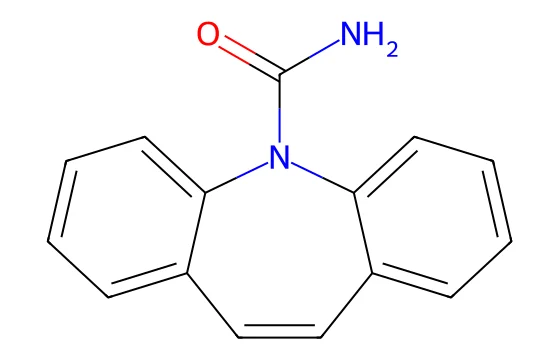
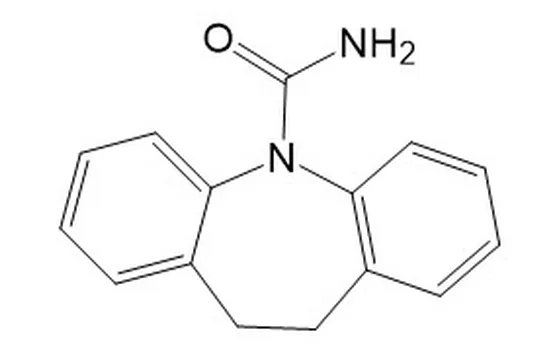
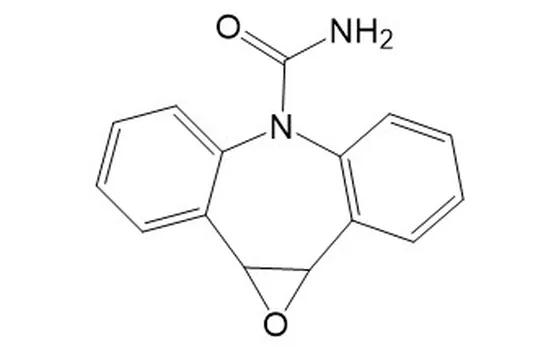
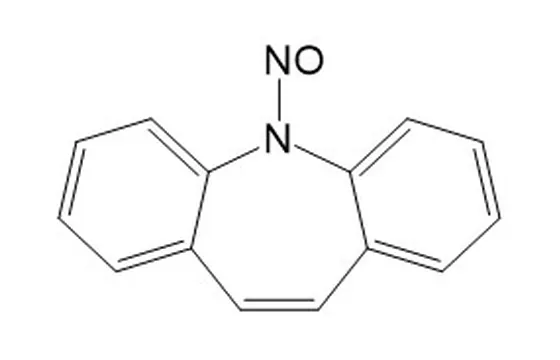
本目录收录卡马西平相关条目 This catalogue contains 33 条,与欧洲药典字母建立映射的 7 条(EP 杂质 A 至 G),另有两个 N-亚硝基条目。一个品种同时挂着两条风险线,要分清: carbamazepine-related entries, 7 mapped to European Pharmacopoeia letters (EP Impurity A to G), plus two N-nitroso entries. One drug substance carries two risk lines at once, and they must be kept apart: 晶型是物理形态,亚硝胺是化学结构,控制手段没有交集polymorph is physical form and nitrosamine is chemical structure; their control measures do not overlap.
二、Form III 与 Form I:熔点高的那个,室温反而不稳定2. Form III and Form I: the one with the higher melting point is the unstable one at room temperature
互变对(enantiotropic pair)意味着两种晶型之间存在一个转晶温度 TAn enantiotropic pair means that between the two forms there is a transition temperature Tt:低于它一种稳定,高于它另一种稳定,且两者可互相转变。卡马西平的 Form III 与 Form I 就是这种关系: below it one form is stable, above it the other, and the two can interconvert. Carbamazepine's Form III and Form I stand in exactly this relationship[3].
这里有一个反直觉的地方:There is one counter-intuitive point here: 室温更稳定的 Form III,熔点反而更低Form III, the more stable at room temperature, has the lower melting point。文献报道 Form I 的熔点约 190–193 ℃,Form III 约 174–177 ℃. Reported melting points are about 190–193 °C for Form I and about 174–177 °C for Form III[2]。如果按「熔点高=稳定」这条日常经验去判断,会得出完全相反的结论。原因不复杂:熔点衡量的是「从晶体到液体的自由能差」,而室温稳定性衡量的是「两种晶体之间的自由能差」,两者不是同一把尺子。. Judging by the everyday rule that a higher melting point means greater stability leads to exactly the wrong conclusion. The reason is not complicated: melting point measures the free-energy difference between crystal and liquid, whereas room-temperature stability measures the free-energy difference between the two crystals; these are not the same yardstick.
更麻烦的是熔点本身也不干净。Form III 在熔融前后常伴随一次转晶,DSC 曲线上会出现两个相邻的吸热事件——一个对应转晶、一个对应熔融。做晶型鉴别时只看「熔点是多少度」,很容易把一个双峰读成「这是两种晶型的混合物」,或者把 Form III 判成 Form I。Worse, the melting point itself is not clean. Form III often undergoes a transition around melting, producing two adjacent endothermic events on the DSC curve, one for the transition and one for fusion. Reading polymorph identity off a single melting point easily turns a double peak into "this is a mixture of two forms" or misassigns Form III as Form I. 熔点只能作为辅助判据,主判据必须是粉末衍射或振动光谱Melting point can only be a secondary criterion; the primary criterion must be powder diffraction or vibrational spectroscopy.
转晶温度 TReported values of the transition temperature Tt 的文献值差异也需要说清楚。常见引用是约 71 ℃,但也有研究用变温粉末衍射给出的结论是转晶发生在 120 ℃ 以上,同一篇文章里就点明了「早期研究报告的转晶温度各不相同」 also need explaining. The commonly cited value is about 71 °C, yet other work using variable-temperature powder diffraction concluded that the transition occurs above 120 °C; the same paper notes that "transition temperatures reported in earlier studies vary"[3]。这个分歧不是谁做错了,是方法敏感度不同:DSC 靠热流抓事件,升温速率与样品量都改变读数;变温衍射看相组成,对动力学滞后更宽容;杂质、粒径、气氛也会推动或推迟转晶。. The disagreement is not a matter of someone being wrong but of differing method sensitivity: DSC catches events via heat flow, and heating rate and sample mass both shift the reading; variable-temperature diffraction observes phase composition and is more forgiving of kinetic lag; impurities, particle size and atmosphere can also advance or delay the transition. 文献 TThe literature Tt 只能预判风险区间,工艺上限必须用自家样品实测。 can only flag a risk window; the process ceiling must be measured on your own samples.
三、水才是这个品种真正的主角3. Water is the real protagonist for this drug substance
如果只看无水物之间的相互转换,卡马西平的晶型问题还在可控范围——毕竟工艺温度很少长时间跨过 70 ℃。真正把问题放大的,是If only interconversion among the anhydrates mattered, carbamazepine's polymorph problem would remain manageable, since process temperatures rarely exceed 70 °C for long. What actually amplifies the problem is 水water.
在含水介质中,二水合物是热力学终点。无水物(无论 Form III 还是 Form I)接触水后,会经历「表面溶解 → 二水合物成核 → 继续溶解-沉淀」的溶剂介导过程。这不是固-固转变:. In aqueous media the dihydrate is the thermodynamic end point. On contact with water the anhydrate, whether Form III or Form I, goes through a solvent-mediated sequence of surface dissolution, dihydrate nucleation, and continued dissolution and precipitation. This is not a solid-solid transition: 它需要液相存在,受水量、时间、温度、搅拌共同控制it requires a liquid phase and is jointly controlled by water amount, time, temperature and agitation,所以干法与湿法工艺的风险等级差得很远。, so the risk level of dry and wet processes differs by a wide margin.
转过去之后会怎样?水合物比无水物稳定,稳定相的溶解度就更低——热力学必然。文献明确指出:无水卡马西平遇水会转变为二水合物,这一现象与部分仿制片剂的What happens after the conversion? The hydrate is more stable than the anhydrate, and the more stable phase necessarily has the lower solubility. The literature states explicitly that anhydrous carbamazepine converts to the dihydrate on contact with water and that this phenomenon is associated with 生物等效性失败和临床失败bioequivalence failures and clinical failures有关 of some generic tablets[4]。二水合物不是杂质也不是降解产物,HPLC 测纯度一切正常,但它把溶出曲线整体压低了。. The dihydrate is neither an impurity nor a degradation product, and HPLC purity looks entirely normal, yet it depresses the whole dissolution profile.
对普通片,曲线下移可能还在 f2 相似的范围内;对缓释片,释放本来靠骨架或包衣控制,晶型一变,前期与后期释放可能同时偏离。所以For immediate-release tablets the downward shift may still fall within f2 similarity; for extended-release tablets, where release is controlled by matrix or coating, a change of polymorph can shift both early and late release at once. Therefore 「原料药晶型合格」与「成品释放合格」之间隔着一整套工艺验证a compliant drug-substance polymorph and a compliant release profile are separated by an entire process validation,两句话不能互相替代。, and the two cannot stand in for each other.
四、测什么、用什么测:五种手段的分工4. What to measure and with what: the division of labour among five techniques
晶型研究的第一个坑是「用一种方法证明一切」。实际上不同手段回答的是不同问题:The first trap in polymorph work is trying to prove everything with one method. In practice different techniques answer different questions:
| 手段Technique | 回答什么问题Question answered | 局限Limitation | 典型用法Typical use |
|---|---|---|---|
| 粉末 X 射线衍射(PXRD)Powder X-ray diffraction (PXRD) | 相组成与相对含量,指纹性最强Phase composition and relative content, with the strongest fingerprint character | 择优取向影响强度;无定形含量高时基线抬升;定量需自建标准曲线Preferred orientation affects intensities; baseline rises when amorphous content is high; quantitation requires an in-house calibration curve | 原料药放行、制剂中晶型确认的主方法Primary method for drug-substance release and for confirming polymorph in formulations |
| 拉曼光谱(含成像)Raman spectroscopy (including imaging) | 可透过包衣测;成像能看到颗粒级的相分布Can measure through coatings; imaging reveals particle-level phase distribution | 荧光干扰;谱峰重叠时解析依赖模型Fluorescence interference; deconvolution of overlapping bands relies on models | 判断「部分转晶」发生在哪一批颗粒上Determining which particle population carries partial conversion |
| 差示扫描量热(DSC)Differential scanning calorimetry (DSC) | 热事件、转晶与熔融的温度区间Thermal events and the temperature ranges of transition and fusion | 转晶峰与熔融峰相邻时易误读;升温速率敏感Transition and fusion peaks adjacent to each other are easily misread; sensitive to heating rate | 辅助判据,配合变温实验看转晶动力学Secondary criterion; pair with variable-temperature work for transition kinetics |
| 热重分析(TGA)Thermogravimetric analysis (TGA) | 二水合物的失水台阶与含水量The dihydrate dehydration step and water content | 不能区分「晶格水」与「表面吸附水」,需结合其他手段Cannot distinguish lattice water from surface-adsorbed water; needs other techniques | 快速筛二水合物,理论含水量约 13.2%Rapid screening for the dihydrate; theoretical water content about 13.2% |
| 固体核磁(ssNMR)Solid-state NMR (ssNMR) | 无定形与晶型的比例、氢键环境差异Amorphous-to-crystalline ratio and differences in hydrogen-bond environment | 耗时、成本高,定量需长采集Time-consuming and costly; quantitation needs long acquisitions | 无定形含量争议时的仲裁方法Arbitration method when amorphous content is disputed |
表注:二水合物理论含水量按两分子水与 CTable note: the theoretical water content of the dihydrate is calculated from two water molecules and C15H12N2O·2H2O(分子量 272.30)计算,为 36.03÷272.30≈13.2%;各手段适用性为方法学归纳,具体参数须按自家仪器与样品验证。O (molecular weight 272.30) as 36.03 ÷ 272.30 ≈ 13.2%. The applicability of each technique is a methodological generalisation; specific parameters must be verified on your own instruments and samples.
三个实操判断,比写进方法学文件更有用。Three practical judgements that are more useful than what goes into the method document. 其一,PXRD 报「未检出其他晶型」时要说清检出能力。First, when PXRD reports "no other polymorph detected", state the detection capability.方法验证里应有按比例配制的混合相样品数据,说明多大比例的二水合物能被认出来;没有这个数据,「未检出」等于没有信息量。 Method validation should include data on mixed-phase samples prepared at defined ratios showing what proportion of dihydrate can be recognised; without that data "not detected" carries no information. 其二,制剂样品必须单独建方法。Second, formulation samples require their own method.纤维素类与无机填充剂在低角度有强衍射,会掩盖目标峰;把原料药方法直接套到片剂上,谱图一片杂乱,只能写「未见明显差异」——这种描述在审评里几乎必然被追问。 Cellulosic and inorganic fillers diffract strongly at low angles and mask target peaks; applying the drug-substance method directly to tablets yields a cluttered pattern that can only be described as "no significant difference", a wording that almost inevitably invites questions during review. 其三,拉曼成像别省。Third, do not skip Raman imaging.湿法制粒的转晶常集中在颗粒表层或某个粒径段,PXRD 给的是平均值,成像能告诉你转晶发生在哪里,这对定位工艺环节的价值高于一个百分比。 Conversion during wet granulation is often concentrated at granule surfaces or in a particular size fraction; PXRD gives an average, whereas imaging shows where the conversion happened, which is worth more for locating the process step than a percentage is.
五、把工艺拆成单元操作,风险就清楚了5. Break the process into unit operations and the risk becomes clear
「会不会转晶」这个问题,拆到单元操作层面才能回答。判断依据只有两条:The question "will it convert" can only be answered at the level of unit operations. There are just two criteria: 这一步有没有液相水,这一步的温度与停留时间够不够。does this step involve liquid water, and are the temperature and residence time sufficient?
| 单元操作Unit operation | 液相水Liquid water | 风险判断Risk assessment | 验证动作Verification action |
|---|---|---|---|
| 湿法制粒(高剪切/低剪切)Wet granulation (high shear / low shear) | 有,且量大Yes, in large amount | 高High:制粒阶段即可能生成二水合物: the dihydrate may form already during granulation | 测湿颗粒与干燥后颗粒的 PXRD,而不只测成品Run PXRD on wet granules and on dried granules, not only on the finished product |
| 流化床制粒/顶喷Fluid-bed granulation / top spray | 有,但停留时间短Yes, but short residence time | 中:取决于喷液速率与床层湿度Moderate: depends on spray rate and bed humidity | 同批不同时间点取样,看趋势Sample at several time points within the batch to see the trend |
| 水性薄膜包衣Aqueous film coating | 有,持续Yes, continuously | 中高:片芯在湿热环境中暴露时间较长Moderate to high: the core is exposed to hot humid conditions for a relatively long time | 包衣前后各取样,必要时做片芯截面拉曼Sample before and after coating; if needed, run Raman on core cross-sections |
| 干燥Drying | 由有到无From present to absent | 高High:二水合物脱水并不必然回到 Form III: dehydrating the dihydrate does not necessarily return it to Form III | 做脱水产物的 PXRD,确认是 Form III、Form I 还是无定形Run PXRD on the dehydration product to establish whether it is Form III, Form I or amorphous |
| 干法制粒/直接压片Dry granulation / direct compression | 无None | 低:机械能可能造成表面无序化,但整体转晶风险小Low: mechanical energy may disorder surfaces, but overall conversion risk is small | 关注压力对结晶度的影响Watch the effect of compression force on crystallinity |
| 储存(高湿条件)Storage (high humidity) | 吸附水Adsorbed water | 中:裸片或防潮性差的包装在高温高湿下仍可能转Moderate: bare tablets or poorly moisture-proof packaging can still convert at high temperature and humidity | 稳定性末期加测晶型,不只测有关物质Add polymorph testing at the end of stability, not only related substances |
表注:风险等级为按「有无液相水+暴露时间」两因素的方法学判断,实际须以本品种工艺验证数据为准;干燥步骤的行为依据见二水合物脱水路径研究Table note: risk levels are a methodological judgement based on two factors, presence of liquid water and exposure time; actual values must follow process validation data for this product. The basis for the drying step is the literature on dihydrate dehydration pathways[3].
表里最容易被忽略的是The most easily overlooked row in the table is 干燥Drying。很多人的心理模型是「加水转成二水合物,烘干就转回来」,实际脱水产物取决于条件:可能得无定形、可能得 Form I,也可能部分回到 Form III;脱水路径受相对湿度、溶剂蒸气、升温速率影响,结晶度与晶粒尺寸也随之不同. Many people carry the mental model that water converts it to the dihydrate and drying converts it back. In practice the dehydration product depends on conditions: it may be amorphous, may be Form I, or may partly return to Form III; the dehydration pathway is influenced by relative humidity, solvent vapour and heating rate, and crystallinity and crystallite size differ accordingly[3].
实际含义是:The practical implication: 成品晶型是所有单元操作的净结果,不能用原料药报告去推the polymorph of the finished product is the net result of all unit operations and cannot be inferred from the drug-substance report。一批片子可能走完「Form III → 二水合物 → 部分无定形 → 部分 Form III」这条路径,最后在 PXRD 上呈现混合态。只在放行时测一次,你看到的是终点、不是路径,出偏差无从定位。. A batch of tablets may travel the path Form III → dihydrate → partially amorphous → partially Form III and end up as a mixed state on PXRD. Measure once at release and you see the end point, not the path, leaving you no way to locate a deviation.
六、申报:Q6A 的立场,与三个必被追问的点6. Filing: the Q6A position and the three questions that always come
多晶型的监管立场很清楚。ICH Q6A 的态度是:The regulatory position on polymorphism is clear. ICH Q6A holds that 多晶型不作为常规检验项目,但当晶型可能影响溶出度、生物利用度或稳定性时,应当建立相应的检查与控制polymorphism should not be a routine test item, but where polymorphic form may affect dissolution, bioavailability or stability, appropriate tests and controls should be established[1]。也就是说「要不要控」不取决于这个品种有没有多晶型,而取决于晶型有没有临床相关性。卡马西平显然属于有相关性那一类:低溶解度、缓释制剂靠释放行为定效,所以只写「原料药为 Form III,与文献一致」并不充分。. In other words, whether to control does not depend on whether the substance is polymorphic but on whether the form has clinical relevance. Carbamazepine clearly belongs to the relevant class: low solubility, and extended-release products whose efficacy is defined by release behaviour, so stating only that "the drug substance is Form III, consistent with the literature" is not sufficient.
截至 2026 年 10 月 24 日,CDE 公开受理信息中卡马西平相关记录 As of 24 October 2026, public CDE acceptance records for carbamazepine numbered 52 条、涉及申报单位 records involving 27 家 applicants[6]。体量不大,一旦被发补,往往缺少同类答复可参照。. The volume is small, so once a deficiency letter is issued there is often little comparable precedent to draw on.
真正被追问的是三件事。What actually gets challenged comes down to three things. ①晶型定性依据的完整性(1) Completeness of the polymorph identification basis:PXRD 图谱+特征峰列表+对照品或文献比对,必要时补单晶或固体核磁;只有一张谱图、没有峰位与相对强度表,等于无法复核。: a PXRD pattern plus a characteristic peak table plus comparison against a reference standard or literature, with single-crystal data or solid-state NMR added where necessary; a pattern alone without peak positions and relative intensities cannot be independently checked. ②制剂中晶型的确认(2) Confirmation of polymorph in the formulation:不是要求成品必须与原料药同晶型,而是要求你知道成品里是什么晶型、并说明这个状态在你的工艺下是稳定的。二水合物本身就是合法终点——前提是你证明了它,也证明了溶出与稳定性可接受。: this is not a demand that the finished product match the drug substance but that you know which form is in the product and show that this state is stable under your process. The dihydrate is itself a legitimate end point, provided you demonstrate it and show that dissolution and stability are acceptable. ③晶型与关键质量属性的关联数据(3) Data linking polymorph to critical quality attributes:把晶型比例与溶出曲线放在一张图里,说明「转晶多少、溶出降多少」。稳定性按 ICH Q1A(R2) 设计: place the polymorph ratio and the dissolution profile in one figure to show how much conversion produces how much loss of dissolution. Design stability per ICH Q1A(R2)[5],但晶型项应单独取样、单独列表,不要并进「性状」一栏。, but sample the polymorph item separately and tabulate it separately; do not fold it into the description column.
七、四个常见误区,都是实操里踩出来的7. Four common misconceptions, all learned the hard way
误区一:用熔点判晶型。Misconception 1: judging polymorph by melting point.Form III 的 DSC 曲线常有转晶与熔融两个相邻吸热峰。毛细管法读到的是混合事件的温度,既不是纯 Form III 的熔点,也不能证明没有 Form I。判晶型请回到衍射或光谱。 The DSC curve of Form III often shows two adjacent endotherms, one for transition and one for fusion. A capillary method reads a mixed event, which is neither the melting point of pure Form III nor evidence that Form I is absent. Go back to diffraction or spectroscopy to assign polymorph.
误区二:只做原料药,不做制剂。Misconception 2: testing only the drug substance, not the formulation.原料药是 Form III,不等于片芯是 Form III。制粒、包衣、干燥每一段都可能改相,而患者吃的是片芯。 A Form III drug substance does not mean a Form III tablet core. Granulation, coating and drying can each alter the phase, and the patient swallows the core.
误区三:认为干法工艺绝对安全。Misconception 3: assuming a dry process is absolutely safe.干法避开了液相水,风险低一个量级;但高机械能造成表面无序化,储存阶段在高湿下仍可能表面水合。低风险不等于零风险,稳定性末期加一次晶型检查的成本远低于一次 BE 失败。 A dry process avoids liquid water and the risk is an order of magnitude lower, but high mechanical energy disorders surfaces, and surface hydration can still occur during storage at high humidity. Low risk is not zero risk, and the cost of one polymorph check at the end of stability is far below the cost of a failed bioequivalence study.
误区四:把晶型变化当纯度问题。Misconception 4: treating a polymorph change as a purity problem.转晶后 HPLC 纯度可能一点没变,于是有人怀疑方法有问题。这不是方法问题,是两种原理看的东西不同:HPLC 看化学纯度,PXRD 看相组成, HPLC purity may not change at all after conversion, which leads some to suspect the method. It is not a method problem: the two principles observe different things. HPLC sees chemical purity and PXRD sees phase composition; 一个合格、一个不合格可以同时成立one passing and the other failing can be true simultaneously.
另有一条不算误区但需提醒:卡马西平的杂质谱里有 One more point, not a misconception but worth flagging: the impurity profile of carbamazepine includes 10,11-二氢卡马西平10,11-dihydrocarbamazepine(EP 杂质 A,CAS 3564-73-6,合成中的还原副产物兼贮存降解物)与 (EP Impurity A, CAS 3564-73-6, a reduction by-product of synthesis and also a storage degradant) and 10,11-环氧化物10,11-epoxide(CAS 36507-30-9,活性代谢物)。两者与晶型没有因果关系,但会改变结晶行为——杂质干扰成核与生长,可能带来晶习差异与溶剂包裹,进而影响转晶动力学。(CAS 36507-30-9, the active metabolite). Neither is causally related to polymorph, but both alter crystallisation behaviour: impurities interfere with nucleation and growth, possibly producing habit differences and solvent inclusion, and thereby affect transition kinetics.
八、横向对照:同样是多晶型,机制完全不同8. Cross-comparison: all polymorphic, but entirely different mechanisms
多晶型这个词太笼统,机制混在一起讨论,结论一定出错。三个对照案例。The word polymorphism is too broad; discuss the mechanisms together and the conclusion will be wrong. Three comparison cases.
甲磺酸伊马替尼Imatinib mesylate是构象多晶型。 is conformational polymorphism.α 型熔点更高却在室温亚稳,β 型室温更稳,差别来自分子构象与氢键网络重排;α→β 是溶剂介导的,庚烷最快、水最慢。这与卡马西平「熔点高的 Form I 是高温相」在现象上相似,成因却一个是构象、一个是堆积, Form α has the higher melting point yet is metastable at room temperature, while Form β is the more stable at room temperature; the difference comes from molecular conformation and rearrangement of the hydrogen-bond network. The α→β conversion is solvent-mediated, fastest in heptane and slowest in water. This resembles carbamazepine's "higher-melting Form I is the high-temperature phase" in appearance, but the cause is conformation in one case and packing in the other, 预测工具不能通用so predictive tools are not interchangeable.
利托那韦Ritonavir是另一个方向的教训。 offers the lesson in the opposite direction.问题不在原料药不纯,而在制剂过程中出现了一个更稳定的新相,把老制剂的溶出打崩,最终只能改剂型重做。它提醒我们:晶型风险可以是「新相出现」,不只是「原料晶型不对」。 The problem was not an impure drug substance but the emergence of a more stable new phase during formulation, which destroyed the dissolution of the established product and forced a reformulation. The reminder: polymorph risk can be the appearance of a new phase, not only the wrong starting form.
头孢呋辛酯Cefuroxime axetil则反过来。 is the reverse case.无定形在溶出与生物利用度上优于结晶态,所以「追求最稳定晶型」在这个品种上是错的目标。 The amorphous form outperforms the crystalline form in dissolution and bioavailability, so chasing the most stable polymorph is the wrong goal for this product.
并列看,共同点是Side by side, the common thread is that 晶型风险永远与介质和时间绑定polymorph risk is always bound to medium and time——干粉放着不动不会变,一旦有溶剂、水汽、温度,热力学就开始工作。差异在于对手是谁:卡马西平怕水(生成水合物),: a dry powder left alone will not change, but once solvent, moisture or heat appear, thermodynamics goes to work. The difference is the adversary: carbamazepine fears water (hydrate formation), 伊马替尼imatinib↗怕溶剂(溶剂介导转晶), fears solvent (solvent-mediated conversion), 利托那韦Ritonavir↗怕自身更高稳定性的新相。所以卡马西平最有效的预防是控水,伊马替尼是控溶剂残留与干燥曲线,利托那韦只能靠处方与工艺把黏度、溶解度压住。 fears a new phase of its own that is more stable. Carbamazepine is therefore best prevented by controlling water, imatinib by controlling residual solvent and the drying curve, and ritonavir only by using formulation and process to hold viscosity and solubility in check.
不能类比之处:卡马西平的二水合物是Where the analogy fails: carbamazepine's dihydrate is a 化学计量明确的真水合物true hydrate of defined stoichiometry,不是含水量不定的水合无定形,PXRD 峰尖锐可定量、TGA 有明确台阶,比「无定形含量」类问题好处理——不必争 30% 还是 35%,只要把二水合物比例测准。, not a hydrated amorphous material of variable water content; its PXRD peaks are sharp and quantifiable and its TGA step is well defined, making it easier to handle than amorphous-content questions. There is no argument over 30% versus 35%, only the need to measure the dihydrate fraction accurately.
九、本目录可提供的对照条目9. Reference entries available in this catalogue
杂质对照品在晶型研究里常被低估:验证 PXRD 方法要用加杂混合样判断是否干扰特征峰,强制降解要用降解产物定位。本目录收录Impurity reference standards are routinely underestimated in polymorph work: validating a PXRD method requires spiked mixed samples to check interference with characteristic peaks, and forced degradation requires degradation products for peak assignment. This catalogue contains 卡马西平Carbamazepine 33 条,涵盖 EP 杂质 A 至 G 映射与两个 N-亚硝基条目:[→ 查看卡马西平全部条目]( entries covering the EP Impurity A to G mapping and two N-nitroso entries: [→ View all carbamazepine entries](卡马西平 / CarbamazepineCarbamazepine)
常见问题(FAQ)Frequently asked questions (FAQ)
原料药已经确认是 Form III,成品还有必要检晶型吗?The drug substance is confirmed as Form III; is polymorph testing of the finished product still necessary?
湿法制粒是不是一定把 Form III 转成二水合物?Does wet granulation always convert Form III to the dihydrate?
二水合物到底算不算质量问题?Is the dihydrate a quality problem at all?
为什么文献给的转晶温度差这么多,71 ℃ 和 120 ℃ 以上都有?Why do reported transition temperatures differ so much, with values around 71 °C and others above 120 °C?
PXRD 能不能定量测二水合物比例?Can PXRD quantify the dihydrate fraction?
DSC 上出现两个吸热峰,是不是说明有两种晶型?Do two endothermic peaks on DSC mean two polymorphs are present?
卡马西平有 N-亚硝基杂质条目,这和晶型研究要一起做吗?Carbamazepine has an N-nitroso impurity entry; must this be handled together with polymorph work?
缓释片为什么比普通片更怕晶型变化?Why are extended-release tablets more sensitive to polymorph change than immediate-release tablets?
相关品种与对照品Related drug substances and reference standards
- 卡马西平 / CarbamazepineCarbamazepine(共 33 个杂质/衍生物条目)(33 impurity and derivative entries in total)
- 甲磺酸伊马替尼 / Imatinib MesylateImatinib Mesylate(共 55 个杂质/衍生物条目)(55 impurity and derivative entries in total)
- 利托那韦 / RitonavirRitonavir(共 51 个杂质/衍生物条目)(51 impurity and derivative entries in total)
- 头孢呋辛酯 / Cefuroxime AxetilCefuroxime Axetil(共 6 个杂质/衍生物条目)(6 impurity and derivative entries in total)
- 奥氮平 / OlanzapineOlanzapine(共 50 个杂质/衍生物条目)(50 impurity and derivative entries in total)
参考资料与来源References and sources
- ICH,ICH Q6A《规范:新原料药和新制剂的检验项目与可接受标准》(含多晶型是否作为常规检验项的判定原则)ICH Q6A Specifications: Test Procedures and Acceptance Criteria for New Drug Substances and New Drug Products (including the criteria for whether polymorphism is a routine test item),访问日期 2026-10-24, accessed 2026-10-24
- International Journal of Pharmaceutics,Kobayashi Y. 等:Physicochemical properties and bioavailability of carbamazepine polymorphs and dihydrate(卡马西平多晶型与二水合物的理化性质与生物利用度)Kobayashi Y. et al., Physicochemical properties and bioavailability of carbamazepine polymorphs and dihydrate,访问日期 2026-10-24, accessed 2026-10-24
- IUCr / PMC,Polymorphism and surface diversity arising from stress-induced transformations — the case of multicomponent forms of carbamazepine(含 Form I/III 互变关系与转晶温度文献分歧的讨论)Polymorphism and surface diversity arising from stress-induced transformations — the case of multicomponent forms of carbamazepine (including the Form I/III enantiotropic relationship and the divergence in reported transition temperatures),访问日期 2026-10-24, accessed 2026-10-24
- International Journal of Pharmaceutics,In situ monitoring of carbamazepine–nicotinamide cocrystal intrinsic dissolution behaviour(含无水卡马西平遇水转变为二水合物及其与仿制片剂生物等效性失败的关联论述)In situ monitoring of carbamazepine–nicotinamide cocrystal intrinsic dissolution behaviour (including the conversion of anhydrous carbamazepine to the dihydrate in water and its association with bioequivalence failures of generic tablets),访问日期 2026-10-24, accessed 2026-10-24
- ICH,ICH Q1A(R2)《新原料药与制剂的稳定性试验》(加速与长期试验条件)ICH Q1A(R2) Stability Testing of New Drug Substances and Products (accelerated and long-term conditions),访问日期 2026-10-24, accessed 2026-10-24
- 国家药品监督管理局药品审评中心(CDE),Center for Drug Evaluation (CDE), NMPA, CDE 受理品种信息(卡马西平,公开受理记录;数据块口径为受理记录,不等于获批家数)CDE acceptance records (carbamazepine; public acceptance records, not equal to the number of approvals),访问日期 2026-10-24, accessed 2026-10-24
说明:本文为 CATO 佳途技术团队原创整理,其中引用的法规、药典与公开文献内容已在上方标注来源,仅用于技术交流与检索参考,不构成质量标准或法规建议;具体品种的检测方法、限值与申报要求,请以现行法规、药典正文及官方发布为准。Note: this article was compiled by the CATO technical team. Regulatory, pharmacopoeial and public literature content cited has been sourced above and is provided for technical exchange and search reference only; it does not constitute a quality specification or regulatory advice. For the test methods, limits and filing requirements of any specific product, the current regulations, pharmacopoeial monographs and official publications prevail.
本站产品信息仅供科研检索与选型参考,不作为质量标准依据;技术参数、纯度与结构确证以随货 COA 及我方书面确认为准。本文涉及的产品均为科研用途,不用于人体或动物诊断、治疗。Product information on this site is for scientific search and selection reference only and is not a quality specification; technical data, purity and structural confirmation are governed by the shipped COA and our written confirmation. All products mentioned are for research use only and are not intended for human or animal diagnosis or treatment.