左乙拉西坦的对映体控制:一个只有酰胺、没有发色团的药,手性方法该怎么搭Enantiomeric Control of Levetiracetam: Building a Chiral Method for a Drug With Nothing but an Amide and No Chromophore
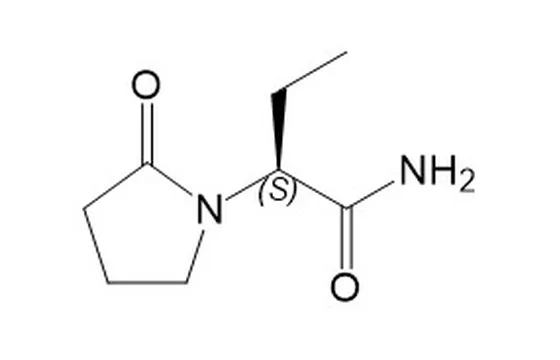
左乙拉西坦↗(CAS 102767-28-2)是 (-)-(S)-α-乙基-2-氧代-1-吡咯烷乙酰胺,分子式 C8H14N2O2,分子量 170.21,水中溶解度高达 104.0 g/100 mL。它的麻烦不在溶解性,而在两个看起来很朴素的事实:分子里只有一个手性中心,且这个分子没有发色团——没有芳环、没有共轭体系。前者决定了 (R)-对映体是必须守住的杂质,后者决定了你没法用最顺手的紫外检测去守它。
Levetiracetam↗ (CAS 102767-28-2) is (-)-(S)-α-ethyl-2-oxo-1-pyrrolidineacetamide, formula C8H14N2O2, molecular weight 170.21, with a water solubility as high as 104.0 g/100 mL. Its trouble is not solubility but two deceptively plain facts: the molecule has a single stereocentre, and it has no chromophore, no aromatic ring and no conjugated system. The first makes the (R)-enantiomer an impurity that must be held; the second means you cannot hold it with the most convenient tool, UV detection.
Note: product names shown in red (marked with ↗) are clickable. Click to open the product page for structure, CAS number, purity and lead time.
一、品种定位:一个只有酰胺的分子1. Positioning: a molecule with nothing but an amide
关键要点Key points
- 左乙拉西坦是 (-)-(S)-α-乙基-2-氧代-1-吡咯烷乙酰胺,CLevetiracetam is (-)-(S)-α-ethyl-2-oxo-1-pyrrolidineacetamide, C8H14N2O2,分子量 170.21,单一手性中心, molecular weight 170.21, with a single stereocentre[1]。
- 水中溶解度 104.0 g/100 mL,乙醇中 16.5 g/100 mL,乙腈中仅 5.7 g/100 mL——溶解度极高,样品前处理不是瓶颈,色谱负载才是Solubility is 104.0 g/100 mL in water, 16.5 g/100 mL in ethanol and only 5.7 g/100 mL in acetonitrile: extremely high, so sample preparation is not the bottleneck, column loading is[1]。
- 成人口服最大日剂量 3000 mg(1500 mg 每日两次),这个剂量把 ICH Q3A 的阈值推到「>2 g/日」一档:报告 0.03%、鉴定 0.05%、界定 0.05%The maximum adult oral daily dose is 3000 mg (1500 mg twice daily), which pushes the ICH Q3A thresholds into the >2 g/day tier: reporting 0.03%, identification 0.05%, qualification 0.05%[2]。
- 分子无芳环、无共轭体系,紫外检测只能落在末端吸收区;手性方法实际是「手性柱+非紫外检测器」的组合,检测器选择反过来限制了流动相添加剂。The molecule has no aromatic ring and no conjugated system, so UV detection can only work in the end-absorption region; the chiral method is really a chiral column paired with a non-UV detector, and that detector choice in turn constrains the mobile-phase additives.
结构上它就是一个 2-吡咯烷酮环,N 上接一条 α-乙基乙酰胺侧链。手性中心在侧链的 α 碳上,也就是乙基、酰胺羰基、氮原子与氢四个取代基围出来的那个碳。整个分子只有酰胺羰基一个可用的发色团,λmax 落在 210 nm 以下的末端吸收区,这就是后面所有分析难题的源头。Structurally it is a 2-pyrrolidinone ring with an α-ethylacetamide side chain on the nitrogen. The stereocentre is the α-carbon of the side chain, the carbon bounded by an ethyl group, the amide carbonyl, the nitrogen atom and a hydrogen. The molecule offers only the amide carbonyl as a usable chromophore, with λmax in the end-absorption region below 210 nm, which is the origin of every analytical difficulty that follows.
本目录收录左乙拉西坦相关条目 This catalogue contains 75 条,其中带编号杂质 70 个,编号覆盖 1–99;有 5 条与欧洲药典杂质字母建立了映射(EP 杂质 A、B、C、D、G),另有 1 条氘代内标。以这个品种的规模来说,EP 只挂了 5 个字母,而目录里编到 99 号——字母体系与编号体系从来不是一一对应的,这一点在第六节会具体说。 entries for levetiracetam, 70 of them numbered impurities covering numbers 1–99; 5 are mapped to European Pharmacopoeia impurity letters (EP Impurity A, B, C, D, G), and there is 1 deuterated internal standard. For a substance of this scale the EP carries only 5 letters while the catalogue numbers up to 99: letter systems and numbering systems have never corresponded one-to-one, a point taken up in section 6.
二、(R)-对映体从哪来:两条工艺路线,两个漏点2. Where the (R)-enantiomer comes from: two synthetic routes, two leak points
把对映体当成「检测问题」是很多项目的通病。它首先是工艺问题:如果你知道 (R)-体从哪一步进来,就知道该在哪一步设控制点、限度该定多严。Treating the enantiomer as a testing problem is a common failing. It is first of all a process question: knowing which step lets the (R)-form in tells you where to put the control point and how tight the limit should be.
主流路线是手性池起步。The main route starts from the chiral pool.以 (S)-2-氨基丁酰胺为起始物料,与 4-氯丁酰氯酰化得到 N-(4-氯丁酰基)-2-氨基丁酰胺,再在碱性条件下环合关环成吡咯烷酮。这条路线的手性完全依赖起始物料的光学纯度——起始物料有多少 (R)-体,成品里就有多少。第一个风险点在酰化:α-氨基酰胺在碱性水相中与酰氯反应,容易经噁唑-5(4H)-酮(azlactone)中间体消旋,pH 越高、温度越高、停留时间越长,消旋越多。第二个风险点在环合:强碱加升温,虽然 α-氢的酸性不强,但工艺开发阶段必须用对映体过量数据去确认,不能假设低温就一定安全。 Starting from (S)-2-aminobutanamide, acylation with 4-chlorobutyryl chloride gives N-(4-chlorobutyryl)-2-aminobutanamide, which cyclises to the pyrrolidinone under basic conditions. Chirality in this route depends entirely on the optical purity of the starting material: as much (R)-form as the input carries ends up in the product. The first risk point is acylation: α-aminoamides reacting with acyl chlorides in basic aqueous media racemise readily through an oxazol-5(4H)-one (azlactone) intermediate, and the more basic, the hotter and the longer the hold, the more racemisation. The second is cyclisation: strong base plus heating. The α-hydrogen is not strongly acidic, but process development must confirm with enantiomeric excess data rather than assume that low temperature is automatically safe.
另一条是拆分路线。The other is a resolution route.从消旋体(etiracetam)出发,用扁桃酸类拆分剂做非对映异构体盐或共晶拆分。公开研究报道过一条用 S-2-氯扁桃酸共晶拆分的路线:该体系对 S-构型高度专一,从消旋溶液中可得 69.1% 收率、接近 100% 对映体纯度,共晶的热力学稳定性差异约 5.5 kcal/mol Starting from the racemate (etiracetam), a mandelic-acid-type resolving agent forms diastereomeric salts or a cocrystal. Published work describes a cocrystal resolution with S-2-chloromandelic acid: the system is highly specific for the S configuration, delivering 69.1% yield and close to 100% enantiomeric purity from a racemic solution, with a thermodynamic stability difference of about 5.5 kcal/mol between the cocrystals[5]。
69.1% 的收率、接近 100% 的纯度69.1% yield, close to 100% purity——收率不到七成,说明母液里还有大量 (R)-体与未拆分消旋体;「接近 100%」也仍是「接近」。拆分路线的对映体杂质来自拆分不完全与母液夹带,控制点该设在结晶与洗涤。: a yield below seventy percent means the mother liquor still holds substantial (R)-form and unresolved racemate, and close to 100% is still close to. Enantiomeric impurities in the resolution route come from incomplete resolution and mother-liquor carry-over, so the control points belong at crystallisation and washing.
控制逻辑因此很清楚:手性池路线管起始物料与酰化条件,拆分路线管结晶与母液夹带。资料里只写「成品对映体 0.05% 以下」却说不清这两条线,一问工艺就会露底。The control logic is therefore clear: the chiral pool route governs starting material and acylation conditions, the resolution route governs crystallisation and mother-liquor carry-over. A dossier that states only that the enantiomer in the product is below 0.05% without explaining these two lines collapses at the first process question.
三、方法的第一道坎:紫外检测在这个分子上不可靠3. The first hurdle: UV detection is unreliable for this molecule
常规有关物质方法习惯用 210–220 nm 的紫外检测。左乙拉西坦在这个区间只有末端吸收,摩尔吸光系数极低,要做到 0.05% 级别的定量,进样浓度得往上堆;而它水中溶解度 1040 mg/mL,堆浓度很容易,堆上去的后果是柱超载、峰形塌陷、分离度下降Conventional related-substances methods habitually detect at 210–220 nm. Levetiracetam shows only end absorption there, with a very low molar absorptivity, so reaching 0.05% quantitation requires pushing the injected concentration up; with a water solubility of 1040 mg/mL that is easy to do, and the consequence is column overload, collapsing peak shape and falling resolution[1]。
流动相更麻烦。手性分离常用的极性有机模式(乙腈/甲醇为主,加少量酸或碱)里,甲醇在 210 nm 附近已有明显吸收;三氟乙酸、二乙胺这类添加剂在低波长同样吸光。于是出现一个典型困局:The mobile phase is worse. In the polar organic mode common for chiral separation (mainly acetonitrile and methanol with a little acid or base), methanol already absorbs noticeably near 210 nm, and additives such as trifluoroacetic acid and diethylamine absorb at low wavelength too. Hence a typical impasse: 能把对映体分开的条件,恰好是紫外最不灵敏的条件。the conditions that resolve the enantiomers are precisely the conditions where UV is least sensitive.方法设计只能按「检测器→流动相→手性柱」的顺序走,反过来做,通常得到一张分离度很好、定量限不达标的图。 Method design can only proceed detector first, then mobile phase, then chiral column; doing it the other way round usually yields a chromatogram with excellent resolution and an unacceptable limit of quantitation.
四、检测器取舍:三种方案与各自的硬约束4. Choosing a detector: three options and the hard constraint on each
方案一,LC-MS。Option one, LC-MS.灵敏度最好,能做到 ppm 级,适合把定量限压到限度以下。硬约束是流动相:磷酸盐缓冲液、高浓度离子对试剂都不能用,必须换成挥发性添加剂(甲酸铵、乙酸铵、甲酸)。而手性分离有时恰恰依赖三氟乙酸这类酸性添加剂来改善峰形——TFA 会抑制 ESI 信号,两者要折中。另一个细节是左乙拉西坦分子量只有 170,碎片少,多反应监测要选好特征离子,避免与基质背景重叠。 Best sensitivity, reaching ppm levels and suited to pushing the limit of quantitation below the limit. The hard constraint is the mobile phase: phosphate buffers and high-concentration ion-pair reagents are excluded and must be replaced by volatile additives (ammonium formate, ammonium acetate, formic acid). Yet chiral separation sometimes depends precisely on acidic additives such as trifluoroacetic acid to improve peak shape, and TFA suppresses the ESI signal, so a compromise is needed. A further detail: with a molecular weight of only 170 the molecule gives few fragments, so MRM transitions must be chosen carefully to avoid overlap with the matrix background.
方案二,CAD 或 ELSD。Option two, CAD or ELSD.不依赖发色团,是这类无紫外吸收品种的常规选择。硬约束同样是挥发性:CAD 对不挥发性盐敏感,磷酸盐会把基线抬起来;TFA 虽然挥发,但会明显压低 CAD 响应。ELSD 灵敏度通常低于 CAD,做到 0.05% 级别需要较高的进样量,又会回到柱超载的问题。 Independent of chromophore, the conventional choice for substances without UV absorption. The constraint is again volatility: CAD is sensitive to non-volatile salts and phosphate raises the baseline, while TFA, though volatile, markedly suppresses the CAD response. ELSD is usually less sensitive than CAD, so reaching 0.05% needs a higher injection load, which returns you to column overload.
方案三,柱前衍生化。Option three, pre-column derivatisation.给分子接一个有发色团(或荧光)的基团,再用常规紫外/荧光检测。好处是灵敏度与选择性都能做上去;代价是衍生化反应的手性歧视——如果衍生化试剂本身是手性的,或者反应速率对两个对映体不同,就会引入系统偏差,必须用消旋体做回收与线性验证。这条路线在方法验证上的工作量最大,但对没有质谱的实验室最现实。 Attach a chromophoric or fluorescent group to the molecule and detect by conventional UV or fluorescence. Both sensitivity and selectivity improve, at the cost of chiral discrimination in the derivatisation reaction: if the reagent itself is chiral, or the reaction rate differs between the two enantiomers, systematic bias enters, and recovery and linearity must be validated against the racemate. This route carries the heaviest validation workload but is the most realistic where no mass spectrometer is available.
三种方案没有优劣,只有匹配:有质谱就选一,只有常规检测器就选二或三。真正的判断标准是None of the three is better, only better matched: with a mass spectrometer choose the first, with only conventional detectors choose the second or third. The real criterion is 定量限能否稳定做到限度的 20–30%whether the limit of quantitation reliably reaches 20–30% of the limit,而不是「跑得出来峰」。, not whether a peak can be produced.
五、限度:3000 mg/天 把阈值推到最严一档5. Limits: 3000 mg/day pushes the thresholds to the strictest tier
限度这件事在这个品种上有一个反直觉的结论:On this substance the limit question produces a counter-intuitive conclusion: 日剂量越高,百分比阈值越严,而不是越松。the higher the daily dose, the stricter the percentage threshold, not the looser.ICH Q3A 对原料药按最大日剂量分两档,>2 g/日 一档比 ≤2 g/日 一档整整严一倍以上 ICH Q3A splits drug substances into two tiers by maximum daily dose, and the >2 g/day tier is more than twice as strict as the ≤2 g/day tier[2]。
| 框架Framework | 日剂量档Daily dose tier | 报告阈值Reporting threshold | 鉴定阈值Identification threshold | 界定阈值Qualification threshold |
|---|---|---|---|---|
| ICH Q3A 原料药ICH Q3A drug substance | ≤2 g/日≤2 g/day | 0.05% | 0.10% 或 1.0 mg/日(取低)0.10% or 1.0 mg/day (whichever is lower) | 0.15% 或 1.0 mg/日(取低)0.15% or 1.0 mg/day (whichever is lower) |
| ICH Q3A 原料药ICH Q3A drug substance | >2 g/日>2 g/day | 0.03% | 0.05% | 0.05% |
| ICH Q3B 制剂ICH Q3B drug product | >2 g/日>2 g/day | 0.05% | 0.10% | 0.15% |
表注:阈值取自 ICH Q3A(R2) 附件 1 与 Q3B(R2) 附件 1Table note: thresholds taken from ICH Q3A(R2) Annex 1 and Q3B(R2) Annex 1[2,3];3000 mg/日 落在 >2 g/日 一档。; 3000 mg/day falls in the >2 g/day tier.
按 3000 mg/日 代入,0.05% 相当于 1.5 mg/日 的绝对暴露,而这只是界定阈值的水平。再把常见做法摊开看:如果标准里把对映体限度写成 0.5% 或 1.0%,对应的绝对暴露就是 15 mg/日 与 30 mg/日——比 ICH 的界定阈值高一个数量级。这类写法不是一定不成立,但必须有历史数据或毒理资料支撑,不能因为「行业里都这么写」就照抄。At 3000 mg/day, 0.05% corresponds to an absolute exposure of 1.5 mg/day, and that is only the qualification threshold. Lay out common practice: writing the enantiomer limit as 0.5% or 1.0% corresponds to 15 mg/day and 30 mg/day, an order of magnitude above the ICH qualification threshold. Such a wording is not automatically invalid, but it must be supported by historical data or toxicology, and must not be copied merely because everyone writes it that way.
| 杂质水平Impurity level | 1000 mg/日1000 mg/day | 2000 mg/日2000 mg/day | 3000 mg/日3000 mg/day |
|---|---|---|---|
| 0.05% | 0.5 mg | 1.0 mg | 1.5 mg |
| 0.10% | 1.0 mg | 2.0 mg | 3.0 mg |
| 0.50% | 5.0 mg | 10 mg | 15 mg |
| 1.00% | 10 mg | 20 mg | 30 mg |
表注:按「日剂量 × 杂质百分比」自行折算,用于判断限度写法的量级是否合理,不构成限度建议。Table note: calculated as daily dose × impurity percentage, offered to judge whether the order of magnitude of a proposed limit is reasonable; it is not a limit recommendation.
还有一条常被误用的放宽理由:「体内会消旋,限度可以松一点」。说明书写得很清楚——左乙拉西坦及其主要代谢物One relaxation argument is frequently misused: that because the substance racemises in vivo the limit can be looser. The label states plainly that levetiracetam and its principal metabolite 没有对映体互变undergo no enantiomeric interconversion[1],体内不会替你把 (R)-体转成 (S)-体,进多少暴露多少。这条恰恰是收紧的理由。, so the body will not convert (R) to (S) on your behalf: whatever goes in is what is exposed. This is precisely a reason to tighten.
顺带算一个数量级:若把某杂质按致突变杂质对待,TTC 1.5 μg/天 折算到 3000 mg/日 是 0.5 ppm,比 0.05%(500 ppm)低三个数量级One order-of-magnitude exercise: treat an impurity as mutagenic and the TTC of 1.5 μg/day converts, at 3000 mg/day, to 0.5 ppm, three orders of magnitude below 0.05% (500 ppm)[4]。两套尺度混在一张表比大小,是这类资料最常见的硬伤。. Comparing two different scales in one table is the most common fatal flaw in such dossiers.
现实背景也值得放进来:CDE 公开受理记录里,左乙拉西坦相关受理 495 条、申报单位 182 家Some context belongs here too: public CDE acceptance records show 495 levetiracetam-related acceptances from 182 applicants[6]。仿制密度到这个程度,常规方法已很难成为差异点,真正拉开差距的是手性与痕量方法。. At this density of generics, a conventional method can hardly be a differentiator; chiral and trace-level methods are what actually separate one dossier from another.
六、对照品:EP 字母不等于结构6. Reference standards: an EP letter is not a structure
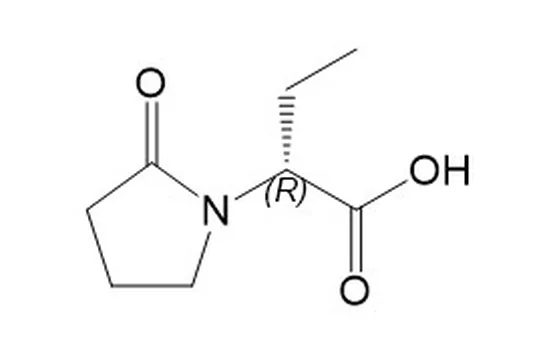
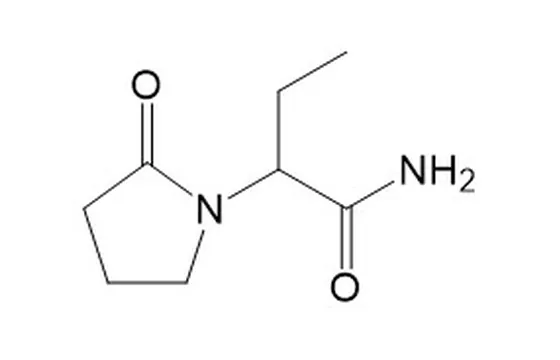
做手性方法时最容易踩的坑,是把「EP 杂质 A」当成一个唯一确定的东西。本目录里的实际情况是:同一个 EP 字母名下挂着两个不同的 CAS——一条是 CAS 67118-31-4、编为杂质 8;另一条是 CAS 103833-72-3、编为杂质 44,并在名称里明确标注 (R)-构型。两条例目都写了「EP 杂质 A」。The easiest trap in chiral work is treating "EP Impurity A" as one uniquely determined thing. In this catalogue the reality is that a single EP letter carries two different CAS numbers: one entry is CAS 67118-31-4, numbered Impurity 8; the other is CAS 103833-72-3, numbered Impurity 44, with (R) configuration stated explicitly in the name. Both entries say EP Impurity A.
这不是我们目录独有的现象。药典字母体系是「按出峰顺序或发现顺序」编号的,不同版本、不同来源的对照品供应商在转译时可能对应到不同的结构;而供应商自己的编号体系又是另一套。所以采购与建档时唯一可靠的做法是:This is not unique to our catalogue. Pharmacopoeial letter systems are assigned by elution order or order of discovery, and different editions and different reference-standard suppliers may map a letter to different structures when transcribing it, while each supplier's own numbering is yet another system. The only reliable practice when purchasing and building records is: 以结构式与 CAS 核对,字母只作辅助verify against structure and CAS, using the letter only as a guide。方法开发阶段还要用消旋体(本目录杂质 5,CAS 33996-58-6)做系统适用性,确认两个对映体的相对保留时间与分离度,再拿单个对映体对照品定位。. During method development, run system suitability with the racemate (Impurity 5 in this catalogue, CAS 33996-58-6) to establish the relative retention and resolution of the two enantiomers, then assign with a single-enantiomer standard.
另外,EP 只挂了 5 个字母(A、B、C、D、G),而目录里编号编到 99。字母体系覆盖「药典关心的那几个」,编号体系覆盖「工艺与降解可能产生的全部」;杂质谱完整性论证时两套都要列,并说明哪些有药典对照品、哪些只能自建。欧洲药典各论是字母体系的本源Note also that the EP carries only 5 letters (A, B, C, D, G) while the catalogue numbers to 99. The letter system covers what the pharmacopoeia cares about, the numbering system covers everything process and degradation might produce; an impurity-profile completeness argument must present both and state which impurities have pharmacopoeial standards and which can only be built in-house. The European Pharmacopoeia monograph is the source of the letter system[8],国内收载项目以现行版药典为准, while domestic monograph items follow the current edition of the Chinese Pharmacopoeia[7]。
七、横向对照:哪些药可以类比,哪些不能7. Cross-comparison: which drugs can be analogised and which cannot
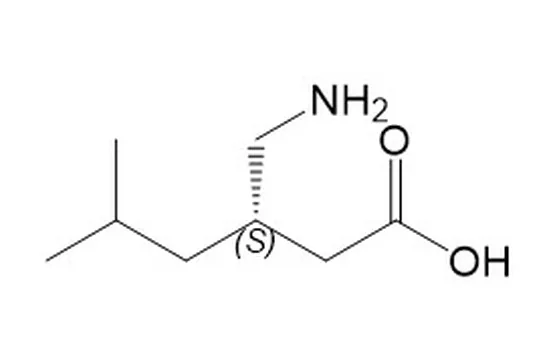
同样「无发色团+单手性中心」的品种,方法思路可以整体搬。For substances that likewise combine no chromophore with a single stereocentre, the whole methodological approach transfers. 普瑞巴林Pregabalin 是 3-异丁基 GABA,同样只有羧基与氨基、没有芳环; is 3-isobutyl GABA, likewise carrying only a carboxyl and an amino group with no aromatic ring; 布瓦西坦Brivaracetam 是左乙拉西坦类似物,吡咯烷酮骨架相同、取代基不同,无发色团这一点完全一致。三者方法框架可互相借用,差异只在色谱条件与前处理。 is a levetiracetam analogue with the same pyrrolidinone skeleton and different substituents, identical in having no chromophore. The three can borrow each other's method frameworks, differing only in chromatographic conditions and sample preparation.
不能类比的有两类。一类是没有手性中心的:Two classes cannot be analogised. One has no stereocentre: 吡拉西坦Piracetam 是左乙拉西坦去掉乙基的母体,压根没有手性中心,不存在对映体杂质问题。第二类是有发色团的: is the parent of levetiracetam with the ethyl group removed, has no stereocentre at all and poses no enantiomeric impurity question. The second class has chromophores: 硫酸氢氯吡格雷Clopidogrel bisulfate 有噻吩并吡啶环、 carries a thienopyridine ring and 盐酸莫西沙星Moxifloxacin hydrochloride 有喹诺酮共轭体系,两者的手性方法可以直接用紫外检测,灵敏度足够,添加剂的选择空间也大得多——它们的经验反过来不能证明「无发色团品种也能用紫外」。 carries a quinolone conjugated system; both can be run with UV detection in their chiral methods, sensitivity is adequate and the choice of additives far wider. Their experience does not conversely prove that chromophore-free substances can use UV.
一句话:In one sentence: 发色团决定检测器,手性中心数量决定分离难度,两者要分开判断。the chromophore determines the detector and the number of stereocentres determines separation difficulty; the two must be judged separately.
八、五个常见误区8. Five common misconceptions
- 「有手性柱就能测对映体。」"A chiral column is all you need to measure the enantiomer."分离与定量是两件事。没有发色团的分子,手性柱只解决「分得开」,解决不了「测得准」;检测器与流动相的匹配才是关键。 Separation and quantitation are two different things. For a chromophore-free molecule the chiral column only achieves resolution, not accurate measurement; matching detector to mobile phase is what matters.
- 「进样浓度越高,灵敏度越好。」"The higher the injected concentration, the better the sensitivity."这个分子水中溶解度 1040 mg/mL,堆浓度很容易,但柱超载会让峰形塌陷、分离度下降,反而做不出 0.05% 的定量限。 This molecule dissolves to 1040 mg/mL in water, so loading it up is easy, but column overload collapses peak shape and lowers resolution, making a 0.05% limit of quantitation unreachable.
- 「日剂量大,限度就宽。」"A large daily dose means a loose limit."ICH Q3A 是反过来的:>2 g/日 一档报告阈值 0.03%、鉴定与界定 0.05%,比低剂量档更严 ICH Q3A runs the other way: the >2 g/day tier has a reporting threshold of 0.03% and identification and qualification thresholds of 0.05%, stricter than the low-dose tier[2]。
- 「体内会消旋,所以对映体限度可以放宽。」"It racemises in vivo, so the enantiomer limit can be relaxed."说明书明确写了左乙拉西坦及其主要代谢物没有对映体互变 The label states explicitly that levetiracetam and its principal metabolite undergo no enantiomeric interconversion[1],进多少暴露多少,这条只能用来收紧。, so whatever goes in is what is exposed; this can only be used to tighten.
- 「EP 杂质 A 只有一个 CAS。」"EP Impurity A has only one CAS number."本目录里同一个字母对应两个 CAS,一条注明 (R)-构型、一条没有。建档必须按结构式核对,字母只作辅助。 In this catalogue one letter maps to two CAS numbers, one stating (R) configuration and one not. Records must be verified against structure, with the letter only as a guide.
本目录收录左乙拉西坦 This catalogue holds levetiracetam 75 条,覆盖 70 个编号杂质(1–99)、5 条 EP 字母映射条目(A、B、C、D、G)、消旋体(杂质 5,CAS 33996-58-6)与 1 条氘代内标,可用于手性方法开发、系统适用性验证与稳定性考察: entries covering 70 numbered impurities (1–99), 5 letter-mapped entries (A, B, C, D, G), the racemate (Impurity 5, CAS 33996-58-6) and 1 deuterated internal standard, supporting chiral method development, system suitability verification and stability testing: → 查看左乙拉西坦全部条目→ View all levetiracetam entries。同为无发色团、单手性中心的 . For comparison among chromophore-free, single-stereocentre substances: 普瑞巴林Pregabalin、布瓦西坦Brivaracetam 可作方法框架的横向参照; can serve as a cross-reference for the method framework; 吡拉西坦Piracetam 无手性中心,不适用本篇结论。 has no stereocentre, so the conclusions here do not apply to it.
常见问题(FAQ)Frequently asked questions (FAQ)
左乙拉西坦的手性方法为什么不能直接用紫外检测?Why can't levetiracetam's chiral method use UV detection directly?
(R)-对映体是从哪一步进来的?At which step does the (R)-enantiomer enter?
为什么这个品种的阈值比普通品种严?Why are the thresholds for this substance stricter than usual?
限度写成 0.5% 或 1.0% 有问题吗?Is writing the limit as 0.5% or 1.0% a problem?
「体内会消旋」能作为放宽限度的理由吗?Can in vivo racemisation justify a looser limit?
EP 杂质 A 到底对应哪个 CAS?Which CAS number does EP Impurity A actually correspond to?
系统适用性为什么建议用消旋体?Why is the racemate recommended for system suitability?
柱前衍生化做手性定量要注意什么?What must be watched in chiral quantitation by pre-column derivatisation?
相关品种与对照品Related drug substances and reference standards
- 左乙拉西坦 / LevetiracetamLevetiracetam(共 74 个杂质/衍生物条目)(74 impurity and derivative entries in total)
- 普瑞巴林 / PregabalinPregabalin(共 108 个杂质/衍生物条目)(108 impurity and derivative entries in total)
- 布瓦西坦 / BrivaracetamBrivaracetam(共 98 个杂质/衍生物条目)(98 impurity and derivative entries in total)
- 吡拉西坦 / PiracetamPiracetam(共 41 个杂质/衍生物条目)(41 impurity and derivative entries in total)
- 硫酸氢氯吡格雷 / Clopidogrel BisulfateClopidogrel Bisulfate(共 111 个杂质/衍生物条目)(111 impurity and derivative entries in total)
- 盐酸莫西沙星 / Moxifloxacin HydrochlorideMoxifloxacin Hydrochloride(共 177 个杂质/衍生物条目)(177 impurity and derivative entries in total)
参考资料与来源References and sources
- 美国国家医学图书馆 DailyMed,US National Library of Medicine, DailyMed, KEPPRA(levetiracetam)片剂与口服液说明书:11 描述(化学名、分子式 C8H14N2O2、分子量 170.21、水中溶解度 104.0 g/100 mL 及各溶剂溶解度)、2.2 成人最大日剂量 3000 mg、12.3 药代动力学(无对映体互变)、16 处方组成KEPPRA (levetiracetam) tablets and oral solution prescribing information: section 11 Description (chemical name, formula C8H14N2O2, molecular weight 170.21, solubility 104.0 g/100 mL in water and in other solvents), section 2.2 maximum adult daily dose 3000 mg, section 12.3 pharmacokinetics (no enantiomeric interconversion), section 16 formulation,访问日期 2026-10-22, accessed 2026-10-22
- ICH,ICH Q3A(R2)《新原料药中的杂质》附件 1 阈值表(≤2 g/日 与 >2 g/日 两档)ICH Q3A(R2) Impurities in New Drug Substances, Annex 1 reporting, identification and qualification thresholds (two tiers: ≤2 g/day and >2 g/day),访问日期 2026-10-22, accessed 2026-10-22
- ICH,ICH Q3B(R2)《新制剂中的杂质》附件 1 降解产物阈值表ICH Q3B(R2) Impurities in New Drug Products, Annex 1 degradation product thresholds,访问日期 2026-10-22, accessed 2026-10-22
- ICH,ICH M7《评估和控制药物中 DNA 反应性(致突变)杂质以限制潜在致癌风险》(TTC 1.5 μg/天)ICH M7 Assessment and Control of DNA Reactive (Mutagenic) Impurities in Pharmaceuticals to Limit Potential Carcinogenic Risk (TTC 1.5 μg/day),访问日期 2026-10-22, accessed 2026-10-22
- ACS Omega(2022 年),ACS Omega (2022), Nulek T. 等《Separation of Etiracetam Enantiomers Using Enantiospecific Cocrystallization with 2-Chloromandelic Acid》:S-2-氯扁桃酸与 S-etiracetam 共晶拆分,收率 69.1%、对映体纯度接近 100%,共晶热力学稳定性差异约 5.5 kcal/mol(PMC9202017)Nulek T. et al., "Separation of Etiracetam Enantiomers Using Enantiospecific Cocrystallization with 2-Chloromandelic Acid": cocrystal resolution of S-etiracetam with S-2-chloromandelic acid, 69.1% yield, enantiomeric purity close to 100%, thermodynamic stability difference between cocrystals about 5.5 kcal/mol (PMC9202017),访问日期 2026-10-22, accessed 2026-10-22
- 国家药品监督管理局药品审评中心(CDE),Center for Drug Evaluation (CDE), NMPA, 受理品种信息公开(左乙拉西坦,抓取时间 2026-10-22)public acceptance information (levetiracetam, retrieved 2026-10-22),访问日期 2026-10-22, accessed 2026-10-22
- 中国药典委员会,Chinese Pharmacopoeia Commission, 《中华人民共和国药典》四部通则与相关品种正文Pharmacopoeia of the People's Republic of China, Part IV general chapters and the relevant monographs,访问日期 2026-10-22, accessed 2026-10-22
- 欧洲药品质量管理局(EDQM)European Pharmacopoeia 左乙拉西坦各论与手性分离通用章节(站点对本机不可达,仅列名称)European Directorate for the Quality of Medicines (EDQM), European Pharmacopoeia monograph on Levetiracetam and the general chapter on chiral separation (site unreachable from this workstation; name listed only)
说明:本文为 CATO 佳途技术团队原创整理,其中引用的法规、药典与公开文献内容已在上方标注来源,仅用于技术交流与检索参考,不构成质量标准或法规建议;具体品种的检测方法、限值与申报要求,请以现行法规、药典正文及官方发布为准。Note: this article was compiled by the CATO technical team. Regulatory, pharmacopoeial and public literature content cited has been sourced above and is provided for technical exchange and search reference only; it does not constitute a quality specification or regulatory advice. For the test methods, limits and filing requirements of any specific product, the current regulations, pharmacopoeial monographs and official publications prevail.
本站产品信息仅供科研检索与选型参考,不作为质量标准依据;技术参数、纯度与结构确证以随货 COA 及我方书面确认为准。本文涉及的产品均为科研用途,不用于人体或动物诊断、治疗。Product information on this site is for scientific search and selection reference only and is not a quality specification; technical data, purity and structural confirmation are governed by the shipped COA and our written confirmation. All products mentioned are for research use only and are not intended for human or animal diagnosis or treatment.