硝苯地平的光稳定性:同一个邻硝基,把光解拆成了三条路Photostability of Nifedipine: One Ortho-Nitro Group Splits Photolysis Into Three Pathways
硝苯地平↗的光解是药剂学教科书里的老例子,但教科书只讲前半段:1,4-二氢吡啶环氧化成吡啶环,活性归零。真按这个理解去设计光稳定性试验和方法,会漏掉一整条支路——4-位那个邻硝基自己也会光化学反应,产物不是吡啶衍生物,而是亚硝基、氧化偶氮和内酰胺。做这个品种的强制降解,如果只盯着主峰前面那个芳香化产物,杂质谱是不完整的。
The photolysis of nifedipine↗ is an old example from pharmaceutics textbooks, but textbooks tell only the first half: the 1,4-dihydropyridine ring is oxidised to a pyridine ring and activity falls to zero. Design a photostability study and method on that understanding and an entire branch is missed: the ortho-nitro group at position 4 is itself photochemically active, and its products are not pyridine derivatives but nitroso, azoxy and lactam species. Run forced degradation on this substance while watching only the aromatisation product ahead of the main peak and the impurity profile is incomplete.
Note: product names shown in red (marked with ↗) are clickable. Click to open the product page for structure, CAS number, purity and lead time.
一、品种定位:光敏性不在取代基上,在骨架里1. Positioning: the photosensitivity is in the skeleton, not the substituents
关键要点Key points
- 硝苯地平分子式 CNifedipine has formula C17H18N2O6,相对分子质量 346.34,1969 年合成、1981 年获 FDA 批准,是第一个上市的 1,4-二氢吡啶类钙通道阻滞剂, relative molecular mass 346.34, synthesised in 1969 and FDA-approved in 1981 as the first marketed 1,4-dihydropyridine calcium channel blocker[1]。
- 光解的第一条通道是二氢吡啶环芳香化,这是所有二氢吡啶类药物共有的主过程;但硝苯地平的 4-位苯环带邻硝基,额外开启一条以亚硝基为起点的支路The first photolysis channel is aromatisation of the dihydropyridine ring, a main process shared by all dihydropyridines; but the 4-phenyl ring of nifedipine carries an ortho-nitro group, which opens an additional branch starting from a nitroso species[2]。
- 室内光照射 30 天,研碎的片剂可同时检出六个光解组分:亚硝基衍生物为主,另有顺式与反式氧化偶氮、N,N'-二氧化物、内酰胺和硝基衍生物After 30 days under indoor light, ground tablets yield six photodegradation components at once: mainly the nitroso derivative, plus cis- and trans-azoxy compounds, the N,N'-dioxide, a lactam and a nitro-containing derivative[2]。
- 本目录收录硝苯地平相关条目 47 条(2026-11-03 实抓),EP 杂质 A–D 分别对应编号 1、2、4、5,编号覆盖到 63 但条目只到 46 个杂质,中间缺 17 个号。This catalogue holds 47 nifedipine entries (retrieved 2026-11-03); EP Impurity A–D correspond to numbers 1, 2, 4 and 5, and numbering runs to 63 while only 46 impurities exist, leaving 17 numbers missing.
把结构拆开看:一个 1,4-二氢吡啶环,2,6-位两个甲基,3,5-位两个甲酸甲酯,4-位挂一个 2-硝基苯基。环上的 N-H 是它区别于吡啶的地方,也是吸收紫外、被激发、失去两个氢的全部原因;4-位那个硝基,位置恰好贴着环的 4-位氢。Take the structure apart: a 1,4-dihydropyridine ring, two methyls at 2,6, two methyl carboxylates at 3,5, and a 2-nitrophenyl group at 4. The ring N-H is what distinguishes it from pyridine and is the whole reason it absorbs UV, gets excited and loses two hydrogens; the nitro group at position 4 sits right against the 4-hydrogen of the ring.
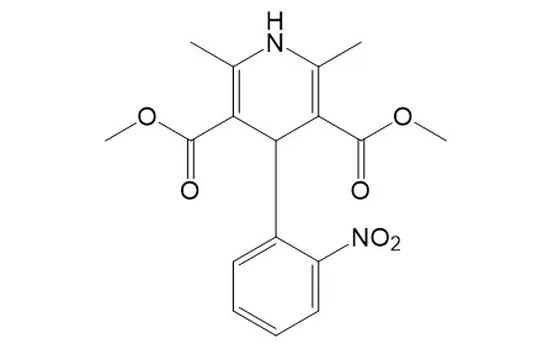
剂型分布本身是旁证:二氢吡啶类在水溶液里降解快,市面几乎都是固体制剂The dosage-form landscape is itself corroborating evidence: dihydropyridines degrade quickly in aqueous solution, so nearly all commercial products are solid[1]。硝苯地平常规日剂量 30–60 mg,控释制剂一次 30 mg 或 60 mg。剂量不算低,1.0 mg/日的鉴定阈值上限换算成百分比在 3% 以上,实际起作用的永远是 0.10%. The usual nifedipine dose is 30–60 mg daily, or 30 mg to 60 mg per dose for controlled-release products. The dose is not low: converting the 1.0 mg/day identification ceiling into a percentage gives more than 3%, so the operative threshold is always 0.10%[3]。
本目录的编号体系值得提前说一句。47 条里母体之外 46 条杂质,编号从 1 排到 63,缺 17 个号——不是收录不全,而是供应商体系里有些号只对特定客户开放。EP 四个字母杂质都落在编号 1、2、4、5 上,做方法开发时先按字母定位 A–D,再用编号杂质补强制降解里的未知峰,比反过来省事。原料与片剂、缓释片在《中国药典》现行版中均有收载One word on the numbering in this catalogue. Of the 47 entries, 46 are impurities besides the parent, numbered 1 through 63 with 17 missing, which is not incomplete coverage but a supplier system in which some numbers are released only to specific customers. The four EP letter impurities land on numbers 1, 2, 4 and 5, so during method development it is easier to locate A–D by letter first and then fill in forced-degradation unknowns with the numbered impurities, rather than the reverse. The drug substance, tablets and extended-release tablets are all monographed in the current Chinese Pharmacopoeia[4],各论方法与 EP 并不逐条对应,双报项目要准备两套数据。, and the monograph methods do not correspond item by item with the EP, so dual-filing projects need two data sets.
二、芳香化只是第一条:另外两条通道各走各的2. Aromatisation is only the first channel; the other two run their own course
二氢吡啶环的芳香化是主通道,机理没有争议:激发态把 N-H 的质子转移出去,分子失去两个氢,二氢吡啶变成吡啶,共轭体系从交叉共轭变成完整芳香共轭,钙通道活性随之消失Aromatisation of the dihydropyridine ring is the main channel and its mechanism is not disputed: the excited state transfers the N-H proton away, the molecule loses two hydrogens, the dihydropyridine becomes a pyridine, the conjugated system turns from cross-conjugated into fully aromatic, and calcium channel activity disappears with it[1]。这一步的产物就是 EP 杂质 A,2,6-二甲基-4-(2-硝基苯基)吡啶-3,5-二甲酸二甲酯。. The product of this step is EP Impurity A, dimethyl 2,6-dimethyl-4-(2-nitrophenyl)pyridine-3,5-dicarboxylate.
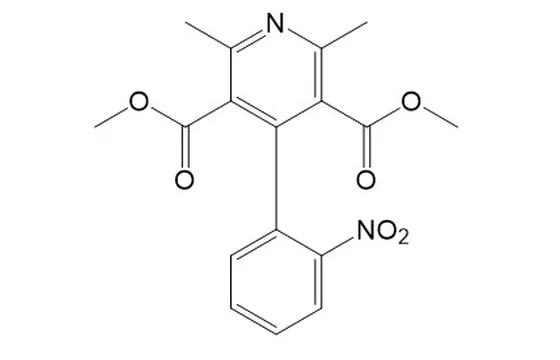
问题在于芳香化之后故事没结束。1994 年的研究把医院分装、研碎的片剂在室内光下放 30 天,用制备薄层逐一分出六个组分:主产物是亚硝基衍生物,另有顺式氧化偶氮、反式氧化偶氮、N,N'-二氧化物、内酰胺和一个硝基保留的衍生物;后四个含氮偶联结构被证明由亚硝基经光化学缩合生成The problem is that the story does not end with aromatisation. A 1994 study left hospital-dispensed, ground tablets under indoor light for 30 days and separated six components by preparative thin layer chromatography: the main product was the nitroso derivative, alongside cis-azoxy, trans-azoxy, the N,N'-dioxide, a lactam and a derivative retaining the nitro group; the last four nitrogen-coupled structures were shown to arise from photochemical condensation of the nitroso species[2]。
这条支路不是痕量:亚硝基衍生物是六个组分中的主产物,特定光照下其量可能超过芳香化产物。只按 EP 杂质 A 做归属,会把图谱上最大的未知峰留成空白。This branch is not trace-level: the nitroso derivative is the main product among the six, and under certain illumination its amount can exceed that of the aromatisation product. Assigning by EP Impurity A alone leaves the largest unknown peak on the chromatogram blank.
还有两条与光无关、却会同时出现在同一张图谱上的通道。其一是酯水解:两个甲酸甲酯先掉一个生成单甲酯,即 EP 杂质 D,继续水解得到二酸。其二是位置异构体:硝基跑到间位,得到 EP 杂质 C。位置异构体在 Hantzsch 缩合条件下不会自己迁移,只能来自起始物料 2-硝基苯甲醛夹带的间硝基杂质——杂质 C 偏高,先查起始物料,不怀疑反应条件。Two further channels are unrelated to light yet appear on the same chromatogram. The first is ester hydrolysis: one of the two methyl esters goes first to give the monoester, EP Impurity D, and further hydrolysis gives the diacid. The second is the regioisomer: the nitro group sitting meta gives EP Impurity C. A regioisomer cannot migrate by itself under Hantzsch condensation conditions and can only come from meta-nitro impurity carried in by the starting material 2-nitrobenzaldehyde, so when Impurity C runs high, check the starting material first rather than suspecting the reaction conditions.
三、为什么偏偏是邻硝基:几何决定通道3. Why the ortho-nitro group specifically: geometry decides the channel
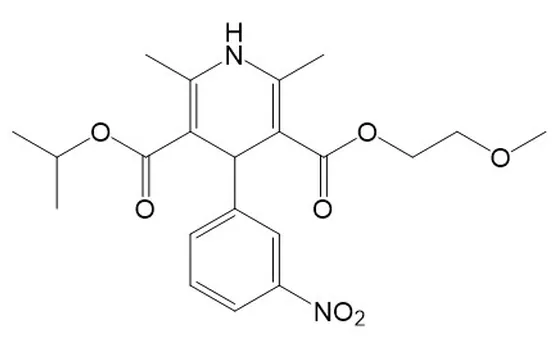
同族药物的差别一目了然:硝苯地平是 2-硝基,The difference across the family is plain: nifedipine is 2-nitro, 尼群地平nitrendipine、尼莫地平nimodipine、盐酸尼卡地平nicardipine hydrochloride都是 3-硝基, are all 3-nitro, 氨氯地平amlodipine是 2-氯, is 2-chloro, 非洛地平felodipine是 2,3-二氯。 is 2,3-dichloro.
邻位的意义是几何的。硝基与 4-位氢、与二氢吡啶环的 π 体系在空间上贴得很近,激发态下分子内过程在极短距离内完成,硝基被还原到亚硝基,亚硝基再与另一分子的烯胺部分缩合,长出氧化偶氮与 N,N'-二氧化物这类双分子结构The significance of the ortho position is geometric. The nitro group sits very close in space to the 4-hydrogen and to the π system of the dihydropyridine ring, so intramolecular processes complete over extremely short distances in the excited state: the nitro group is reduced to nitroso, and the nitroso then condenses with the enamine portion of another molecule, growing bimolecular structures such as the azoxy compounds and the N,N'-dioxide[2]。间硝基把硝基推到苯环另一侧,距离拉开,分子内通道被切断,光解只能回到芳香化主线。所以. A meta-nitro group pushes the nitro to the other side of the benzene ring, the distance opens up, the intramolecular channel is cut and photolysis can only fall back on the main aromatisation line. So 尼群地平nitrendipine↗、尼莫地平nimodipine↗的光解产物清单短得多,把它们的解释搬过来是错的。 have far shorter photodegradant lists, and transplanting their explanation is wrong.
但没有硝基也不等于光稳定。But having no nitro group does not mean photostable. 非洛地平felodipine↗是 2,3-二氯苯基,同样怕紫外;有研究把它的固体分散体粉末与混悬液放在紫外下照射,粉末中非洛地平残留只有 32.76%,混悬液只剩 0.79%,并检出两个光解产物 carries a 2,3-dichlorophenyl group and is likewise UV-sensitive; one study irradiated its solid dispersion powder and suspension under UV and found only 32.76% felodipine remaining in the powder and 0.79% in the suspension, with two photodegradants detected[5]。所以「邻硝基才有问题」的正确表述是:邻硝基多开一条支路、多出一批结构不同的产物,而不是「没有邻硝基就不用做光稳定性」。. The correct way to put "only ortho-nitro is a problem" is therefore that an ortho-nitro group opens an extra branch and produces a set of structurally different products, not that substances without one need no photostability testing.
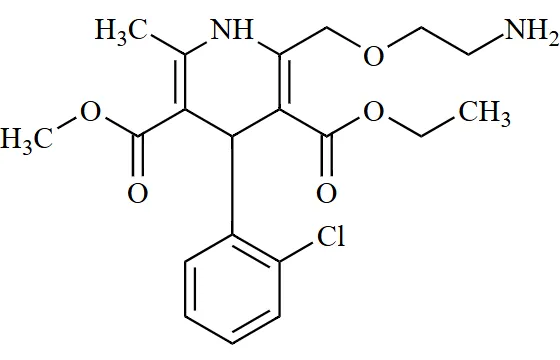
氨氯地平amlodipine↗还有一层容易被忽略的差异:它的 3,5-位酯不对称,一个是乙酯一个是甲酯。水解时可能生成两种不同的单酯,结构互为位置异构,色谱行为接近但不等同。拿硝苯地平「只有一种单酯」的经验去套氨氯地平的水解杂质谱,会少算一个组分。 One further difference is easily missed: its 3,5-esters are asymmetric, one ethyl and one methyl. Hydrolysis can give two different monoesters that are regioisomers of each other, close but not identical in chromatographic behaviour. Applying nifedipine's one-monoester experience to amlodipine's hydrolysis profile misses a component.
四、ICH Q1B 的两个选项,在这个品种上并不等价4. The two ICH Q1B options are not equivalent for this substance
光稳定性照 ICH Q1B 做没有选择余地,能选的是用哪个光照选项。对邻硝基品种,这个选择不是程序问题。There is no choice about doing photostability per ICH Q1B; the choice is which illumination option to use. For an ortho-nitro substance that choice is not procedural.
| 项目Item | 选项一Option 1 | 选项二Option 2 |
|---|---|---|
| 光源Light source | D65 或 ID65 日光灯,模拟室内日光D65 or ID65 daylight lamp, simulating indoor daylight | 冷白荧光灯Cool white fluorescent lamp |
| 可见光剂量Visible light dose | 不低于 1.2×10Not less than 1.2×10⁶ lux·h | 不低于 6×10Not less than 6×10⁶ lux·h |
| 近紫外分量Near-UV component | 不低于 200 W·h/mNot less than 200 W·h/m2,单独设定, specified separately | 不单独设定Not specified separately |
| 对邻硝基品种For an ortho-nitro substance | 覆盖 340 nm 附近吸收,产物谱完整Covers absorption near 340 nm and gives a complete product profile | 能量集中在可见区,可能低估光解程度Energy concentrated in the visible region, possibly underestimating photolysis |
表注:条件依据 ICH Q1B 正文Table note: conditions follow the ICH Q1B text[6];最后一行判断来自本品种吸收特征,不是指南原文。; the last row is a judgement from this substance's absorption characteristics, not the guideline text.
硝苯地平的紫外最大吸收在 340 nm 附近,来自二氢吡啶 N-H 的 n→π* 跃迁,落在 UVA 段。选项一只要求 1.2×10Nifedipine's UV maximum lies near 340 nm, arising from the n→π* transition of the dihydropyridine N-H and falling in the UVA band. Option 1 requires only 1.2×10⁶ lux·h 可见光,却明确规定了 200 W·h/m lux·h of visible light yet specifies 200 W·h/m2 近紫外剂量,正好打在它的吸收带上;选项二把总照度提到 6×10 of near-UV, landing exactly on its absorption band; Option 2 raises total illuminance to 6×10⁶ lux·h,不单独约束紫外分量 lux·h without separately constraining the UV component[6]。对一个靠 UVA 触发的分子,用选项二做出来的「通过」说服力有限。. For a molecule triggered by UVA, a pass obtained under Option 2 carries limited weight.
更实际的问题是包装。普通钠钙玻璃能挡住大部分 UVB,对 UVA 基本透明,棕色瓶的遮光能力也集中在短波段。若把样品装在棕色安瓿里,而市售包装是铝塑泡罩加遮光包衣,两者没有可比性。要用拟上市包装,或至少同时给出裸片与包装件数据。The more practical problem is packaging. Ordinary soda-lime glass blocks most UVB but is essentially transparent to UVA, and an amber bottle's protection is concentrated in the short wavelengths. Putting the sample in an amber ampoule while the commercial pack is an aluminium blister with a light-blocking coating makes the two incomparable. Use the proposed commercial pack, or at least present bare-tablet and packaged data together.
五、分析方法:三个藏在波长里的坑5. Analytical method: three traps hidden in the wavelength
第一个坑是检测波长。二氢吡啶在 340 nm 附近的强吸收,芳香化之后就不存在了:吡啶环没有这条 n→π* 跃迁,EP 杂质 A 在该波长上的摩尔吸光系数掉到母体的零头。用母体做自身对照在 340 nm 上积分杂质 A,量会系统性偏低,且偏低程度随仪器带宽与流动相比例变化。The first trap is the detection wavelength. The strong dihydropyridine absorption near 340 nm ceases to exist after aromatisation: a pyridine ring has no such n→π* transition, and the molar absorptivity of EP Impurity A at that wavelength falls to a fraction of the parent's. Integrating Impurity A at 340 nm against the parent as self-reference systematically underestimates it, and the size of that underestimate varies with instrument bandwidth and mobile-phase ratio.
可行的路只有两条:买到杂质 A 对照品,实测它在方法波长下的响应因子;或把检测波长下移到 235 nm 附近的共轭吸收区,让母体与杂质落在同一量级,代价是溶剂末端吸收的基线噪声。0.10% 的鉴定阈值,用 340 nm 加校正因子勉强够,用 235 nm 则对色谱柱与流动相批次稳定性要求更高。Only two routes work: obtain an Impurity A reference standard and measure its response factor at the method wavelength, or move detection down to the conjugated absorption region near 235 nm so that parent and impurity fall in the same range, at the cost of baseline noise from solvent end absorption. For a 0.10% identification threshold, 340 nm with a correction factor is barely adequate, while 235 nm places higher demands on column and mobile-phase batch consistency.
第二个坑在样品处理。硝苯地平在甲醇、乙腈溶液里的光解速度远高于固体,配好的样品在台面上放两小时就会多峰。强制降解的光解样品、含量样品、有关物质样品要分开配制,全程黄光下操作,棕色容量瓶加锡纸包裹,配好即进样。否则测到的不是样品的光稳定性,是操作台的光照强度。The second trap is sample handling. Nifedipine photolyses far faster in methanol or acetonitrile solution than as a solid, and a prepared sample left on the bench for two hours gains extra peaks. Prepare photodegradation, assay and related-substance samples separately, work under yellow light throughout, wrap amber volumetric flasks in foil and inject immediately after preparation. Otherwise what you measure is the bench illuminance, not the sample's photostability.
第三个坑是质量平衡。芳香化产物在 340 nm 不响应,亚硝基与氧化偶氮类的吸收也不一样,单波长下「降解产物总和 + 剩余含量」通常对不上 100%。这个缺口不要去凑数,它恰恰是判断方法漏检的线索:缺口大且随光照时间增长,说明有一批产物没被积分进去。The third trap is mass balance. Aromatisation products do not respond at 340 nm and the nitroso and azoxy species absorb differently, so at a single wavelength the sum of degradants plus remaining content usually does not reach 100%. Do not force the gap to close; it is precisely the clue that the method is missing analytes: a large gap that grows with illumination time means a group of products is not being integrated.
分离上还有一个与结构相关的判断。氧化偶氮与 N,N'-二氧化物分子量翻倍、疏水性强,在梯度后段出峰;单甲酯与二酸极性大,跑在前段甚至接近死体积。一张梯度同时覆盖两端往往两头都不好看,拆成两个方法更稳:宽梯度看全景,低 pH 条件专测二酸。There is one more structure-related decision on separation. The azoxy compounds and the N,N'-dioxide double in molecular weight and are strongly hydrophobic, eluting late in the gradient; the monoester and diacid are highly polar and run early, close to the dead volume. One gradient covering both ends usually performs poorly at both, and splitting into two methods is more robust: a wide gradient for the overview and a low-pH condition dedicated to the diacid.
六、申报资料里最容易被追问的四个点6. The four points in a dossier most likely to be challenged
硝苯地平是老品种,申报量却一点不老。截至 2026-11-03,CDE 公开受理记录里硝苯地平相关条目 269 条、涉及申报单位 151 家,其中仿制 122 条、补充申请 103 条Nifedipine is an old substance whose filing volume is anything but old. As of 2026-11-03 public CDE acceptance records show 269 nifedipine-related entries from 151 applicants, of which 122 are generics and 103 supplementary applications[7]。补充申请占近四成,说明变更频繁——每次变更,光稳定性都要重新说一遍。. Supplementary applications account for nearly forty percent, indicating frequent changes, and every change requires the photostability case to be made again.
第一问是光照条件的选择依据。只写「按选项二执行」在当前审评尺度下偏薄,要说明它为什么能覆盖本品种的实际光解风险。说不清就换选项一,成本只是多一组紫外剂量数据。The first question is the basis for choosing illumination conditions. Writing only that Option 2 was followed is thin by current review standards; you must explain why it covers the substance's actual photolysis risk. If that cannot be explained, switch to Option 1, which costs only one extra set of UV dose data.
第二问是遮光措施的论证。薄膜包衣加二氧化钛是常规操作,但二氧化钛遮光靠散射与吸收,它本身又是光催化剂,在紫外下能产生活性氧。对一个降解通道本来就是氧化的品种,提高增重并不等于更安全,要给出包衣片与裸片的光解速率对比,以及氧化铁黄、氧化铁红的配比依据。包衣片在 340 nm 附近的透过率曲线,比任何增重百分比都有说服力。The second question is the light-protection argument. A film coat with titanium dioxide is routine, but titanium dioxide blocks light by scattering and absorption and is itself a photocatalyst that generates reactive oxygen under UV. For a substance whose degradation channel is already oxidation, a higher weight gain does not equal greater safety: present photolysis rates for coated versus bare tablets and the basis for the yellow and red iron oxide ratios. A transmittance curve for the coated tablet near 340 nm is more persuasive than any weight-gain percentage.
第三问是降解产物的归属完整性。芳香化产物、亚硝基、氧化偶氮、单酯、位置异构体,五类结构要在图谱上逐一定位:有对照品的用对照品,没有的至少给出 LC-MS 分子量与碎片证据。有个概念必须说清:C-亚硝基不是 N-亚硝胺,不适用按 ng/天计的专属限度;但也不是可以一笔带过的普通降解杂质,需要单独的毒理界定结论。混为一谈,答复必被打回。The third question is completeness of degradant assignment. Five structural classes, the aromatisation product, the nitroso, the azoxy compounds, the monoester and the regioisomer, must each be located on the chromatogram: with reference standards where available, and at minimum with LC-MS molecular weight and fragment evidence where not. One concept must be stated clearly: a C-nitroso is not an N-nitrosamine and the dedicated ng/day limits do not apply; but neither is it an ordinary degradant to wave through, and it needs its own toxicological qualification conclusion. Conflating the two gets the response rejected.
第四问是稳定性趋势里的单酯。EP 杂质 D 随贮温与湿度缓慢增长,长期试验 24 个月的曲线要能看出趋势;如果 6 个月就接近 0.10%,说明水分控制或包装阻湿不够,改包装比改处方有效。The fourth question is the monoester in the stability trend. EP Impurity D grows slowly with storage temperature and humidity, and the 24-month long-term curve must show a trend; if it approaches 0.10% by six months, moisture control or package moisture barrier is inadequate, and changing the pack is more effective than changing the formulation.
七、五个常见误区7. Five common misconceptions
误区一:避光就是换个棕色瓶。Misconception 1: light protection means switching to an amber bottle.钠钙玻璃对 UVA 近乎透明,而硝苯地平的敏感区就在 UVA。真正起作用的是包装的铝箔层与包衣里的遮光色素。 Soda-lime glass is nearly transparent to UVA, and nifedipine's sensitive region is precisely UVA. What actually works is the aluminium layer of the pack and the opacifying pigment in the coating.
误区二:包衣加了二氧化钛就万事大吉。Misconception 2: adding titanium dioxide to the coating solves everything.二氧化钛遮光有效,但它同时是光催化剂。要证明的是「光解速率下降」,不是「配方里含有遮光剂」。 Titanium dioxide blocks light effectively but is also a photocatalyst. What must be proven is a reduced photolysis rate, not that an opacifier is present in the formula.
误区三:用 340 nm 单波长算杂质 A。Misconception 3: quantify Impurity A at 340 nm alone.芳香化后这条吸收带消失,算出来的量系统性偏低,且偏低程度随仪器变化,加样回收也掩盖不了。 That absorption band disappears on aromatisation, the result is systematically low, the degree of underestimation shifts with the instrument, and spike recovery will not conceal it.
误区四:强制降解只做溶液光解。Misconception 4: cover photodegradation with solution photolysis only.溶液里光解快、产物多,看着漂亮,但固体状态下的晶格堆积、辅料遮光、局部水分都会改变通道。片剂必须做固体光照,且用拟上市包装。 Solution photolysis is fast and gives many products, which looks impressive, but lattice packing in the solid state, excipient light shielding and local moisture all change the channel. Tablets require solid-state illumination in the proposed commercial pack.
误区五:把位置异构体当工艺问题、单酯当稳定性问题,两不相干。Misconception 5: treat the regioisomer as a process issue and the monoester as a stability issue, as if unrelated.它们在同一条工艺-贮存链上:位置异构体来自起始物料,靠供应商审计解决;单酯来自处方水分与贮温,靠包装与处方解决。 They sit on one process-to-storage chain: the regioisomer comes from the starting material and is solved by supplier audit, while the monoester comes from formulation moisture and storage temperature and is solved by pack and formulation.
常见问题(FAQ)Frequently asked questions (FAQ)
硝苯地平的光稳定性,用 ICH Q1B 的选项二会不会被发补?Will using ICH Q1B Option 2 for nifedipine photostability attract a deficiency letter?
杂质 A 买不到对照品,能用主成分自身对照法算吗?If no Impurity A standard is available, can it be calculated by self-reference against the main component?
亚硝基光解产物要不要按亚硝胺杂质申报?Should the nitroso photodegradant be filed as a nitrosamine impurity?
光解产物里的氧化偶氮和内酰胺,为什么常规有关物质方法看不到?Why do the azoxy compounds and lactam among the photodegradants escape a conventional related-substances method?
强制降解的光照时间给多少合适?What illumination time is appropriate for forced degradation?
为什么我们的样品在实验室台面上放几天含量就掉了?Why does our sample lose assay after a few days on the laboratory bench?
控释片和普通片的光稳定性要求一样吗?Are photostability requirements the same for controlled-release and immediate-release tablets?
EP 杂质 C(位置异构体)偏高,该怀疑什么?When EP Impurity C, the regioisomer, runs high, what should be suspected?
相关品种与对照品Related drug substances and reference standards
- 硝苯地平 / NifedipineNifedipine(共 47 个杂质/衍生物条目)(47 impurity and derivative entries in total)
- 氨氯地平 / AmlodipineAmlodipine(共 162 个杂质/衍生物条目)(162 impurity and derivative entries in total)
- 非洛地平 / FelodipineFelodipine(共 14 个杂质/衍生物条目)(14 impurity and derivative entries in total)
- 尼莫地平 / NimodipineNimodipine(共 35 个杂质/衍生物条目)(35 impurity and derivative entries in total)
参考资料与来源References and sources
- Pharmaceutics(2019,MDPI,开放获取),Pharmaceutics (2019, MDPI, open access), 1,4-Dihydropyridine Antihypertensive Drugs: Recent Advances in Photostabilization Strategies(转述:硝苯地平 1969 年合成、1981 年获 FDA 批准;二氢吡啶类光解的首要过程为二氢吡啶环芳香化;市售二氢吡啶类药物几乎均为固体制剂)"1,4-Dihydropyridine Antihypertensive Drugs: Recent Advances in Photostabilization Strategies" (reporting that nifedipine was synthesised in 1969 and FDA-approved in 1981; that the primary photolytic process of dihydropyridines is ring aromatisation; and that marketed dihydropyridines are almost all solid dosage forms),访问日期 2026-11-03, accessed 2026-11-03
- Journal of Pharmaceutical Sciences(1994),Newly discovered photodegradation products of nifedipine in hospital prescriptions(室内光 30 天、研碎片剂中分离出六个光解组分;主产物为亚硝基衍生物,另有顺式与反式氧化偶氮、N,N'-二氧化物、内酰胺与硝基衍生物;后四者由亚硝基经光化学缩合生成)"Newly discovered photodegradation products of nifedipine in hospital prescriptions" (six photodegradation components separated from ground tablets after 30 days under indoor light; the main product is the nitroso derivative, with cis- and trans-azoxy compounds, the N,N'-dioxide, a lactam and a nitro-containing derivative; the latter four form by photochemical condensation of the nitroso species),访问日期 2026-11-03, accessed 2026-11-03
- ICH,ICH Q3A(R2)《新原料药中的杂质》与 Q3B(R2)《新制剂中的杂质》:报告阈值 0.05%、鉴定阈值 0.10% 或 1.0 mg/日、界定阈值 0.15% 或 1.0 mg/日(取低者)ICH Q3A(R2) Impurities in New Drug Substances and Q3B(R2) Impurities in New Drug Products: reporting threshold 0.05%, identification threshold 0.10% or 1.0 mg/day, qualification threshold 0.15% or 1.0 mg/day (whichever is lower),访问日期 2026-11-03, accessed 2026-11-03
- 中国药典委员会,Chinese Pharmacopoeia Commission, 《中华人民共和国药典》现行版收载硝苯地平原料药及其片剂、缓释片(各论条目与检验方法以现行版为准)Pharmacopoeia of the People's Republic of China, current edition, monographs on nifedipine drug substance, tablets and extended-release tablets (monograph items and test methods per the current edition),访问日期 2026-11-03, accessed 2026-11-03
- Pharmaceutics(2023,MDPI,开放获取),Pharmaceutics (2023, MDPI, open access), Structure Determination of Felodipine Photoproducts in UV-Irradiated Medicines Using ESI-LC/MS/MS(紫外照射后非洛地平固体分散体粉末残留 32.76±4.88%、混悬液残留 0.79±0.74%,并检出两个光解产物)"Structure Determination of Felodipine Photoproducts in UV-Irradiated Medicines Using ESI-LC/MS/MS" (after UV irradiation, 32.76±4.88% felodipine remaining in solid dispersion powder and 0.79±0.74% in suspension, with two photodegradants detected),访问日期 2026-11-03, accessed 2026-11-03
- ICH,ICH Q1B《新原料药和制剂的光稳定性试验》:选项一为 D65/ID65 光源、不低于 1.2×10⁶ lux·h 且近紫外不低于 200 W·h/m²;选项二为冷白荧光灯、不低于 6×10⁶ lux·hICH Q1B Photostability Testing of New Drug Substances and Products: Option 1 uses a D65/ID65 source with not less than 1.2×10⁶ lux·h and near-UV not less than 200 W·h/m²; Option 2 uses a cool white fluorescent lamp with not less than 6×10⁶ lux·h,访问日期 2026-11-03, accessed 2026-11-03
- 国家药品监督管理局药品审评中心(CDE),Center for Drug Evaluation (CDE), NMPA, 受理品种信息检索:硝苯地平相关受理记录 269 条、申报单位 151 家,其中仿制 122 条、补充申请 103 条(抓取时间 2026-11-03;口径为公开受理记录,不等于获批家数)acceptance information search: 269 nifedipine-related acceptance records from 151 applicants, of which 122 are generics and 103 supplementary applications (retrieved 2026-11-03; the basis is public acceptance records, not approval counts),访问日期 2026-11-03, accessed 2026-11-03
说明:本文为 CATO 佳途技术团队原创整理,其中引用的法规、药典与公开文献内容已在上方标注来源,仅用于技术交流与检索参考,不构成质量标准或法规建议;具体品种的检测方法、限值与申报要求,请以现行法规、药典正文及官方发布为准。Note: this article was compiled by the CATO technical team. Regulatory, pharmacopoeial and public literature content cited has been sourced above and is provided for technical exchange and search reference only; it does not constitute a quality specification or regulatory advice. For the test methods, limits and filing requirements of any specific product, the current regulations, pharmacopoeial monographs and official publications prevail.
本站产品信息仅供科研检索与选型参考,不作为质量标准依据;技术参数、纯度与结构确证以随货 COA 及我方书面确认为准。本文涉及的产品均为科研用途,不用于人体或动物诊断、治疗。Product information on this site is for scientific search and selection reference only and is not a quality specification; technical data, purity and structural confirmation are governed by the shipped COA and our written confirmation. All products mentioned are for research use only and are not intended for human or animal diagnosis or treatment.