利托那韦的晶型 I 与晶型 II:为什么更稳定的那一相,把胶囊逼成了片剂Ritonavir Form I and Form II: Why the More Stable Phase Forced the Capsule to Become a Tablet
利托那韦↗在多晶型讨论里几乎是必被引用的案例,但多数转述只说到「晶型转变导致产品失败」。真正有用的是链条上的每一环:为什么是那个处方、为什么更稳定的晶型反而不能用、以及为什么改成固体分散体之后问题并没有消失,只是换了名字。
Ritonavir↗ is almost obligatory in any discussion of polymorphism, but most retellings stop at "a polymorphic transition caused product failure". What is actually useful is each link in the chain: why that particular formulation, why the more stable form could not be used, and why switching to a solid dispersion did not remove the problem but merely renamed it.
Note: product names shown in red (marked with ↗) are clickable. Click to open the product page for structure, CAS number, purity and lead time.
一、品种定位:一个专门为「晶型出事」准备的结构1. Positioning: a structure built to fail on polymorphism
关键要点Key points
- 利托那韦(CAS 155213-67-5,CRitonavir (CAS 155213-67-5, C37H48N6O5S2,分子量 721.0)是肽模拟物类蛋白酶抑制剂,分子大、氢键位点多、晶格能高,本来就属于「晶型容易出事」的结构类型。, molecular weight 721.0) is a peptidomimetic protease inhibitor: large, rich in hydrogen-bonding sites and high in lattice energy, which puts it by nature in the class of structures prone to polymorph problems.
- 1998 年的问题不是纯度,而是晶型 I 在处方环境里转成了晶型 II;后者在室温下更稳定,但溶解度更低,产品因此溶出不合格The 1998 problem was not purity but the conversion of Form I to Form II in the formulation environment; Form II is more stable at room temperature but less soluble, so the product failed dissolution[2]。
- 这件事的教训被写进了方法学:晶型预测(CSP)本可以在上市前算出晶型 II 在室温更稳定,从而提前安排晶型筛选The lesson was written into methodology: crystal structure prediction (CSP) could have established before launch that Form II is the more stable at room temperature, allowing polymorph screening to be planned in advance[3]。
- 剂型改成熔融挤出的固体分散体之后,「晶型」问题换了个名字继续存在——关注点从相变变成相分离与结晶析出,控制手段完全不同。After the dosage form was changed to a melt-extruded solid dispersion, the polymorph problem persisted under a different name: the focus moved from phase transition to phase separation and crystallisation, and the control measures are entirely different.
利托那韦(CAS 155213-67-5,CRitonavir (CAS 155213-67-5, C37H48N6O5S2,分子量 721.0)是 HIV 蛋白酶抑制剂里结构最复杂的一批之一:肽模拟物骨架,两个噻唑环,多个可形成氢键的羰基与羟基,还有数个手性中心。分子量七百多、刚性不足、构象柔性大——这三条凑在一起,就是多晶型的温床。, molecular weight 721.0) is one of the most structurally complex HIV protease inhibitors: a peptidomimetic backbone, two thiazole rings, several carbonyl and hydroxyl groups able to form hydrogen bonds, and multiple stereocentres. A molecular weight above seven hundred, insufficient rigidity and high conformational flexibility, three factors together, make a breeding ground for polymorphism.
它的原研剂型是半固体胶囊,内容物里含乙醇与水。这个处方细节在多晶型讨论里经常被跳过,但它恰恰是 1998 年那次事件的必要条件——没有液相介质,固固相变在室温下慢到可以忽略;有了乙醇与水,晶型 I 就有了溶解析出这条捷径。The originator dosage form was a semi-solid capsule whose fill contained ethanol and water. This formulation detail is routinely skipped in polymorphism discussions, yet it was precisely the necessary condition for the 1998 event: without a liquid medium, solid-solid transition at room temperature is slow enough to ignore; with ethanol and water, Form I had a shortcut through dissolution and precipitation.
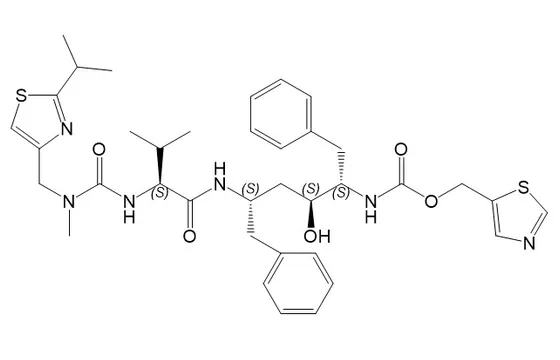
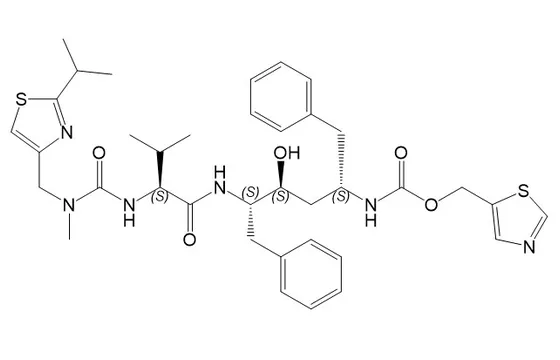
本目录收录This catalogue contains 利托那韦Ritonavir相关条目 related entries 52 条(含母体),EP 已有各论收载 entries (including the parent); the EP already monographs it[4],中国药典亦有对应品种正文, and the Chinese Pharmacopoeia has a corresponding monograph[5]。条目里 EP 字母从 A 排到 T,中间有缺号,另有一批只有编号没有药典字母的新增杂质。. EP letters run from A to T with gaps, alongside a group of newer impurities that carry only numbers and no pharmacopoeial letter.
二、1998 年的因果链:四步,每一步单独看都不致命2. The 1998 causal chain: four steps, none fatal in isolation
把这次事件按因果链拆开,会看到四步,每一步单独看都不致命,串起来才出事。Break the event into a causal chain and four steps appear, none fatal in isolation, fatal only in sequence.
第一步,原料药选的是晶型 I。它在当时的筛选里是能稳定拿到的形态,工艺放大也顺利。第二步,晶型 I 在室温下并不是热力学最稳定的那一相,晶型 II 才是。第三步,半固体胶囊的处方里有乙醇与水,贮存期间胶囊壳与内容物之间存在水分迁移,晶型 I 溶解、晶型 II 析出,这条路径比固相转变快得多。第四步,晶型 II 的溶解度明显低于晶型 I,溶出曲线掉下来,生物利用度跟着掉。Step one: the drug substance chosen was Form I, the form that screening at the time could obtain reliably and that scaled up smoothly. Step two: Form I is not the thermodynamically most stable phase at room temperature; Form II is. Step three: the semi-solid capsule formulation contained ethanol and water, moisture migrated between shell and fill during storage, and Form I dissolved while Form II crystallised out, a pathway far faster than solid-state transition. Step four: Form II is markedly less soluble than Form I, so the dissolution profile fell and bioavailability followed.
值得注意的是第三步的隐蔽性。转晶不是「产品变脏」,含量、有关物质、水分可能全部合格,唯一异常的是溶出。如果放行标准里只有含量与有关物质,这批产品会顺利出厂,问题要到临床或稳定性后期才暴露。这也是这件事后来被反复引用的原因:它证明了晶型必须作为质量属性管理,而不是当作工艺细节。What deserves attention is how concealed step three is. A phase transition does not make the product dirty: assay, related substances and water content may all pass, and the only abnormality is dissolution. If the release specification covers only assay and related substances, the batch ships without incident and the problem surfaces only in the clinic or late in stability. This is why the case is cited so often: it proved that polymorph must be managed as a quality attribute rather than treated as a process detail.
2000 年,原研企业把这套经历完整公开在 Org. Process Res. Dev. 上,从晶型筛选、处方选择到剂型重做的全过程都有记录In 2000 the originator published the full account in Org. Process Res. Dev., documenting the entire path from polymorph screening through formulation choice to reformulation[2]。这篇文章至今仍是多晶型风险最完整的工业案例。. That paper remains the most complete industrial case study of polymorph risk.
三、稳定性与溶解度是反向的:选晶型不是选「最稳」3. Stability and solubility run in opposite directions: choosing a form is not choosing the most stable
| 形态Form | 室温热力学地位Thermodynamic status at room temperature | 表观溶解度Apparent solubility | 在本品中的角色Role in this product |
|---|---|---|---|
| 晶型 IForm I | 亚稳Metastable | 较高Higher | 原胶囊剂所用形态The form used in the original capsule |
| 晶型 IIForm II | 更稳定More stable | 较低Lower | 贮存中析出,导致溶出不合格Crystallises out during storage, causing dissolution failure |
| 无定形(固体分散体)Amorphous (solid dispersion) | 非平衡态Non-equilibrium state | 过饱和,最高Supersaturated, highest | 现剂型形态,靠载体抑制结晶The current dosage form; the carrier suppresses crystallisation |
表注:稳定性排序依据公开研究结论Table note: the stability ranking follows published findings[2,3];溶解度为定性比较,不列具体数值。; solubility is compared qualitatively without specific values.
很多人第一次听到这件事的反应是:既然晶型 II 更稳定,为什么不用它?答案是稳定性与溶解度在晶型上是反向的。晶格能越高,分子在晶格里排得越紧,越不容易被水带走——热力学上更稳定,表观溶解度就更低。对难溶药物来说,这个方向的代价直接体现在生物利用度上。The first reaction most people have is: if Form II is more stable, why not use it? The answer is that stability and solubility run in opposite directions across polymorphs. The higher the lattice energy, the more tightly molecules pack and the harder they are to carry away by water: thermodynamically more stable means lower apparent solubility. For a poorly soluble drug the cost of that direction shows up directly in bioavailability.
所以多晶型研究的目标从来不是「找最稳定的晶型」,而是「找稳定性与溶解度匹配的那一相」。利托那韦的困境在于匹配窗口很窄:处方对溶解度下降的容忍度低,而晶型 I 又随时可能转向晶型 II。2025 年发表的一项晶型预测研究把这一点讲得很直白——用计算晶体结构预测(CSP)本可以在上市前就算出晶型 II 在室温下更稳定,从而提前判定这是高风险品种,安排更充分的晶型筛选与处方规避The goal of polymorphism work is therefore never to find the most stable form but to find the phase where stability and solubility are matched. Ritonavir's difficulty is that the matching window is narrow: the formulation tolerates little loss of solubility, and Form I can convert to Form II at any time. A 2025 polymorph prediction study put this bluntly: using computational crystal structure prediction (CSP), it could have been established before launch that Form II is the more stable at room temperature, flagging the substance as high risk early and allowing fuller polymorph screening and formulation avoidance[3]。同一项工作还用三维电子衍射解出了晶型 IV 的结构,证明它是一个热力学不稳定的无序堆积。. The same work also solved the structure of Form IV by three-dimensional electron diffraction, showing it to be a thermodynamically unstable disordered packing.
这条经验对仿制药的直接意义是:晶型筛选不能只做「能不能拿到」,还要做「拿到的那一相在处方环境里会不会变」。判断后者至少需要三组数据:不同溶剂/湿度下的竞争 slurrying 结果、含水的相变动力学、以及处方中实际的微环境(水分活度、pH、辅料酸碱性)。The direct implication for generics is that polymorph screening cannot stop at whether a form can be obtained but must ask whether the form obtained will change in the formulation environment. Answering the latter takes at least three data sets: competitive slurrying results across solvents and humidities, aqueous phase-transition kinetics, and the actual microenvironment in the formulation (water activity, pH, acidity or basicity of excipients).
四、晶型研究要做到什么程度:四层,缺一层就被点名4. How far polymorph work must go: four layers, and a missing layer gets flagged
一个经得起审评的晶型研究,通常要覆盖四层,缺一层就会在发补里被点名。A polymorph study that survives review usually covers four layers; omit one and the deficiency letter names it.
第一层是定性。The first layer is identification.PXRD 是主力,但要与 Raman、固体核磁、DSC/TGA 交叉确认。单靠 PXRD 有几个特征峰就下结论,遇到择优取向或样品粒度不均时会误判。原料药、市售品、加速与长期样品各测一次,是最低要求。 PXRD is the workhorse but must be cross-confirmed with Raman, solid-state NMR and DSC/TGA. Concluding from a handful of characteristic PXRD peaks alone misleads when preferred orientation or uneven particle size is present. The minimum is one measurement each on the drug substance, the commercial product, and accelerated and long-term samples.
第二层是定量。The second layer is quantitation.要回答「混了多少晶型 II」。方法可以走 PXRD 全谱拟合,也可以走 Raman 或 DSC 熔融焓,但必须做完整验证:专属性、线性、检出限、精密度。检出限要能覆盖 1%–2% 的相变量级,否则「未检出晶型 II」这句话没有分量。 It must answer how much Form II is present. The method can be whole-pattern PXRD fitting, Raman, or DSC enthalpy of fusion, but it must be fully validated for specificity, linearity, limit of detection and precision. The detection limit must reach the 1%–2% level of phase change, otherwise the statement "Form II not detected" carries no weight.
第三层是制剂中的原位状态。The third layer is the in-situ state in the formulation.原料药的晶型数据不能替代制剂。制粒、压片、包衣的热与应力都可能诱导转变,贮存期的水分迁移更常见。可行的手段是 Raman 显微 mapping(看空间分布)与同步辐射或高分辨 PXRD(看低含量相)。对固体分散体,这一层要换成「相分离」评估:药物是否仍以无定形态分散,有没有析出微晶。 Drug-substance polymorph data cannot substitute for the formulation. The heat and stress of granulation, compression and coating can all induce transition, and moisture migration during storage is even more common. Workable techniques are Raman micro-mapping for spatial distribution and synchrotron or high-resolution PXRD for low-level phases. For a solid dispersion this layer becomes a phase-separation assessment: is the drug still dispersed in amorphous form, and have microcrystals appeared?
第四层是关联。The fourth layer is correlation.晶型差异最终要通过溶出曲线体现,否则就只是结构表征,不构成质量属性。同一批原料药的两种晶型做平行溶出,能直接回答「这个晶型差异要不要管」——这也是 ICH Q6A 多晶型决策树的判断入口 A polymorph difference must ultimately show up in the dissolution profile, otherwise it is only structural characterisation and not a quality attribute. Running parallel dissolution on two forms of the same drug substance batch answers directly whether the difference matters, which is the entry point of the ICH Q6A polymorphism decision tree[1]。
五、晶型之外的另一半:52 条里那四条同分子式的异构体5. The other half beyond polymorphism: the four same-formula isomers among the 52 entries
晶型只是利托那韦的一半难点。另一半在 52 条有关物质里——这个分子的手性中心多,构型异构体自然多,其中有一批与母体的分子式完全相同。Polymorphism is only half of ritonavir's difficulty. The other half lies in the 52 related-substance entries: the molecule has many stereocentres, so configurational isomers abound, and a group of them share the parent's molecular formula exactly.
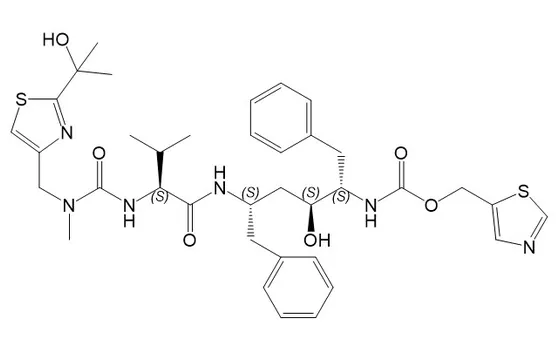
| 分子式Molecular formula | 条目数Entries | 条目与关系Entries and relationship | 分离手段Separation approach |
|---|---|---|---|
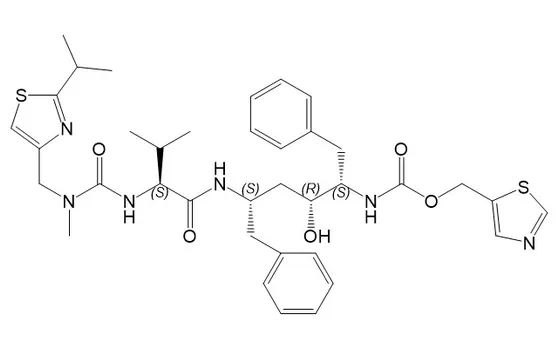
| C37H48N6O5S2 | 4(EP N、O、Q、R) | 与母体分子式相同,立体或位置异构Same formula as the parent; stereo- or regio-isomers | 仅能靠对照品与相对保留时间Only by reference standard and relative retention time |
| C37H48N6O6S2 | 1(EP E) | 母体 + O,氧化产物Parent + O, oxidation product | 反相可分离,MS 可确证Separable by reversed phase; confirmable by MS |
| C37H48N6O7S2 | 1(EP G) | 母体 + 2O,进一步氧化Parent + 2O, further oxidation | 同 EP E 与母体的分离体系Same separation system as EP E and the parent |
| C28H35N3O5S | 2(EP J、K) | 一对同分子式的降解片段A pair of same-formula degradation fragments | 极性差异大,需梯度覆盖Large polarity difference; needs gradient coverage |
| C52H61N7O8S2 | 1(EP S) | 比母体多 CContains C more than the parent15H13NO3,二聚体量级, at dimer scale | 高有机相才洗得下来Elutes only at high organic content |
表注:分子式与条目取自本目录品种页(2026-10-25 抓取);元素差为按分子式相减所得。Table note: formulas and entry counts are from the variety page in this catalogue (retrieved 2026-10-25); elemental differences are obtained by subtracting the formulas.
表里第一行最能说明问题:EP 杂质 N、O、Q、R 四条,分子式与母体一模一样。这意味着质谱完全帮不上忙——标称质量相同,主要碎片也相似,MRM 找不到可用的差异离子。定位只能靠对照品与相对保留时间,而相对保留时间在不同色谱柱、不同批次流动相之间会漂。所以系统适用性里必须把这四条与主峰的分离度写进去,而不是笼统写「相邻杂质峰分离度符合要求」。The first row of the table makes the point best: EP Impurities N, O, Q and R have exactly the parent's molecular formula. Mass spectrometry is therefore no help at all: nominal mass is identical, the principal fragments are similar, and MRM offers no distinguishing ion. Assignment relies entirely on reference standards and relative retention time, and relative retention drifts between columns and mobile-phase batches. System suitability must therefore spell out the resolution of these four from the main peak rather than stating vaguely that adjacent impurity peaks meet the resolution requirement.
EP 杂质 S 是另一个极端:比母体多出 CEP Impurity S is the other extreme, with C more than the parent15H13NO3,已经到二聚体量级。它保留很强,常规梯度跑到最后才出峰,很多方法因为运行时间不够而把它漏在柱子里,下一针才被洗出来,表现为「莫名其妙的多出一个峰」。这是梯度方法最常见的假象之一,延长运行时间或加一段高有机相冲洗就能排除。, putting it at dimer scale. It retains strongly and elutes only at the very end of a conventional gradient; many methods with insufficient run time leave it on the column, where it is washed out in the next injection and appears as an unexplained extra peak. This is one of the most common artefacts of gradient methods and is eliminated by extending the run time or adding a high-organic wash segment.
还有一层与剂量有关。利托那韦常规 600 mg 每日两次,最大日剂量 1200 mg。按 ICH Q3A 的鉴定阈值 0.10% 或 1.0 mg/天(取低者)折算,0.10% 对应 1.2 mg/天,高于 1.0 mg/天,所以实际执行的是 1.0 mg/天,也就是约 0.083%There is also a dose-dependent layer. Ritonavir is usually 600 mg twice daily, giving a maximum daily dose of 1200 mg. Converting the ICH Q3A identification threshold of 0.10% or 1.0 mg/day, whichever is lower, 0.10% of 1200 mg is 1.2 mg/day, above 1.0 mg/day, so the operative threshold is 1.0 mg/day, about 0.083%[6]。高剂量品种的限度往往比百分比看上去更紧,这个换算必须自己算一遍。. For high-dose products the limit is often tighter than the percentage suggests, and this conversion must be worked through yourself.
六、申报与发补:晶型项怎么写,固体分散体怎么改口径6. Filing and deficiency responses: how to write the polymorph item and how to reframe a solid dispersion
晶型要不要写进质量标准,ICH Q6A 给了一张决策树,逻辑很干脆:晶型是否影响溶解度、溶出或生物利用度?是否影响稳定性与可加工性?两个问题有一个答「是」,就必须控制Whether polymorph belongs in the specification is answered by an ICH Q6A decision tree with blunt logic: does the form affect solubility, dissolution or bioavailability? Does it affect stability or processability? A yes to either means it must be controlled[1]。
利托那韦的情况是两条全中,所以原料药标准里要有晶型项,制剂端还要有对应的溶出与物理稳定性要求。写的时候注意三件事:一是晶型项的检验方法要能定量,不能只写「应与对照品谱图一致」;二是限度要有依据,写「不得检出晶型 II」就必须给出方法的检出限;三是稳定性方案里要安排晶型检测点,而不是只在放行时测一次。Ritonavir hits both, so the drug-substance specification needs a polymorph item and the product side needs corresponding dissolution and physical stability requirements. Three points when writing it: the test method must be quantitative, not merely "should match the reference standard pattern"; the limit needs a basis, and stating "Form II not detected" requires the method's detection limit; and the stability protocol must schedule polymorph time points rather than testing once at release.
如果做的是固体分散体片剂,申报重点会整体平移。此时的「晶型」问题变成物理稳定性:药物在载体中是否保持无定形、贮存中有没有相分离、溶出时是否出现药物富集相。对应的研究是加速与长期条件下的 PXRD/Raman 复测、溶出曲线相似性、以及必要的热分析。把原料药的晶型资料直接搬过来,是这类制剂发补里最常见的错位。For a solid dispersion tablet the emphasis shifts wholesale. The polymorph question becomes one of physical stability: does the drug remain amorphous in the carrier, is there phase separation during storage, does a drug-rich phase appear on dissolution. The corresponding work is PXRD and Raman retesting under accelerated and long-term conditions, dissolution profile similarity, and thermal analysis where needed. Transplanting drug-substance polymorph data directly is the most common mismatch in deficiency responses for this type of product.
国内这个品种的申报以仿制为主,审评关注点集中在晶型一致性与 BE 支持上Domestic filings for this substance are mostly generics, and review focuses on polymorph consistency and bioequivalence support[7]。
七、五个误区,每一条都在真实项目里出现过7. Five misconceptions, every one of which appears in real projects
误区一:挑最稳定的晶型做原料药。Misconception 1: pick the most stable form for the drug substance.更稳定往往意味着更难溶。选型的依据是「处方能不能接受」,不是「晶格能高不高」。 More stable usually means less soluble. The selection criterion is whether the formulation can accept it, not how high the lattice energy is.
误区二:用 PXRD 单峰高度比定量。Misconception 2: quantify by the height ratio of a single PXRD peak.择优取向会让某个峰的强度翻几倍,结果不可重复。要么全谱拟合,要么换 Raman/热分析做定量。 Preferred orientation can multiply the intensity of one peak several-fold and the result is not reproducible. Either fit the whole pattern or quantify by Raman or thermal analysis.
误区三:只做原料药晶型稳定性,不做制剂中晶型。Misconception 3: study polymorph stability in the drug substance only, not in the formulation.制粒、压片、包衣的热与应力,加上贮存期水分迁移,才是相变真正发生的地方。 The heat and stress of granulation, compression and coating, plus moisture migration during storage, are where transitions actually happen.
误区四:把固体分散体当成「没有晶型问题」。Misconception 4: treat a solid dispersion as having no polymorph problem.问题只是换了形式:从相变变成相分离与结晶析出,难度不减。 The problem merely changes form, from phase transition to phase separation and crystallisation, without becoming easier.
误区五:认为同分子式的异构体可以靠质谱区分。Misconception 5: assume same-formula isomers can be distinguished by mass spectrometry.EP 杂质 N、O、Q、R 与母体分子式相同,没有差异离子可用,只能靠对照品与保留时间。 EP Impurities N, O, Q and R share the parent's formula, offer no distinguishing ion, and can only be handled with reference standards and retention times.
八、与卡马西平、伊马替尼横向对比:能借方法,不能借结论8. Comparison with carbamazepine and imatinib: borrow methods, not conclusions
多晶型这件事,每个品种的机制都不一样,横向借用时要分清借的是方法还是结论。Every substance has its own polymorph mechanism, and when borrowing across substances it matters whether you are borrowing a method or a conclusion.
先说一句品种地位:利托那韦在临床上很少单独用,更多是作为药动学增效剂,与One word on its clinical position: ritonavir is rarely used alone, serving mostly as a pharmacokinetic booster combined with 洛匹那韦lopinavir、达芦那韦darunavir、阿扎那韦atazanavir做成复方。复方里它的剂量低,但晶型与物理稳定性的要求不会因此放松——它在复方中同样是难溶组分,溶出掉下来一样影响整体暴露。 in fixed-dose combinations. Its dose is low there, but the polymorph and physical stability requirements are no looser, because it remains a poorly soluble component and a drop in its dissolution still affects overall exposure.
卡马西平Carbamazepine是水致水合物化:无水物遇水生成二水合物,脱水后也未必回到原来的晶型,所以它的风险点在湿度与制粒用水,控制手段是水分活度而非温度。 undergoes water-induced hydrate formation: the anhydrate converts to the dihydrate on contact with water, and dehydration does not necessarily restore the original form, so its risk lies in humidity and granulation water and the control lever is water activity rather than temperature. 甲磺酸伊马替尼Imatinib mesylate是构象多晶型,α 型的熔点更高却是亚稳相,β 型室温更稳,转晶走的是溶剂介导路径,与利托那韦有相似之处,但它是成盐品种,还要考虑游离碱与盐型之间的平衡。 is conformational polymorphism: Form α has the higher melting point yet is metastable, Form β is more stable at room temperature, and the transition follows a solvent-mediated path similar to ritonavir's, though as a salt-forming substance it also requires attention to the free base/salt equilibrium.
利托那韦的特殊性在于「稳定相溶解度更低」与「处方含醇水」这两件事同时成立。如果换成不含水的处方,同样的晶型 II 未必会在货架期内长出来;如果换成一个高溶解度药物,同样的溶解度下降也未必影响吸收。所以它的结论不能直接搬到别的品种上,能搬的只有方法学:竞争 slurrying、含水相变动力学、制剂原位晶型、晶型与溶出的关联这四步。What makes ritonavir special is that lower solubility of the stable phase and an alcohol-water formulation hold true simultaneously. With an anhydrous formulation the same Form II might never appear within shelf life; with a highly soluble drug the same drop in solubility might not affect absorption. Its conclusions therefore cannot move to another substance, only its methodology: competitive slurrying, aqueous transition kinetics, in-situ polymorph in the formulation, and polymorph-to-dissolution correlation, the same four steps.
对照品选型上,本目录可提供 52 条覆盖,从母体到 EP 杂质 A–T 均有对应条目;做晶型研究要另配晶型对照(晶型 I、晶型 II),做有关物质则要优先配齐那四条同分子式的异构体:[→ 查看利托那韦全部条目](For reference standard selection this catalogue offers 52 entries covering everything from the parent through EP Impurity A–T; polymorph work requires separate form standards (Form I and Form II), while related-substance work should prioritise the four same-formula isomers: [→ View all ritonavir entries](利托那韦 52 条Ritonavir, 52 entries)。
常见问题(FAQ)Frequently asked questions (FAQ)
利托那韦当年到底是晶型问题还是纯度问题?Was the ritonavir case a polymorph problem or a purity problem?
晶型 II 更稳定,为什么反而不能用?Form II is more stable, so why can't it be used?
晶型定量方法做到什么程度才算够?How far must a quantitative polymorph method go?
固体分散体片剂还要做晶型研究吗?Do solid dispersion tablets still need polymorph work?
EP 杂质 N、O、Q、R 为什么不能用质谱区分?Why can't EP Impurities N, O, Q and R be distinguished by mass spectrometry?
1200 mg/天 的日剂量对限度有什么影响?What does a 1200 mg/day dose do to the limits?
晶型预测(CSP)现在能替代实验筛选吗?Can crystal structure prediction (CSP) replace experimental screening?
相关品种与对照品Related drug substances and reference standards
- 利托那韦 / RitonavirRitonavir(共 51 个杂质/衍生物条目)(51 impurity and derivative entries in total)
- 洛匹那韦 / LopinavirLopinavir(共 13 个杂质/衍生物条目)(13 impurity and derivative entries in total)
- 达芦那韦 / DarunavirDarunavir(共 27 个杂质/衍生物条目)(27 impurity and derivative entries in total)
- 阿扎那韦 / AtazanavirAtazanavir(共 51 个杂质/衍生物条目)(51 impurity and derivative entries in total)
- 卡马西平 / CarbamazepineCarbamazepine(共 33 个杂质/衍生物条目)(33 impurity and derivative entries in total)
参考资料与来源References and sources
- ICH,ICH Q6A《新原料药和制剂的检验项目与可接受标准:化学物质》(含多晶型决策树与晶型是否入标准的判断逻辑)ICH Q6A Specifications: Test Procedures and Acceptance Criteria for New Drug Substances and New Drug Products: Chemical Substances (including the polymorphism decision tree and the logic for whether a form belongs in the specification),访问日期 2026-10-25, accessed 2026-10-25
- Organic Process Research & Development(美国化学会),Organic Process Research & Development (American Chemical Society), Chemburkar S.R., Bauer J., Deming K., Spiwek H. 等:Dealing with the Impact of Ritonavir Polymorphs on the Late Stages of Bulk Drug Process Development(2000,晶型 I 转晶型 II 的完整工业案例)Chemburkar S.R., Bauer J., Deming K., Spiwek H. et al., "Dealing with the Impact of Ritonavir Polymorphs on the Late Stages of Bulk Drug Process Development" (2000; the complete industrial case of Form I converting to Form II),访问日期 2026-10-25, accessed 2026-10-25
- Communications Chemistry(Nature Portfolio),Predicting the ritonavir crisis by revisiting the polymorph landscape with crystal structure prediction and form 4 structure solution(2025,CSP 复算晶型 II 的室温稳定性并解出晶型 IV 结构)"Predicting the ritonavir crisis by revisiting the polymorph landscape with crystal structure prediction and form 4 structure solution" (2025; CSP re-evaluates the room-temperature stability of Form II and solves the Form IV structure),访问日期 2026-10-25, accessed 2026-10-25
- 欧洲药品质量管理局(EDQM),European Directorate for the Quality of Medicines (EDQM), 欧洲药典(Ph. Eur.)利托那韦各论:有关物质项下 EP 杂质 A–T 的命名与限度European Pharmacopoeia monograph on Ritonavir: naming and limits of EP Impurity A–T under related substances,访问日期 2026-10-25, accessed 2026-10-25
- 国家药典委员会,Chinese Pharmacopoeia Commission, 中国药典品种正文数据库(利托那韦及其制剂各论)Chinese Pharmacopoeia monograph database (ritonavir and its preparations),访问日期 2026-10-25, accessed 2026-10-25
- ICH,ICH Q3A(R2)《新原料药中的杂质》(报告阈值 0.05%、鉴定阈值 0.10% 或 1.0 mg/天、界定阈值 0.15% 或 1.0 mg/天)ICH Q3A(R2) Impurities in New Drug Substances (reporting threshold 0.05%, identification threshold 0.10% or 1.0 mg/day, qualification threshold 0.15% or 1.0 mg/day),访问日期 2026-10-25, accessed 2026-10-25
- 国家药品监督管理局药品审评中心(CDE),Center for Drug Evaluation (CDE), NMPA, CDE 受理品种信息(信息公开):利托那韦相关受理记录与申报单位统计CDE acceptance information (public): ritonavir acceptance records and applicant statistics,访问日期 2026-10-25, accessed 2026-10-25
说明:本文为 CATO 佳途技术团队原创整理,其中引用的法规、药典与公开文献内容已在上方标注来源,仅用于技术交流与检索参考,不构成质量标准或法规建议;具体品种的检测方法、限值与申报要求,请以现行法规、药典正文及官方发布为准。Note: this article was compiled by the CATO technical team. Regulatory, pharmacopoeial and public literature content cited has been sourced above and is provided for technical exchange and search reference only; it does not constitute a quality specification or regulatory advice. For the test methods, limits and filing requirements of any specific product, the current regulations, pharmacopoeial monographs and official publications prevail.
本站产品信息仅供科研检索与选型参考,不作为质量标准依据;技术参数、纯度与结构确证以随货 COA 及我方书面确认为准。本文涉及的产品均为科研用途,不用于人体或动物诊断、治疗。Product information on this site is for scientific search and selection reference only and is not a quality specification; technical data, purity and structural confirmation are governed by the shipped COA and our written confirmation. All products mentioned are for research use only and are not intended for human or animal diagnosis or treatment.