缬沙坦片的溶出:pH 1.2 的介质为什么什么也区分不出来Valsartan Tablet Dissolution: Why the pH 1.2 Medium Distinguishes Nothing
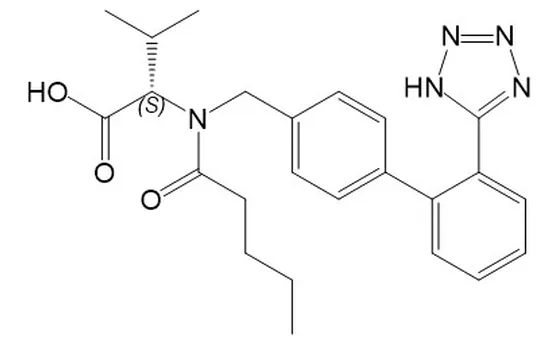
缬沙坦↗(CAS 137862-53-4)是游离酸形态的血管紧张素受体拮抗剂,BCS II 类:溶解度低、渗透性高。它的溶出方法在国内项目里经常被做成「四介质全覆盖、全部合格、没有区分力」的样子——问题不在操作,在介质选错了。pH 1.2 的盐酸介质对这个分子来说,溶解度只有 pH 6.8 时的八十分之一,几条曲线都贴在同一条天花板上,算出来的 f2 全是噪声。
Valsartan↗ (CAS 137862-53-4) is an angiotensin receptor blocker in free acid form, BCS Class II: low solubility, high permeability. Its dissolution method is often built in domestic projects as four media fully covered, all passing, and completely without discriminating power. The fault is not technique but medium selection. In pH 1.2 hydrochloric acid the solubility of this molecule is one eightieth of that at pH 6.8, several curves press against the same ceiling, and the f2 values computed are pure noise.
Note: product names shown in red (marked with ↗) are clickable. Click to open the product page for structure, CAS number, purity and lead time.
一、品种定位:一个游离酸,两个酸性基团1. Positioning: a free acid with two acidic groups
关键要点Key points
- 缬沙坦是游离酸、BCS II 类,水中溶解度约 3.08 μg/mL;口服绝对生物利用度约 23%Valsartan is a free acid, BCS Class II, with aqueous solubility of about 3.08 μg/mL and oral absolute bioavailability of about 23%[1]。
- 平衡溶解度 pH 1.2 为 0.07 mg/mL、pH 6.8 为 5.75 mg/mL,相差约 82 倍;同一批样品在 pH 1.2 溶出低于 20%,pH 6.8 两小时内接近完全Equilibrium solubility is 0.07 mg/mL at pH 1.2 and 5.75 mg/mL at pH 6.8, roughly an 82-fold difference; the same batch dissolves less than 20% at pH 1.2 and almost completely within two hours at pH 6.8[1]。
- 900 mL 介质下,pH 1.2 的溶解度天花板是 63 mg——160 mg 规格理论最高只能溶出约 39%,曲线再怎么优化也上不去In 900 mL of medium the pH 1.2 solubility ceiling is 63 mg, so the 160 mg strength can theoretically dissolve only about 39%; no amount of curve optimisation gets past it[1]。
- BCS II 类不在 ICH M9 的生物等效性豁免范围内,BE 必须做;多规格能否豁免,取决于处方比例与溶出相似性BCS Class II falls outside the ICH M9 biowaiver scope, so an in vivo BE study is mandatory; whether strengths can be bridged depends on proportional formulation and dissolution similarity[2]。
缬沙坦的分子式 CThe molecular formula of valsartan is C24H29N5O3,分子量 435.5。它带两个可电离基团:一个是四唑环,pKa 4.73;一个是羧基,pKa 3.9, molecular weight 435.5. It carries two ionisable groups: a tetrazole ring with pKa 4.73 and a carboxyl group with pKa 3.9[1]。这两个数决定了它在消化道里的全部行为——胃里 pH 1–2,两个基团都质子化,分子不带电,溶解度极低;到了小肠上段 pH 升到 5 以上,两个基团依次解离,溶解度跳两个数量级。国内常见规格 40 mg、80 mg、160 mg,《中国药典》与《欧洲药典》《美国药典》均收载本品种. Those two numbers govern its entire behaviour in the gastrointestinal tract: in the stomach at pH 1–2 both groups are protonated, the molecule carries no charge and solubility is very low; in the upper small intestine, where pH rises above 5, the two groups dissociate in turn and solubility jumps two orders of magnitude. Common domestic strengths are 40 mg, 80 mg and 160 mg, and the Chinese, European and United States Pharmacopoeias all monograph the substance[3]。
本目录收录缬沙坦相关条目 This catalogue contains 71 条(含原料药本体),编号杂质 66 个,编号覆盖 1–132,其中亚硝胺相关条目 5 条(3 条 N-亚硝基物加 2 条 N-亚硝基二甲胺的同位素内标)。对映异构体单列为杂质 1,说明这个分子除溶解度之外还有一条手性线要管。 entries for valsartan (including the drug substance itself), 66 numbered impurities covering numbers 1–132, of which 5 relate to nitrosamines (3 N-nitroso compounds plus 2 isotope-labelled internal standards of N-nitrosodimethylamine). The enantiomer is listed separately as Impurity 1, indicating that beyond solubility this molecule has a chiral line to manage as well.
二、pH 1.2 的介质:曲线其实测的是溶解度2. The pH 1.2 medium: the curve is really measuring solubility
先把数摆出来。公开研究测得缬沙坦的平衡溶解度:pH 1.2 时 0.07 mg/mL,pH 6.8 时 5.75 mg/mLStart with the numbers. Published work reports equilibrium solubility of valsartan of 0.07 mg/mL at pH 1.2 and 5.75 mg/mL at pH 6.8[1]。同一项研究里,原料药的溶出在 pH 1.2 下低于 20%,在 pH 6.8 下两小时接近 100%. In the same study the drug substance dissolved less than 20% at pH 1.2 and close to 100% within two hours at pH 6.8[1]。
这两个溶解度数字可以直接换算出一条天花板。按 900 mL 介质算,pH 1.2 时整个杯子里最多只能溶 0.07 × 900 ≈ 63 mg。160 mg 规格意味着理论最高溶出 63 ÷ 160 ≈ 39%;80 mg 规格是 63 ÷ 80 ≈ 79%;40 mg 规格才可能全溶。而 pH 6.8 时杯子里能溶 5.75 × 900 ≈ 5175 mg,160 mg 规格只占饱和溶解度的 3% 左右,漏槽条件非常充分。Those two solubility figures convert directly into a ceiling. In 900 mL of medium at pH 1.2, no more than 0.07 × 900 ≈ 63 mg can dissolve in the vessel. For the 160 mg strength that caps theoretical dissolution at 63 ÷ 160 ≈ 39%; the 80 mg strength at 63 ÷ 80 ≈ 79%; only the 40 mg strength could dissolve completely. At pH 6.8 the vessel can hold 5.75 × 900 ≈ 5175 mg, so the 160 mg strength occupies only about 3% of saturation and sink conditions are abundant.
这就是问题的全部。用 pH 1.2 做 160 mg 规格的溶出,无论处方怎么改、粒径怎么调,曲线都只能爬到 39% 以下,几条曲线挤在同一条水平线下方,差异全落在方法的随机误差里。这时候算出来的 f2 看起来也许大于 50,但那不是「相似」,是「都溶不出来」。反过来,pH 6.8 下药物浓度只有饱和溶解度的 3%,曲线由制剂行为而不是溶解度决定,才有区分力可言。That is the whole problem. Running the 160 mg strength at pH 1.2, no reformulation or particle-size adjustment can lift the curve above 39%; several curves crowd below the same horizontal line and all differences fall into the method's random error. The resulting f2 may look greater than 50, but that is not similarity, it is shared failure to dissolve. At pH 6.8, by contrast, drug concentration is only 3% of saturation, so the curve is governed by formulation behaviour rather than solubility and can actually discriminate.
| 项目Parameter | pH 1.2 介质pH 1.2 medium | pH 6.8 介质pH 6.8 medium |
|---|---|---|
| 平衡溶解度Equilibrium solubility | 0.07 mg/mL | 5.75 mg/mL |
| 900 mL 可溶总量Total soluble in 900 mL | 约 63 mgAbout 63 mg | 约 5175 mgAbout 5175 mg |
| 160 mg 规格溶出上限Dissolution ceiling for 160 mg | 约 39%About 39% | 不受溶解度限制Not solubility-limited |
| 160 mg 占饱和溶解度160 mg as fraction of saturation | 约 254%,无漏槽About 254%, no sink | 约 3%,漏槽充分About 3%, ample sink |
| 实测溶出Measured dissolution | 低于 20%Below 20% | 两小时内接近 100%Close to 100% within two hours |
表注:溶解度与实测溶出来自文献Table note: solubility and measured dissolution are from the literature[1];溶出上限与漏槽比例为按 900 mL 介质做的算术换算,用于说明量级,非实测值。; the dissolution ceiling and sink ratio are arithmetic conversions based on 900 mL of medium, given to indicate order of magnitude and not measured values.
三、成因:分子为什么这样,制剂还能改什么3. Mechanism: why the molecule behaves this way and what the formulation can still change
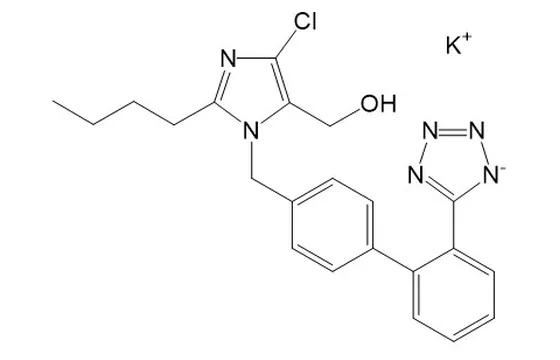
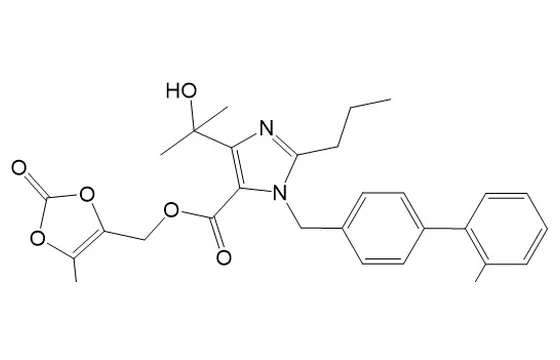
分子层面的原因已经清楚:pH 低于 pKa 时分子不带电,晶格能占主导,溶解度只有微克级;pH 高于 5 以后羧基与四唑依次解离,溶解度上到毫克级。这不是辅料能改变的事,只能通过成盐或成酯去绕开——同一类药里,The molecular explanation is clear: below the pKa the molecule is uncharged, lattice energy dominates and solubility is only microgram-level; above pH 5 the carboxyl and tetrazole dissociate in turn and solubility reaches milligram-level. Excipients cannot change this; it can only be bypassed through salt or ester formation, as elsewhere in the same class: 氯沙坦钾Losartan potassium 做成钾盐、 is made the potassium salt, 奥美沙坦酯Olmesartan medoxomil 与 and the 坎地沙坦酯Candesartan cilexetil 做成酯类前药,走的都是这条路。缬沙坦没有走,它保持游离酸上市,所以溶解度问题只能靠制剂工艺去补。 are made ester prodrugs, all taking that route. Valsartan did not, coming to market as the free acid, so its solubility problem can only be compensated by formulation and process.
制剂端能动的只有三处。第一是粒径与晶型:原料药粒径分布直接决定溶出表面积,微粉化能显著抬高早期溶出;晶型不同,晶格能与润湿性也不同。第二是处方:崩解剂的种类与用量决定片芯能不能快速溃散,表面活性剂能改善颗粒润湿。第三是工艺:湿法制粒还是直压、压片压力多大,都会改变孔隙率与崩解行为。这三处任何一处变化,都应该在溶出曲线上看得见——看不见,说明方法没有区分力。The formulation side has only three levers. First, particle size and polymorph: the particle size distribution of the drug substance sets the dissolution surface area, and micronisation markedly raises early dissolution; different forms also differ in lattice energy and wettability. Second, formulation: the type and level of disintegrant determine whether the core breaks up quickly, and surfactants improve granule wetting. Third, process: wet granulation versus direct compression, and compression force, both change porosity and disintegration behaviour. A change in any of the three should be visible in the dissolution profile; if it is not, the method lacks discriminating power.
这里要提醒一个反过来的风险:pH 6.8 介质漏槽太充分(只有饱和溶解度的 3%),也可能把处方差异「稀释」掉。充分的漏槽保证曲线不被溶解度封顶,但不保证能分辨粒径差异。所以区分力不是靠漏槽条件自动获得的,得专门验证。One risk runs the other way: at pH 6.8 sink conditions are so abundant (only 3% of saturation) that they may dilute formulation differences. Ample sink keeps the curve from being capped by solubility but does not guarantee that particle-size differences can be resolved. Discriminating power is therefore not a free consequence of sink conditions; it must be demonstrated.
四、方法:介质选 pH 6.8,然后证明它有区分力4. Method: choose pH 6.8, then prove it discriminates
介质选择不是拍脑袋,是拿 pH-溶解度曲线对着吸收窗选。缬沙坦的主要吸收部位在小肠上段,该段 pH 明显高于胃;pH 6.8 既落在吸收窗内,又能提供充分漏槽,是首选。方法按《中国药典》四部通则 0931 溶出度与释放度测定法的框架搭Medium selection is not guesswork but a matter of matching the pH-solubility curve to the absorption window. Valsartan is absorbed mainly in the upper small intestine, where pH is clearly higher than in the stomach; pH 6.8 falls inside that window and provides ample sink, making it the first choice. The method follows the framework of Chinese Pharmacopoeia Part IV general chapter 0931, Dissolution and Drug Release Tests[3],桨法、900 mL、37 °C 起步,转速按区分力需要调整。, starting from paddle apparatus, 900 mL, 37 °C, with rotation speed adjusted to achieve discrimination.
不建议加表面活性剂。理由很直接:pH 6.8 下药物浓度只占饱和溶解度的 3%,漏槽本来就够;此时再加表面活性剂,只会让本来溶得慢的样品也溶快,把差异抹平。只有在 pH 6.8 仍达不到漏槽时(例如更高规格、更小体积),才考虑加少量表面活性剂,并且必须证明加入后仍能区分不同粒径的样品。Adding surfactant is not recommended. The reason is direct: at pH 6.8 drug concentration is only 3% of saturation and sink is already adequate; adding surfactant at that point only speeds up the slow-dissolving samples too and flattens the difference. Consider a small amount of surfactant only where pH 6.8 still fails to give sink conditions, for example higher strengths or smaller volumes, and then prove that samples of differing particle size remain distinguishable after adding it.
区分力要专门做一组验证:取同一处方不同粒径的原料药,或不同压片压力的样品,测 15、30、45 分钟三个点。如果三批曲线在早期点重合、只有终点一致,这个方法只能证明「都能溶完」,不能证明「溶出行为一致」。行业里 f2 的通用判据是不小于 50Discriminating power needs its own validation set: take drug substance of different particle sizes in the same formulation, or samples compressed at different forces, and measure at 15, 30 and 45 minutes. If the three curves overlap at early points and agree only at the end point, the method proves only that all of them eventually dissolve, not that their dissolution behaviour is equivalent. The conventional industry criterion is f2 not less than 50[4],但 f2 只在两条曲线形状可比、早期点变异可控时才有意义——第一批取样点相对标准差过大时,f2 会被抬高,出现假相似。, but f2 is only meaningful when the two curve shapes are comparable and early-point variability is controlled; when the relative standard deviation at the first sampling point is too large, f2 is inflated and false similarity appears.
五、BE:BCS II 类为什么不能豁免5. BE: why BCS Class II cannot be waived
ICH M9 建立的生物等效性豁免框架,前提是「高溶解度」——药物在 pH 1.2、4.5、6.8 三档介质中最高剂量都能溶完The biowaiver framework established by ICH M9 rests on high solubility: the highest dose must dissolve completely in all three media at pH 1.2, 4.5 and 6.8[2]。缬沙坦在 pH 1.2 只有 0.07 mg/mL,这一条就过不去。所以它是标准的 BCS II 类,不能走豁免,必须做体内 BE。. Valsartan reaches only 0.07 mg/mL at pH 1.2 and fails that first criterion. It is therefore a textbook BCS Class II substance, cannot be waived, and requires an in vivo BE study.
| BCS 分类BCS class | 溶解度 / 渗透性Solubility / permeability | 豁免可能性Biowaiver possibility | 缬沙坦Valsartan |
|---|---|---|---|
| I 类Class I | 高 / 高High / high | 可以,需快速溶出Possible, with rapid dissolution | — |
| II 类Class II | 低 / 高Low / high | 不在豁免范围Outside the biowaiver scope | 属于此类Belongs here |
| III 类Class III | 高 / 低High / low | 可以,需极快速溶出Possible, with very rapid dissolution | — |
| IV 类Class IV | 低 / 低Low / low | 不在豁免范围Outside the biowaiver scope | — |
表注:分类与豁免框架依 ICH M9Table note: classification and biowaiver framework follow ICH M9[2];缬沙坦的分类依文献; the classification of valsartan follows the literature[1]。
多规格能不能用一个规格的 BE 支持其他规格,关键看两条:处方是否按比例组成,以及各规格的溶出曲线是否相似。前者看处方表,后者靠方法。这就是为什么溶出方法必须先把区分力做出来——它不只服务于放行,也服务于规格豁免的论证。BE 设计本身有成熟的规范性建议可循Whether one strength's BE study can support the others rests on two conditions: whether the formulations are proportionally composed, and whether the dissolution profiles are similar. The first is answered by the formulation table, the second by the method. That is why the dissolution method must first demonstrate discriminating power: it serves not only release but also the strength-bridging argument. BE design itself has mature regulatory recommendations to follow[5],空腹与餐后要不要都做、采样点怎么布,按品种的食物效应数据决定;对溶解度受限的 BCS II 类品种,只做空腹通常不够。; whether to run both fasted and fed states, and how to place sampling points, depends on the food-effect data for the substance, and for a solubility-limited BCS Class II substance a fasted study alone is usually insufficient.
六、申报与发补:三个会被追问的地方6. Filing and deficiencies: three points that get challenged
第一处是介质选择依据。The first is the basis for medium selection.只写「参照药典」不够,要给 pH-溶解度曲线与漏槽论证:为什么选 pH 6.8、为什么这个体积与转速下药物浓度远低于饱和溶解度、为什么不需要表面活性剂。这三问背后是同一个逻辑——证明曲线测的是制剂行为,不是溶解度。 Writing "per the pharmacopoeia" is not enough; you need the pH-solubility curve and the sink argument: why pH 6.8, why drug concentration at this volume and speed is far below saturation, and why no surfactant is needed. All three questions rest on one logic: proving that the curve measures formulation behaviour, not solubility.
第二处是区分力。The second is discriminating power.发补里最常见的表述是「未提供溶出方法区分力的验证资料」。补救办法不是补做几条曲线,而是设计一组能产生差异的样品(不同粒径、不同硬度、不同崩解剂用量),证明方法能把这组差异分出来,并说明这种差异在体内是否有意义。 The most common deficiency wording is that no validation data on the discriminating power of the dissolution method were provided. The remedy is not to run a few more curves but to design a set of samples that actually differ (different particle size, different hardness, different disintegrant levels), show that the method resolves those differences, and explain whether such differences matter in vivo.
第三处是变更后的可比性。The third is comparability after a change.2018 年缬沙坦原料药的亚硝胺事件导致大量产品更换供应商与工艺 The 2018 nitrosamine event in valsartan drug substance led many products to change supplier and process[6],这类变更之后,除了亚硝胺风险评估,还要给出变更前后溶出曲线的对比。很多项目的资料里只有变更后的三批数据,没有变更前的对照——这在审评看来等于没有做可比性研究。. After such a change, beyond the nitrosamine risk assessment you must provide a comparison of dissolution profiles before and after. Many dossiers contain only three post-change batches with no pre-change comparator, which in review amounts to no comparability study at all.
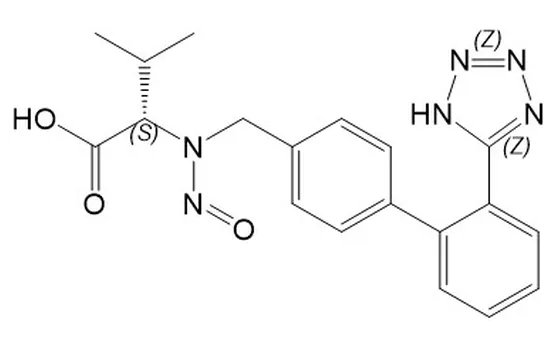
亚硝胺这条线本身也不能漏:本目录收录的 5 条亚硝胺相关条目里,有 3 条是 N-亚硝基物,另 2 条是 N-亚硝基二甲胺的同位素内标。对映异构体(杂质 1)与亚硝胺是两条独立的线,前者管手性纯度,后者管基因毒性杂质,与溶解度、溶出都无关,但同一份申报资料里必须都有交代。The nitrosamine line cannot be left out either: of the 5 nitrosamine-related entries in this catalogue, 3 are N-nitroso compounds and 2 are isotope-labelled internal standards of N-nitrosodimethylamine. The enantiomer (Impurity 1) and the nitrosamines are independent lines, the first covering chiral purity and the second genotoxic impurities, unrelated to solubility or dissolution, yet both must be addressed in the same dossier.
下面这组数据来自 CDE 公开受理记录,用来说明这个品种在国内的申报密度,不作为获批依据The following data come from public CDE acceptance records and illustrate the filing density for this substance in China; they are not evidence of approval[7]。
七、五个常见误区7. Five common misconceptions
- 「四介质全覆盖才叫严谨」。"Covering all four media is what rigour means."介质数量不等于信息量。pH 1.2 对本品的天花板只有 39%(160 mg),这一档做得再漂亮也说明不了制剂差异。合理的做法是把 pH 6.8 做成主方法,pH 1.2 与 4.5 作为辅助数据。 The number of media is not the amount of information. At pH 1.2 this product has a 39% ceiling (160 mg), so no matter how elegant that condition is it cannot reveal formulation differences. The sensible approach is to make pH 6.8 the primary method and treat pH 1.2 and 4.5 as supporting data.
- 「溶出低就加表面活性剂」。"If dissolution is low, add surfactant."pH 6.8 下药物浓度只占饱和溶解度的 3%,没有漏槽问题;加表面活性剂只会抹平差异。要加,先证明加了还能区分不同粒径。 At pH 6.8 drug concentration is only 3% of saturation and there is no sink problem; adding surfactant only flattens differences. If you add it, first prove that samples of differing particle size remain distinguishable.
- 「f2 大于 50 就是相似」。"An f2 above 50 means similar."早期取样点变异大时 f2 会虚高;两条曲线都贴着溶解度天花板时,f2 相似只是「都溶不出来」。 Large variability at the early sampling point inflates f2, and when both curves hug the solubility ceiling, an f2 similarity only means both fail to dissolve.
- 「一个规格过 BE 就能覆盖全部规格」。"One strength passing BE covers all strengths."前提是处方按比例、各规格溶出相似。处方不按比例,或高规格溶出明显偏慢,就不能覆盖。 Only if the formulations are proportional and the strengths dissolve similarly. Non-proportional formulations, or a high strength that dissolves clearly more slowly, cannot be bridged.
- 「溶出合格就等于 BE 合格」。"Passing dissolution equals passing BE."这条只在 BCS I 类或 III 类且极快速溶出时成立。缬沙坦是 II 类,溶出合格与体内等效是两件事。 That holds only for BCS Class I or III substances with very rapid dissolution. Valsartan is Class II, and passing dissolution is not the same as being bioequivalent.
本目录收录缬沙坦相关条目 This catalogue contains 71 条(含本体与 66 个编号杂质),覆盖对映异构体(杂质 1)、3 条 N-亚硝基物与 2 条 N-亚硝基二甲胺同位素内标,可用于溶出方法之外的手性纯度与基因毒性杂质方法开发: entries (including the parent and 66 numbered impurities), covering the enantiomer (Impurity 1), 3 N-nitroso compounds and 2 isotope-labelled internal standards of N-nitrosodimethylamine, supporting chiral purity and genotoxic impurity method development beyond the dissolution method: → 查看缬沙坦全部条目→ View all valsartan entries。同类品种可一并对照:. Related substances for comparison: 厄贝沙坦Irbesartan、替米沙坦Telmisartan、阿齐沙坦Azilsartan
常见问题(FAQ)Frequently asked questions (FAQ)
缬沙坦片的溶出为什么必须用 pH 6.8?Why must valsartan tablet dissolution be run at pH 6.8?
pH 6.8 介质里要不要加表面活性剂?Should surfactant be added to the pH 6.8 medium?
f2 相似因子什么时候不能用?When can the f2 similarity factor not be used?
BCS II 类能不能申请生物等效性豁免?Can a BCS Class II substance apply for a biowaiver?
多规格申报时,BE 能只做一个规格吗?For a multi-strength filing, can BE be run on one strength only?
更换原料药供应商后,除了亚硝胺还要做什么?After changing drug substance supplier, what else is required beyond nitrosamines?
对映异构体和溶出有关系吗?Is the enantiomer related to dissolution?
pH 4.5 介质还要不要做?Should the pH 4.5 medium still be run?
相关品种与对照品Related drug substances and reference standards
- 缬沙坦 / ValsartanValsartan(共 71 个杂质/衍生物条目)(71 impurity and derivative entries in total)
- 氯沙坦钾 / Losartan PotassiumLosartan Potassium(共 74 个杂质/衍生物条目)(74 impurity and derivative entries in total)
- 厄贝沙坦 / IrbesartanIrbesartan(共 34 个杂质/衍生物条目)(34 impurity and derivative entries in total)
- 奥美沙坦酯 / Olmesartan MedoxomilOlmesartan Medoxomil(共 81 个杂质/衍生物条目)(81 impurity and derivative entries in total)
- 坎地沙坦酯 / Candesartan CilexetilCandesartan Cilexetil(共 28 个杂质/衍生物条目)(28 impurity and derivative entries in total)
参考资料与来源References and sources
- International Journal of Nanomedicine,Yeom D.W., Chae B.R., Son H.Y. 等《Enhanced oral bioavailability of valsartan using a polymer-based supersaturable self-microemulsifying drug delivery system》,2017 年第 12 卷第 3533–3545 页(含 BCS 分类、pKa、pH-溶解度与溶出数据,PMC5428796)Yeom D.W., Chae B.R., Son H.Y. et al., "Enhanced oral bioavailability of valsartan using a polymer-based supersaturable self-microemulsifying drug delivery system", 2017, Vol. 12, pp. 3533–3545 (BCS classification, pKa, pH-solubility and dissolution data; PMC5428796),访问日期 2026-10-21, accessed 2026-10-21
- ICH,ICH M9《基于生物药剂学分类系统的生物等效性豁免》ICH M9 Biopharmaceutics Classification System-Based Biowaivers,访问日期 2026-10-21, accessed 2026-10-21
- 中国药典委员会,Chinese Pharmacopoeia Commission, 《中国药典》四部 通则 0931《溶出度与释放度测定法》及缬沙坦各论Chinese Pharmacopoeia Part IV general chapter 0931 Dissolution and Drug Release Tests, and the valsartan monograph,访问日期 2026-10-21, accessed 2026-10-21
- 美国食品药品监督管理局(FDA)《Dissolution Testing of Immediate Release Solid Oral Dosage Forms》(工业指南,1997 年;f2 相似因子判据来源,站点不可达故仅列名称)US Food and Drug Administration (FDA), Dissolution Testing of Immediate Release Solid Oral Dosage Forms (industry guidance, 1997; source of the f2 similarity criterion; site unreachable, so the name is listed only)
- Journal of Pharmacy & Pharmaceutical Sciences,《The bioequivalence study design recommendations for immediate-release solid oral dosage forms in the international pharmaceutical regulators》,2024 年(PMC10993868)"The bioequivalence study design recommendations for immediate-release solid oral dosage forms in the international pharmaceutical regulators", 2024 (PMC10993868),访问日期 2026-10-21, accessed 2026-10-21
- 欧洲药品管理局(EMA),European Medicines Agency (EMA), 亚硝胺杂质:问答文件与上市许可持有人评估要求Nitrosamine impurities: questions and answers and the assessment requirements for marketing authorisation holders,访问日期 2026-10-21, accessed 2026-10-21
- 国家药品监督管理局药品审评中心(CDE),Center for Drug Evaluation (CDE), NMPA, 受理品种信息公开(缬沙坦)public acceptance information (valsartan),访问日期 2026-10-21, accessed 2026-10-21
说明:本文为 CATO 佳途技术团队原创整理,其中引用的法规、药典与公开文献内容已在上方标注来源,仅用于技术交流与检索参考,不构成质量标准或法规建议;具体品种的检测方法、限值与申报要求,请以现行法规、药典正文及官方发布为准。Note: this article was compiled by the CATO technical team. Regulatory, pharmacopoeial and public literature content cited has been sourced above and is provided for technical exchange and search reference only; it does not constitute a quality specification or regulatory advice. For the test methods, limits and filing requirements of any specific product, the current regulations, pharmacopoeial monographs and official publications prevail.
本站产品信息仅供科研检索与选型参考,不作为质量标准依据;技术参数、纯度与结构确证以随货 COA 及我方书面确认为准。本文涉及的产品均为科研用途,不用于人体或动物诊断、治疗。Product information on this site is for scientific search and selection reference only and is not a quality specification; technical data, purity and structural confirmation are governed by the shipped COA and our written confirmation. All products mentioned are for research use only and are not intended for human or animal diagnosis or treatment.