华法林钠的晶体里锁着 8.3% 的异丙醇:一道 68% RH 的坎,和一批溶出掉了 23% 的片Warfarin Sodium Locks 8.3% Isopropanol Inside Its Crystal: A 68% RH Threshold and a Batch That Lost 23% of Its Dissolution
华法林钠在申报资料里通常被归入「多晶型品种」:一套 X 射线粉末衍射、两个晶型、一张 DSC 图,看起来齐整。但严格说它没有普通意义上的多晶型——市售的结晶华法林钠是异丙醇溶剂化物,晶格里按重量装着 8.3% 的异丙醇。这 8.3% 一旦被当成「残留溶剂」或「规格值」去卡,后面每一步都会跟着错;而真正让片子在货架上掉溶出的,也不是晶型互变,是它在湿气里歧化成了难溶的游离酸。
In filings warfarin sodium is usually filed as a polymorphic substance: a set of X-ray powder patterns, two forms, one DSC trace, and it looks tidy. Strictly, though, it has no ordinary polymorphism. The commercial crystalline material is an isopropanol solvate carrying 8.3% isopropanol by weight inside the lattice. Treat that 8.3% as a residual solvent or a specification value and every step afterwards goes wrong; and what actually strips dissolution from tablets on the shelf is not a phase transition but disproportionation to the poorly soluble free acid in humid air.
一、品种定位:靠钠溶、靠香豆素抗凝的老分子1. Positioning: an old molecule that dissolves through sodium and anticoagulates through coumarin
关键要点Key points
- 市售结晶华法林钠是 2-丙醇包合物,实测含异丙醇 8.3%、水 0.57%,这不是污染,是晶格组成Commercial crystalline warfarin sodium is a 2-propanol clathrate, measured at 8.3% isopropanol and 0.57% water; this is not contamination but lattice composition[1]。
- 临界相对湿度落在 60%–68% 之间:低于此值只是表面吸附,高于此值从表面向内部潮解并逐步失去异丙醇The critical relative humidity lies between 60% and 68%: below it only surface adsorption occurs, above it the material deliquesces from the surface inwards and progressively loses isopropanol[1,2]。
- 片剂在 25 ℃、75% 相对湿度下放一周,药物释放下降约 23%,原因是钠盐先转无定形、再歧化成难溶游离酸Tablets held for one week at 25 °C and 75% relative humidity lose about 23% of drug release, because the sodium salt first turns amorphous and then disproportionates into the poorly soluble free acid[3]。
- 本目录收录该品种 66 条(2026-10-31 实抓),含 EP 字母条目 A、B、C 与 R/S 两个对映体条目,编号覆盖 1–63。This catalogue holds 66 entries for this substance (retrieved 2026-10-31), including EP letter entries A, B and C and separate R and S enantiomer entries, with numbering covering 1–63.
结构上,华法林是 4-羟基香豆素与亚苄基丙酮做一次迈克尔加成的产物:香豆素环提供酸性 4-羟基,侧链是 3-氧代-1-苯基丁基。分子只有一个可电离位点,游离酸水溶性很低,成钠盐才够做片。Structurally warfarin is the product of a single Michael addition between 4-hydroxycoumarin and benzylideneacetone: the coumarin ring supplies the acidic 4-hydroxyl and the side chain is a 3-oxo-1-phenylbutyl group. The molecule has only one ionisable site, and the free acid is poorly water-soluble, so the sodium salt is needed to make tablets.
这一步成盐决定了后面所有麻烦。That single salt-formation step creates every difficulty that follows. 第一First,钠盐溶解度高,高溶解度意味着潮气里容易在颗粒表面形成局部液膜,而局部液膜正是歧化的温床。, the sodium salt is highly soluble, and high solubility means that in humid air a local liquid film readily forms on granule surfaces, which is exactly the breeding ground for disproportionation. 第二Second,治疗窗窄,含量均匀度与溶出的漂移会直接对应临床事件。, the therapeutic window is narrow, so drift in content uniformity and dissolution maps directly onto clinical events. 第三Third,上市的是消旋体,本目录把 R 与 S 分别列为杂质 16、杂质 17,两个对映体都得单独备料。, the marketed substance is the racemate; this catalogue lists R and S separately as Impurity 16 and Impurity 17, and both enantiomers have to be stocked individually.
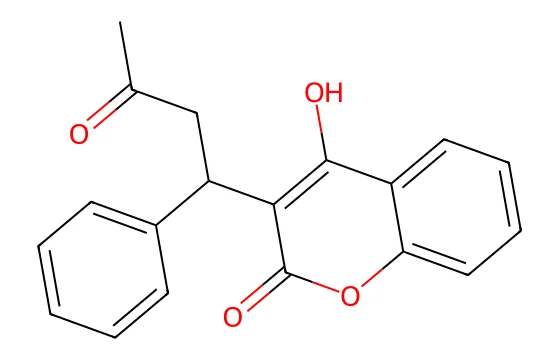
欧洲药典收载该品种,各论用字母体系命名杂质,本目录覆盖 A、B、C 三个字母。字母条目与编号条目不是两套东西,同一物质可能两边都有名字,配对照品按 CAS 对齐比按名字对齐可靠。The European Pharmacopoeia monographs the substance, naming impurities by letter, and this catalogue covers letters A, B and C. Letter entries and numbered entries are not two separate things: the same material may carry both names, and matching reference standards by CAS is more reliable than matching by name.
二、它的「晶型」是溶剂化物:8.3% 不是污染,是晶格2. Its polymorph is a solvate: 8.3% is not contamination but lattice
把商品华法林钠做热重,第一段失重往往在 100 ℃ 出头就开始,对应异丙醇脱除,之后才是主熔融。这个台阶不是「干燥不彻底」,是晶体结构的组成部分。基准数据很具体:结晶华法林钠含异丙醇 8.3%、含水 0.57%Run thermogravimetry on commercial warfarin sodium and the first weight loss usually begins just above 100 °C, corresponding to isopropanol removal, with the main melt only afterwards. That step is not incomplete drying but a component of the crystal structure. The baseline data are specific: crystalline warfarin sodium contains 8.3% isopropanol and 0.57% water[1]。
单晶解析进一步给出化学计量是 1:1,每分子华法林钠配一分子 2-丙醇Single-crystal analysis further establishes 1:1 stoichiometry, one molecule of 2-propanol per molecule of warfarin sodium[2]。按相对分子质量 330.31 与 60.10 折算,1:1 溶剂化物理论含溶剂约 15.4%;实测 8.3% 只有一半多点,大致相当于每两分子带一分子异丙醇。这个差额本身就是判断依据:. Converting with relative molecular masses of 330.31 and 60.10, a 1:1 solvate would contain about 15.4% solvent; the measured 8.3% is just over half of that, roughly one isopropanol per two molecules. That shortfall is itself diagnostic: 物料从结晶完成那刻起就在脱溶剂the material begins losing solvent the moment crystallisation is complete,所谓「标准值 8.3%」只是某类商品物料的统计基线,不是热力学上限。, so the so-called standard value of 8.3% is only a statistical baseline for one class of commercial material, not a thermodynamic maximum.
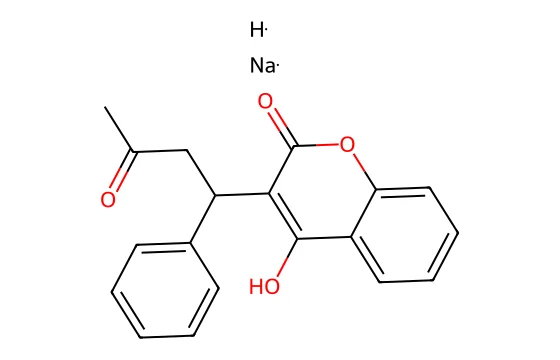
这里有个口径陷阱。ICH Q3C 对三类溶剂给的通用界定值是 5000 ppm,即 0.5%,2-丙醇正属三类There is a basis-of-calculation trap here. ICH Q3C sets a general qualification limit of 5000 ppm, or 0.5%, for Class 3 solvents, and 2-propanol is Class 3[4];8.3% 换算成 83000 ppm,是它的十六倍多。若分析方法不区分晶格溶剂与工艺残留,或报告里不写「按无水无溶剂基计算」,审评看到的只是一个超标十六倍的数字。反过来,为了合规硬把异丙醇压到 0.5% 以下,晶体结构就塌了,得到的是无定形——而这个品种上无定形并不是更好的选择。; 8.3% converts to 83,000 ppm, more than sixteen times that figure. If the analytical method does not distinguish lattice solvent from process residue, or the report omits "calculated on the anhydrous, solvent-free basis", what review sees is only a number sixteen times over the limit. Conversely, forcing isopropanol below 0.5% for compliance collapses the crystal structure and yields the amorphous form, which is not the better choice for this substance.
三、临界湿度:58、60–68、68 说的是同一件事3. Critical humidity: 58, 60–68 and 68 describe the same thing
两组独立研究做过湿度爬坡,方向一致,边界略有差别:Two independent studies ran humidity ramps and agreed in direction with slightly different boundaries:
| 研究Study | 测定方式Method | 临界相对湿度Critical relative humidity | 越界后发生什么What happens beyond it |
|---|---|---|---|
| AAPS PharmSci 2001[1] | 恒定湿度平衡,同步测失重与吸水Equilibration at constant humidity with simultaneous weight-loss and moisture-uptake measurement | 58% 及以下可忽略,68% 及以上明显Negligible at 58% and below, pronounced at 68% and above | 失异丙醇与吸水同时发生,但不是 1:1 交换,转为无定形Isopropanol loss and moisture uptake occur together but not as a 1:1 exchange, and the material turns amorphous |
| J Pharm Sci 2004[2] | 动态吸湿 + 单晶衍射 + 晶胞体积计算Dynamic vapour sorption plus single-crystal diffraction and unit-cell volume calculation | 介于 60% 与 68% 之间Between 60% and 68% | 自表面潮解并向内部推进,水进不了晶格也换不出异丙醇Deliquescence starts at the surface and moves inwards; water cannot enter the lattice and cannot displace isopropanol |
这个差别值得较真:若水能在晶格内替换异丙醇,脱掉的溶剂还能补回来;若只是表面潮解、内部晶格不动,表层一旦塌成无定形就回不去,溶出是不可逆下移。2004 年的单晶与晶胞体积计算支持后者——晶格里没有空间容纳水The difference matters: if water could replace isopropanol inside the lattice, lost solvent could be restored; if it is only surface deliquescence with the interior lattice intact, the surface layer, once collapsed to amorphous, never recovers and dissolution shifts downward irreversibly. The 2004 single-crystal and unit-cell volume work supports the latter: there is no room in the lattice for water[2]。
搬进稳定性方案,会得到一个不太舒服的事实:ICH Q1A 的加速条件 40 ℃、75% 相对湿度Carried into a stability protocol this yields an uncomfortable fact: the ICH Q1A accelerated condition of 40 °C and 75% relative humidity[5]本身就落在临界点之上,六个月里样品必然经历潮解与部分脱溶剂,这是预设之内的事,不是「产品不合格」。方案要回答的是:溶出掉了多少、能否用歧化解释、长期条件(25 ℃、60% 相对湿度)下是否同向。把加速期的物理变化当降解杂质追,方向从一开始就错。falls above the critical point to begin with, so over six months the sample will inevitably deliquesce and partly desolvate. That is within expectations, not a product failure. The protocol must answer how much dissolution was lost, whether disproportionation explains it, and whether long-term conditions (25 °C, 60% relative humidity) move in the same direction. Chasing accelerated-phase physical change as if it were a degradation impurity starts off in the wrong direction.
四、热:80 ℃ 一天、120 ℃ 十一小时,都不在安全区4. Heat: one day at 80 °C or eleven hours at 120 °C is already outside the safe zone
等温放置到 80 ℃、24 小时或 120 ℃、11 小时,物料即出现物理变化Hold the material isothermally at 80 °C for 24 hours or at 120 °C for 11 hours and physical change appears[1];单晶在 120 ℃ 保持 23 小时,沿针状 b 轴产生收缩裂纹,解释为 00l 面间距减小,伴随失异丙醇与无定形化,中间还经过一个过渡晶相; a single crystal held at 120 °C for 23 hours develops shrinkage cracks along the needle b axis, interpreted as a decrease in the 00l interplanar spacing, accompanied by isopropanol loss and amorphisation and passing through an intermediate crystalline phase[2]。
对工艺的含义很直接:湿法制粒后的干燥、流化床进风、压片局部摩擦升温都在这条线附近。「80 ℃ 一天才出现变化」不等于 70 ℃ 安全——判断标准不该是「有没有变」,而是「变了多少、能不能回到基线」。两条实操:干燥终点按干燥失重或溶剂残留卡,不按时间卡;中试放大时把干燥前后的衍射图叠着看,峰形变宽往往比失重更早出现。The process implication is direct: drying after wet granulation, fluid-bed inlet air and local frictional heating during compression all sit near that line. That change needs a full day at 80 °C does not make 70 °C safe; the criterion should not be whether anything changed but how much changed and whether the baseline can be recovered. Two practical rules: set the drying end point on loss on drying or residual solvent, not on time; and during scale-up overlay the diffraction patterns before and after drying, since peak broadening usually appears earlier than weight loss.
过渡晶相的存在还意味着「结晶品」与「无定形」不是二值关系:样品可能停在中间态,衍射图上峰变宽而非峰消失,DSC 上熔融峰前移或分叉。此时只报「符合结晶品指纹」,等于把中间态当合格品放行。The existence of an intermediate phase also means crystalline and amorphous are not binary: a sample can rest in an intermediate state where diffraction peaks broaden rather than disappear and the DSC melt shifts earlier or splits. Reporting only that it matches the crystalline fingerprint then releases an intermediate state as acceptable.
五、真正让溶出掉下来的,是歧化,不是转晶5. What actually drops dissolution is disproportionation, not the phase transition
有个实验值得每个做这个品种的人看一遍:片剂在室温、75% 相对湿度放一周,药物释放下降约 23%。解释链条是——结晶华法林钠先转无定形,无定形比结晶态更快生成难溶的非离子化形式,局部药物浓度被压下去,吸收跟着受影响;溶出与溶解度试验后的粉末衍射与差示扫描量热都证实了钠盐向游离酸的歧化One experiment deserves a read by anyone working on this substance: tablets held for a week at room temperature and 75% relative humidity lose about 23% of drug release. The explanatory chain runs: crystalline warfarin sodium first turns amorphous; the amorphous form generates the poorly soluble unionised form faster than the crystalline state; local drug concentration is suppressed and absorption follows. Powder diffraction and DSC after dissolution and solubility testing both confirmed disproportionation of the sodium salt to the free acid[3]。
关键在顺序:The order is what matters: 不是先有游离酸,而是先有无定形the amorphous form comes first, not the free acid。表面潮解出的那层无定形吸湿能力远高于晶体,等于在颗粒表面造了一层高浓度液膜;膜里钠离子被水或二氧化碳逐步带走,剩下的游离酸因溶解度低立即析出,成为新晶核。析出物不溶、包在外面,水进不去,溶出曲线一段段塌。. The amorphous layer produced by surface deliquescence takes up moisture far more readily than the crystal, effectively creating a concentrated liquid film on the granule surface; sodium ions in that film are progressively carried off by water or carbon dioxide, and the remaining free acid, being poorly soluble, precipitates at once and becomes new nuclei. The precipitate is insoluble and encases the particle, water cannot get in, and the dissolution curve collapses step by step.
这解释了一个反直觉现象:This explains a counter-intuitive observation: 溶解度越好的盐,越容易歧化the more soluble the salt, the more readily it disproportionates。「无定形溶出更快」在盐类品种上只在很短的初始阶段成立,之后被歧化反噬,所以「做成无定形提溶出」这条路走不通,除非处方同时解决抑晶与防潮。. The claim that amorphous dissolves faster holds for salt-form substances only during a very brief initial stage, after which disproportionation takes its revenge, so making it amorphous to improve dissolution does not work unless the formulation simultaneously solves crystallisation inhibition and moisture protection.
验证上还有一层难处:常规溶出是 900 mL、桨法、单点判读,恰恰看不出这个过程。2021 年那项工作专门搭了低体积两阶段溶出模拟胃肠道条件,才把差异放大出来Validation adds a further difficulty: conventional dissolution is 900 mL, paddle, single-point reading, and sees none of this process. The 2021 work built a low-volume two-stage dissolution mimicking gastrointestinal conditions specifically to amplify the difference[3]。放行检验合格,并不排除货架期失效;要看见它,稳定性方案得加多时间点、多介质。. Passing release testing does not rule out shelf-life failure; to see it the stability protocol needs more time points and more media.
六、头两个杂质,就是两个起始物料6. The first two impurities are the two starting materials
工艺很简洁:两个起始物料在酸碱催化下加成,再成钠盐。简洁意味着杂质谱也简洁——最常见的两个杂质,就是两个起始物料本身。The process is compact: two starting materials undergo addition under acid or base catalysis, then form the sodium salt. Compact means a compact impurity profile too: the two most common impurities are the two starting materials themselves.
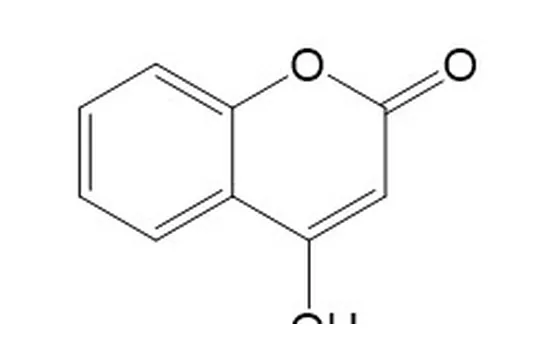
4-羟基香豆素在本目录里就是 EP 杂质 B(CAS 1076-38-6,C9H6O3)。它是过量投料的一方,也是分子酸性官能团的来源,残留量直接反映加成转化率与精制效率。这个物质极性大、反相柱上保留很弱,容易和溶剂前沿、死体积峰混在一起,导致「未检出」其实是「没分开」。方法开发时前五分钟梯度要专门为它留空间,而不是把小极性组分一起塞进空白扣除。4-Hydroxycoumarin is EP Impurity B in this catalogue (CAS 1076-38-6, C9H6O3). It is the reagent charged in excess and the source of the molecule's acidic functionality, so its residue directly reflects addition conversion and purification efficiency. The substance is highly polar and very weakly retained on reversed phase, readily merging with the solvent front and dead-volume peaks so that not detected actually means not separated. Method development must reserve gradient space in the first five minutes for it rather than sweeping small polar components into a blank subtraction.
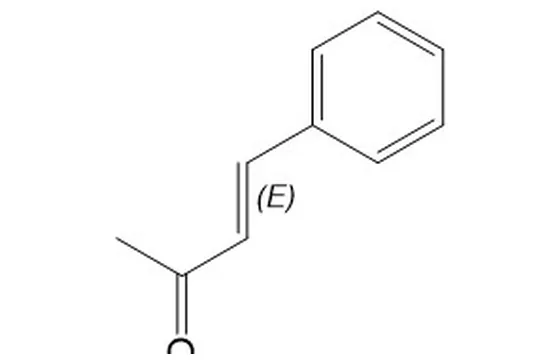
亚苄基丙酮在另一侧,本目录列为 EP 杂质 C(CAS 1896-62-4,C10H10O);同一分子式还对应另一个编号条目(CAS 122-57-6),两个条目分子式完全相同,只是命名与编号体系不同。这种「同分子式多条目」在 α,β-不饱和酮上很常见,备料务必按 CAS 核对。Benzylideneacetone sits at the other end and is listed here as EP Impurity C (CAS 1896-62-4, C10H10O); the same formula also corresponds to another numbered entry (CAS 122-57-6), the two entries sharing an identical formula and differing only in naming and numbering system. Such multiple entries for one formula are common among α,β-unsaturated ketones, so always verify stock by CAS.
两者控制逻辑相反:4-羟基香豆素水溶性好,靠水洗带走,看洗涤效率;亚苄基丙酮脂溶性,靠结晶与母液带走,看收率与残留的平衡——为压杂质过度结晶,收率损失往往大于收益。Their control logic is opposite: 4-hydroxycoumarin is water-soluble and removed by washing, so watch washing efficiency; benzylideneacetone is lipophilic and removed by crystallisation and mother liquor, so balance yield against residue, since over-crystallising to suppress an impurity usually costs more yield than it gains.
七、方法:衍射图回答「是不是晶体」,回答不了「少了多少异丙醇」7. Methods: a diffraction pattern answers whether it is crystalline, not how much isopropanol is missing
常见错配是放三张漂亮的衍射图,却没有一个数据说明异丙醇含量。衍射图证明长程有序,看不见晶格里装了多少溶剂——8.3% 与 15.4% 的样品,图可以几乎一样。The usual mismatch is three handsome diffraction patterns and not one datum on isopropanol content. A pattern proves long-range order and cannot see how much solvent fills the lattice: samples at 8.3% and 15.4% can give nearly identical patterns.
合理组合是四件套,各管一件事:粉末衍射管晶型身份与结晶度,判断有无过渡相或完全无定形;DSC 与 TGA 管脱溶剂台阶与熔融行为,是「溶剂是否晶格组分」最直接的证据;顶空气相管异丙醇绝对量,是批间一致性的量化指标;拉曼管原位与微区,2018 年那项研究就用拉曼确认片子里到底是无定形还是结晶品,并在 pH 1.2 与 4.5 介质中证明了游离酸的重结晶A sensible combination is four techniques, each with one job: powder diffraction for form identity and crystallinity, establishing whether an intermediate phase or full amorphisation is present; DSC and TGA for the desolvation step and melting behaviour, the most direct evidence of whether the solvent is a lattice component; headspace GC for the absolute isopropanol level, the quantitative indicator of batch consistency; and Raman for in situ and micro-area work. The 2018 study used Raman to establish whether tablets contained amorphous or crystalline material and demonstrated recrystallisation of the free acid in pH 1.2 and 4.5 media[6]。
顶空气相有个细节:平衡温度太高,晶格溶剂在进样前大量释放,结果偏高且重复性差;太低则释放不完全,结果偏低。这个品种的溶剂是晶格组分而非表面残留,方法开发必须做「平衡温度—平衡时间」矩阵;先用 TGA 确认脱溶剂起始温度,再把顶空温度压在这条线以下。One detail on headspace GC: set the equilibration temperature too high and lattice solvent is released en masse before injection, giving high results with poor repeatability; set it too low and release is incomplete, giving low results. Here the solvent is a lattice component rather than surface residue, so method development must run an equilibration temperature and time matrix, first establishing the desolvation onset by TGA and then holding the headspace temperature below that line.
含量基准也要跟着改。物料含 8.3% 异丙醇时,按原样称样算含量会被系统性压低约八个百分点,按无水无溶剂基折算才可比。同规格片子若原料溶剂从 8.3% 掉到 4% 而投料按原样重量不变,实际进入片子的华法林钠多约百分之四——这类偏差不出现在任何检验报告上,只出现在生物等效性试验的失败里。The assay basis must change accordingly. With 8.3% isopropanol in the material, calculating assay on an as-is weighing basis systematically depresses the result by about eight percentage points, and only the anhydrous, solvent-free basis is comparable. If the drug substance solvent falls from 8.3% to 4% while the charge stays at the same as-is weight, roughly four percent more warfarin sodium actually enters the tablet; such a deviation appears in no test report and only in a failed bioequivalence study.
八、申报与发补:三个绕不开的问题8. Filing and deficiencies: three unavoidable questions
这个品种国内申报量不大,属于典型的「老品种、少申报、高要求」。下面这块按 CDE 信息公开口径抓取,只代表受理与申报单位,不等于获批:Domestic filing volume for this substance is small: a textbook old substance, few filings, high expectations. The data below are taken from public CDE information and represent acceptances and applicants only, not approvals:
第一题,Question one: 溶剂化物身份要写明白state the solvate identity explicitly。按溶剂化物还是无溶剂物申报,直接决定含量基准、干燥失重项与批间一致性指标。只写「含 2-丙醇的结晶性粉末」不给区间,等于把最关键的一致性维度留空。. Filing as a solvate or as a solvent-free substance directly determines the assay basis, the loss-on-drying item and the batch-consistency indicator. Writing only crystalline powder containing 2-propanol without a range leaves the most important consistency dimension blank.
第二题,Question two: 溶出下移要归因,不能只归给转晶attribute the dissolution shift, and not only to a phase transition。转晶只是第一步,压溶出的是歧化。被问到「稳定性末期溶出下降」时若只交一张衍射图说「晶型未变」,反而更麻烦——图未变恰恰说明问题不在晶型,在表面歧化。该补的是表面表征与低体积两阶段溶出。. The phase transition is only the first step; what suppresses dissolution is disproportionation. Answering a question about falling dissolution at the end of stability with a single diffraction pattern and the remark that the form is unchanged makes matters worse: an unchanged pattern shows precisely that the problem is not the form but surface disproportionation. What is missing is surface characterisation and low-volume two-stage dissolution.
第三题,Question three: 参比制剂的形态要核对verify the physical form of the reference product。原研用结晶品还是无定形,直接影响处方与工艺。2018 年的结论有点反直觉:溶出更多受制粒工艺影响而非原料形态,两种形态的片子都做到了生物等效,影响安全的主因是含量均匀度. Whether the originator uses the crystalline or the amorphous form directly shapes formulation and process. The 2018 conclusion is somewhat counter-intuitive: dissolution is influenced more by granulation process than by the form of the drug substance, tablets of both forms achieved bioequivalence, and the main safety driver is content uniformity[6]。这不意味着形态无所谓,而是它的权重得放进「工艺 + 含量均匀度」整体里评估。. This does not mean the form is irrelevant, only that its weight must be assessed within the whole of process plus content uniformity.
杂质限度仍是 ICH Q3A 三档:报告 0.05%、鉴定 0.10%、界定 0.15%Impurity limits remain the three ICH Q3A tiers: reporting 0.05%, identification 0.10%, qualification 0.15%[7]。该品种日剂量只几毫克,1.0 mg/日折算后远高于 0.15%,三档全部由百分比主导——与日剂量上克的抗生素品种正好相反。. The daily dose here is only a few milligrams, so 1.0 mg/day converts to far above 0.15% and all three tiers are governed by the percentage, the exact opposite of antibiotic substances dosed in grams per day.
九、五个常被写错的判断9. Five judgements that are routinely written wrongly
一,把 8.3% 写进规格。One, writing 8.3% into the specification.它是一类物料的统计基线,不是热力学常数;该写的是区间加晶型指纹。 It is a statistical baseline for one class of material, not a thermodynamic constant; what belongs there is a range plus a form fingerprint.
二,拿 Q3C 的 5000 ppm 卡晶格溶剂。Two, applying the Q3C 5000 ppm figure to lattice solvent.Q3C 界定的是工艺残留 Q3C qualifies process residues[4],混为一谈要么误判合格物料,要么为过限破坏晶体结构。, and conflating the two either rejects acceptable material or destroys the crystal structure to meet a limit that does not apply.
三,只交衍射图不交溶剂定量。Three, submitting diffraction patterns without solvent quantitation.衍射图对溶剂含量几乎不敏感,缺了顶空气相,批间一致性无从谈起。 Patterns are almost insensitive to solvent content, and without headspace GC batch consistency cannot be discussed at all.
四,认为无定形溶出更快所以更好。Four, assuming amorphous dissolves faster and is therefore better.它吸湿更强、歧化更快,一周 75% 湿度就能让释放掉两成以上 It takes up moisture more readily and disproportionates faster; one week at 75% humidity can cost more than twenty percent of release[3]。
五,把末期溶出下降归因于转晶。Five, attributing end-of-shelf-life dissolution loss to the phase transition.转晶是可逆物理过程,歧化是不可逆化学过程;归因错了,纠正措施会开在工艺参数上,而问题出在包装防潮与处方抑晶。 The phase transition is a reversible physical process while disproportionation is an irreversible chemical one; attribute it wrongly and the corrective action lands on process parameters when the problem lies in packaging moisture protection and crystallisation inhibition in the formulation.
十、对照品怎么配,哪些品种不能拿来类比10. How to stock reference standards, and which substances cannot serve as analogies
本目录收录华法林钠相关条目 This catalogue holds 66 条(2026-10-31 实抓),覆盖游离酸与钠盐、两个对映体、EP 字母条目 A、B、C,以及 4 条氘代内标,够从工艺开发配到生物样本分析: entries for warfarin sodium (retrieved 2026-10-31), covering the free acid and the sodium salt, both enantiomers, EP letter entries A, B and C, and 4 deuterated internal standards, enough to stock from process development through bioanalytical work: → 查看华法林钠全部条目→ View all warfarin sodium entries
横向看,同属香豆素类的 Across the class, the coumarin relative 醋硝香豆素Acenocoumarol 最像,但本目录只有 2 条,公开的固体形态研究也远不如华法林充分, is the closest, but this catalogue holds only 2 entries for it and the published solid-state work is far less complete than for warfarin, 不能把溶剂化物的结论直接搬过去so solvate conclusions cannot be transplanted directly。真正要区分的是两类抗凝药:. What genuinely needs distinguishing is two classes of anticoagulant: 利伐沙班Rivaroxaban 与 and the 阿哌沙班Apixaban 这类直接口服抗凝药,既没有这么窄的治疗窗,也没有异丙醇包合物,它们的关键风险在降解杂质与亚硝胺,溶出策略的逻辑起点完全不同。 , direct oral anticoagulants that have neither such a narrow therapeutic window nor an isopropanol clathrate; their key risks are degradation impurities and nitrosamines, and the logic of their dissolution strategy starts from a completely different place. 维生素K2Vitamin K2 是它的药理拮抗剂,临床配对使用,药学上没有可迁移的共性。 is its pharmacological antagonist, used as a clinical pair, and there is no transferable pharmaceutical common ground.
这个品种是溶剂化物、窄治疗窗、强歧化倾向三者的组合,少任何一条,结论都会变形——知识点外包给「多晶型通用方法论」是行不通的。This substance combines solvate form, narrow therapeutic window and a strong tendency to disproportionate; remove any one and the conclusions distort. Outsourcing the problem to a generic polymorphism methodology does not work.
常见问题(FAQ)Frequently asked questions (FAQ)
华法林钠到底算不算多晶型品种?Is warfarin sodium a polymorphic substance at all?
异丙醇 8.3%,为什么不算残留溶剂超标?Why is 8.3% isopropanol not a residual solvent exceedance?
加速试验 40 ℃、75% 相对湿度,会不会必然把样品弄坏?Will accelerated testing at 40 °C and 75% relative humidity inevitably ruin the sample?
为什么常规溶出度合格,货架期还是可能出问题?Why can conventional dissolution pass yet shelf life still fail?
X 射线衍射图没变,能不能说明晶型稳定?If the X-ray diffraction pattern is unchanged, does that show the form is stable?
做成无定形是不是能提高溶出、改善生物利用度?Would making it amorphous raise dissolution and improve bioavailability?
配对照品时,EP 字母条目和编号条目怎么对齐?When stocking reference standards, how do EP letter entries and numbered entries align?
一个起始物料要洗掉、另一个要结晶掉,怎么平衡?One starting material is washed out and the other crystallised out; how is that balanced?
相关品种与对照品Related drug substances and reference standards
- 华法林钠 / Warfarin SodiumWarfarin Sodium(共 66 个杂质/衍生物条目)(66 impurity and derivative entries in total)
- 醋硝香豆素 / AcenocoumarolAcenocoumarol(共 2 个杂质/衍生物条目)(2 impurity and derivative entries in total)
- 利伐沙班 / RivaroxabanRivaroxaban(共 200 个杂质/衍生物条目)(200 impurity and derivative entries in total)
- 阿哌沙班 / ApixabanApixaban(共 219 个杂质/衍生物条目)(219 impurity and derivative entries in total)
- 维生素K2 / Vitamin K2Vitamin K2(共 30 个杂质/衍生物条目)(30 impurity and derivative entries in total)
参考资料与来源References and sources
- AAPS PharmSci(2001,PMC2751235),Physical chemical stability of warfarin sodium(结晶华法林钠含异丙醇 8.3%、水 0.57%;58% RH 以下交换可忽略,68% RH 以上失异丙醇并转无定形;80 ℃ 24 小时、120 ℃ 11 小时出现物理变化)Physical chemical stability of warfarin sodium (crystalline warfarin sodium contains 8.3% isopropanol and 0.57% water; exchange is negligible below 58% RH, and above 68% RH isopropanol is lost and the material turns amorphous; physical change appears after 24 hours at 80 °C or 11 hours at 120 °C),访问日期 2026-10-31, accessed 2026-10-31
- Journal of Pharmaceutical Sciences(2004,PMID 15389677),Solid-state properties of warfarin sodium 2-propanol solvate(单晶结构为 1:1 溶剂化物;临界相对湿度介于 60% 与 68%;水不能进入晶格亦不能置换 2-丙醇;120 ℃ 23 小时沿 b 轴开裂并无定形化)Solid-state properties of warfarin sodium 2-propanol solvate (single-crystal structure is a 1:1 solvate; critical relative humidity between 60% and 68%; water cannot enter the lattice nor displace 2-propanol; 23 hours at 120 °C causes cracking along the b axis and amorphisation),访问日期 2026-10-31, accessed 2026-10-31
- Molecular Pharmaceutics(2021,PMID 33689375),Molecular Insights into Warfarin Sodium 2-Propanol Solvate Solid Form Changes and Disproportionation Using a Low Volume Two-Stage Dissolution Approach(室温 75% RH 一周片剂释放下降约 23%;结晶态先转无定形再歧化为非离子化形式)Molecular Insights into Warfarin Sodium 2-Propanol Solvate Solid Form Changes and Disproportionation Using a Low Volume Two-Stage Dissolution Approach (about 23% release loss after one week at room temperature and 75% RH; the crystalline form turns amorphous first and then disproportionates to the unionised form),访问日期 2026-10-31, accessed 2026-10-31
- ICH,ICH Q3C(R8)《残留溶剂指导原则》:三类溶剂通用界定值 5000 ppm(0.5%),2-丙醇属三类溶剂ICH Q3C(R8) Guideline for Residual Solvents: general Class 3 limit 5000 ppm (0.5%); 2-propanol is a Class 3 solvent,访问日期 2026-10-31, accessed 2026-10-31
- ICH,ICH Q1A(R2)《新原料药和制剂的稳定性试验》:加速条件 40 ℃ ± 2 ℃、75% RH ± 5%ICH Q1A(R2) Stability Testing of New Drug Substances and Products: accelerated condition 40 °C ± 2 °C, 75% RH ± 5%,访问日期 2026-10-31, accessed 2026-10-31
- European Journal of Pharmaceutical Sciences(2018,PMID 30287409),The effect of amorphous and crystal sodium warfarin and its content uniformity on bioequivalence of tablets(拉曼确认无定形与结晶品;pH 1.2 与 4.5 介质中重结晶为游离酸;溶出受工艺影响大于受形态影响;含量均匀度为主要安全性因素)The effect of amorphous and crystal sodium warfarin and its content uniformity on bioequivalence of tablets (Raman confirms amorphous versus crystalline material; recrystallisation to the free acid in pH 1.2 and 4.5 media; dissolution influenced more by process than by form; content uniformity as the main safety factor),访问日期 2026-10-31, accessed 2026-10-31
- ICH,ICH Q3A(R2)《新原料药中的杂质》与 Q3B(R2)《新制剂中的杂质》:报告阈值 0.05%、鉴定阈值 0.10%、界定阈值 0.15%(或 1.0 mg/日,取低者)ICH Q3A(R2) Impurities in New Drug Substances and Q3B(R2) Impurities in New Drug Products: reporting threshold 0.05%, identification threshold 0.10%, qualification threshold 0.15% (or 1.0 mg/day, whichever is lower),访问日期 2026-10-31, accessed 2026-10-31
说明:本文为 CATO 佳途技术团队原创整理,其中引用的法规、药典与公开文献内容已在上方标注来源,仅用于技术交流与检索参考,不构成质量标准或法规建议;具体品种的检测方法、限值与申报要求,请以现行法规、药典正文及官方发布为准。Note: this article was compiled by the CATO technical team. Regulatory, pharmacopoeial and public literature content cited has been sourced above and is provided for technical exchange and search reference only; it does not constitute a quality specification or regulatory advice. For the test methods, limits and filing requirements of any specific product, the current regulations, pharmacopoeial monographs and official publications prevail.
本站产品信息仅供科研检索与选型参考,不作为质量标准依据;技术参数、纯度与结构确证以随货 COA 及我方书面确认为准。本文涉及的产品均为科研用途,不用于人体或动物诊断、治疗。Product information on this site is for scientific search and selection reference only and is not a quality specification; technical data, purity and structural confirmation are governed by the shipped COA and our written confirmation. All products mentioned are for research use only and are not intended for human or animal diagnosis or treatment.