Half of a Fosfomycin Sachet Is Not Fosfomycin, and One Impurity Comes From the Other Half
A fosfomycin sachet weighs 5.631 g and contains 3 g of the drug. The remaining 2.631 g is trometamol, and one of the four pharmacopoeial impurities carried for this substance is that counter-ion carrying a phosphate. Reading the impurity series with the mass balance in front of you turns a routine formulation question into a specification question: which basis the limits are written on, which row of the threshold table applies, and which peak in the chromatogram belongs to the drug at all.
A 5.631 g sachet, of which 3 g is the drug
Key points
- Each sachet holds 5.631 g of fosfomycin tromethamine, equivalent to 3 g of fosfomycin, so 46.7 per cent of the dose by mass is the counter-ion[1].
- One of the four pharmacopoeial impurities, EP C at C4H12NO6P and 201.12, is the trometamol itself carrying a phosphate, so it cannot be derived from the drug at all[2].
- The epoxide impurity, EP A at C3H9O5P and 156.07, is exactly the parent plus one molecule of water, which makes hydrolysis a one-step arithmetic check[3].
- Above 2 g per day ICH Q3A(R2) drops the absolute 1.0 mg branch and leaves three flat percentages, which is simpler than the table used at lower doses[4].
Fosfomycin tromethamine is C7H18NO7P, 259.19: the fosfomycin free acid at C3H7O4P and 138.06 combined one to one with trometamol at C4H11NO3 and 121.14 [5,3]. The sachet contains 5.631 g of the salt, described on the label as equivalent to 3 g of fosfomycin, with sucrose, sodium saccharin and mandarin flavour as the granulation matrix [1].
Subtract and the composition of the dose becomes explicit. 3 g of fosfomycin and 2.631 g of trometamol. That is 53.3 per cent drug and 46.7 per cent counter-ion, a ratio that changes how every limit should be read.
| Component | Mass per sachet | Share of dose | Molar amount |
|---|---|---|---|
| Fosfomycin, free acid | 3.000 g | 53.3 per cent | 21.73 mmol |
| Trometamol | 2.631 g | 46.7 per cent | 21.72 mmol |
| Fosfomycin tromethamine, the salt | 5.631 g | 100 per cent | 21.72 mmol |
Table 1. Composition of one sachet [1,5,3]. The two molar amounts agree to within 0.01 mmol, which is the arithmetic confirmation that the salt is 1:1 and that nothing else of significance is in the granule.
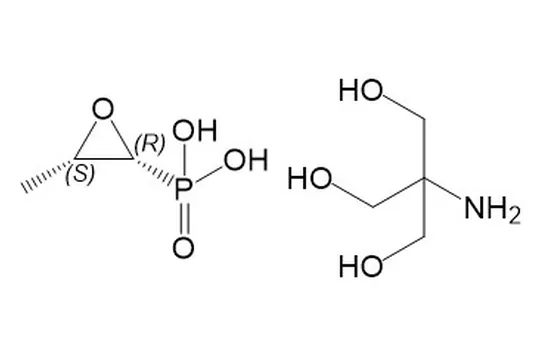
The epoxide and the phosphonic acid sit on adjacent carbons. The epoxide is the pharmacophore and the fragile part; the phosphonic acid is fully ionised across the usable pH range, which is why retention needs ion pairing rather than hydrophobic partitioning.
Two denominators for one limit
Express an impurity as a percentage and the number means nothing until the basis is stated. Here the ratio between the two bases is 259.19 divided by 138.06, or 1.877. A limit of 0.5 per cent on the salt is 0.94 per cent on the fosfomycin content, and a certificate of analysis that does not say which basis it used is not comparable with a specification that used the other.
Any high-mass-fraction salt has this problem, and it gets worse when the drug is lighter than its counter-ion. A batch at 0.48 per cent on the salt basis is 0.45 per cent on the drug basis, so one number passes a 0.5 per cent limit and the other passes with less margin than the reader assumes.
The fix is procedural. State the basis in the specification, in the certificate and in the method. Records that carry only one of the three are the usual origin of a discrepancy that takes a week to resolve and turns out to be arithmetic.
EP impurity C belongs to the counter-ion
Four impurities in this series carry a pharmacopoeial letter: EP A, EP B, EP C and EP D, and the catalogue lists EP C both as the free compound at CAS 23001-39-0 and as a barium salt at CAS 114252-50-5 [2,6]. The free compound is tromethamine phosphate, C4H12NO6P, 201.12, which is trometamol at 121.14 plus phosphoric acid at 98.00 minus one molecule of water at 18.02. The arithmetic closes exactly.
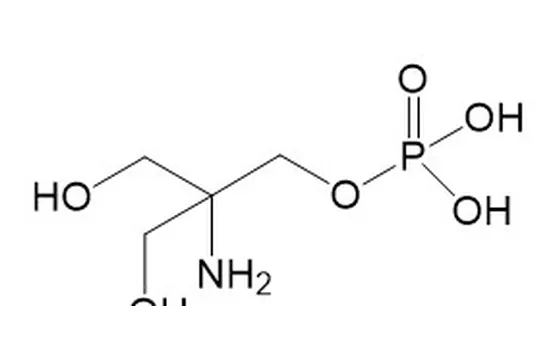
Read that formula carefully, because it changes the control strategy. EP C contains no carbon from fosfomycin, no epoxide and no carbon-phosphorus bond. It is the counter-ion carrying a phosphate, and it can only arise from the salt formation, from the excipient matrix, or from storage of the finished granule. If a batch shows EP C above trend, the investigation belongs in the salt step and in the sachet, not in the chemistry that builds the epoxide.
The barium salt in the series is worth pausing on. A barium salt of a phosphate is a reagent for isolating or assaying phosphate, so its presence says that someone needed one. Barium is a Class 3 element in ICH Q3D and belongs in the elemental impurity risk assessment if it is used anywhere in the process. The catalogue entry is a reason to ask the supplier a question, not evidence of the route.
EP impurity A is the epoxide opened, plus one water
The other end of the molecule gives a cleaner arithmetic. EP A is (1,2-dihydroxypropyl)phosphonic acid, C3H9O5P, 156.07, which is the fosfomycin free acid at 138.06 plus 18.02 [3]. One water molecule, added across the epoxide, and the ring opens to a diol. The product has no epoxide, so it has no antibacterial activity, and its formation is pure hydrolysis.
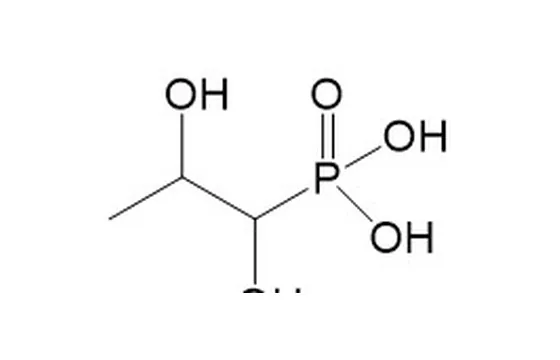
Epoxide hydrolysis is acid and base catalysed and fast in water. Two consequences are easy to conflate. For the specification it matters if the granule holds moisture or if the process passes through an aqueous step at an uncontrolled pH. For the patient it happens at dosing, when the sachet is dissolved and swallowed, so EP A rising in a dissolution experiment describes the dosing ritual rather than a stability failure.
Molar arithmetic makes the size of the limits tangible. At 0.5 per cent of 5.631 g an impurity limit is 28.16 mg per sachet, which is 0.180 mmol of EP A, or 0.83 mol per cent of the 21.7 mmol of drug present. A limit written as half a per cent looks small and is not small at a 5.6 g dose.
Two stereocentres, and two resolving agents in the series
The label describes the substance as (1R,2S)-(1,2-epoxypropyl)phosphonic acid, so both carbons of the epoxide are stereogenic [5]. Four stereoisomers exist. The enantiomer is (1S,2R) and the two trans diastereomers are (1R,2R) and (1S,2S), and they behave differently in analysis: a reversed phase column can resolve a trans pair from the cis compound, and it cannot resolve an enantiomer from its mirror image at all.
The series carries both enantiomers of alpha-methylbenzylamine as salts, the R-(+) form at CAS 25383-07-7 and the S-(−) form at CAS 68509-49-9 [7,8]. Diastereomeric salt resolution with a chiral amine is the classical way to separate a racemic acid, and carrying both salts is a strong hint that the resolution is part of the story. It also creates an analytical trap: alpha-methylbenzylamine has a benzene ring and absorbs strongly in the ultraviolet, while fosfomycin does not absorb at all. A low-wavelength method sees the resolving agent as a large well-shaped peak and the drug as a weak shoulder.
A peak table will not warn about that. If the specification is written from a chromatogram in which the largest peak belongs to a reagent, every limit derived from it inherits the assumption that the reagent is present at the level it happened to be that day.
Detection without a chromophore
Fosfomycin has no aromatic ring, no conjugated carbonyl and no nitrogen, so it has no useful ultraviolet absorption, and its phosphonic acid is ionised in any mobile phase a silica column tolerates. That is why published methods cluster around ion-pair chromatography with evaporative light scattering or mass spectrometry rather than the ultraviolet detector most pharmacopoeial methods assume.
Each option has a cost. Evaporative light scattering is close to universal but its response is not linear, so a limit test and an assay need separate calibration. Mass spectrometry is sensitive, but the same molecule can appear at two masses depending on whether the salt or the free acid survives the source. Refractive index works and is insensitive. None is a drop-in replacement.
What the method must resolve is not only EP A from the parent but the parent from its own counter-ion, because the trometamol is present at 46.7 per cent of the sample mass. A method validated on the salt at 1 mg per mL is injecting 0.47 mg of trometamol, and any trometamol-related peak sits on top of a very large baseline disturbance.
The threshold row above two grams
The dose makes the threshold table unusually simple. ICH Q3A(R2) gives two rows: for a maximum daily dose of 2 g or less, reporting is 0.05 per cent, identification is 0.10 per cent or 1.0 mg per day and qualification is 0.15 per cent or 1.0 mg per day, whichever is lower; above 2 g per day, all three become flat percentages at 0.03, 0.05 and 0.05 [4].
A single 5.631 g sachet sits in the second row, and the absolute branch disappears entirely. The thresholds become 1.69 mg, 2.82 mg and 2.82 mg per sachet. This is the opposite of what happens at 4 g of aspirin, where the 1.0 mg cap would fall below the reporting threshold and collapse the tiers; here the cap is simply not in the row that applies. A team that has only ever worked at doses below 2 g tends to import the 1.0 mg cap by habit, and the resulting specification is tighter than the guideline requires by a factor of almost two.
| Criterion | Row for 2 g per day or less | Value at 5.631 g if that row applied | Row above 2 g per day | Value at 5.631 g |
|---|---|---|---|---|
| Reporting | 0.05 per cent | 2.82 mg | 0.03 per cent | 1.69 mg |
| Identification | 0.10 per cent or 1.0 mg per day | 1.0 mg, since 1.0 mg is lower | 0.05 per cent | 2.82 mg |
| Qualification | 0.15 per cent or 1.0 mg per day | 1.0 mg, since 1.0 mg is lower | 0.05 per cent | 2.82 mg |
Table 2. ICH Q3A(R2) evaluated both ways for a 5.631 g daily dose [4]. The middle column is what a specification copied from a low-dose product would contain, and it is wrong: the guideline has no absolute branch above 2 g per day.
What Q3C and Q3D actually cover in a phosphonate
Neither residual solvent guideline nor elemental impurity guideline was written with this molecule in mind, and the gaps are instructive. Q3D classifies 24 elements into three classes and assigns parenteral, oral and inhalation limits; phosphorus is not one of the 24. Fosfomycin tromethamine is 11.9 per cent phosphorus by mass, so the element that dominates the molecule is outside the framework entirely, and any risk assessment that opens with a list of the 24 elements will not mention it.
Q3C is a shorter list in practice. Class 1 solvents are fixed concentrations, with benzene at 2 ppm and 1,2-dichloroethane at 5 ppm; Class 2 solvents carry both a concentration and a daily dose limit, with acetonitrile at 410 ppm and 4.1 mg per day, methanol at 3000 ppm and 30 mg per day and toluene at 890 ppm and 8.9 mg per day; Class 3 solvents are limited to 5000 ppm or 50 mg per day [9]. At 5.631 g, 50 mg per day is 888 ppm, so the concentration limit binds first.
This is the one place where the mass of the dose helps the manufacturer. For most products the two Class 3 criteria converge at 5000 ppm because the dose is around 10 g; here 888 ppm is the stricter reading, and a supplier who has only applied 5000 ppm will be surprised. Say in the specification which of the two was used.
Five traps in the specification
- Stating an impurity limit without the basis. On this salt the salt basis and the fosfomycin basis differ by 1.877, and a 0.5 per cent limit is 0.94 per cent on the other basis.
- Treating EP C as a drug-related impurity. It contains no fosfomycin carbon, so a trend in EP C points at the salt step, the excipients or the sachet, not at the epoxide chemistry.
- Importing the 1.0 mg absolute branch from the low-dose row. Above 2 g per day the guideline has no absolute branch, and adding one tightens the specification without a basis.
- Validating a low-wavelength method on a sample that is 46.7 per cent counter-ion. The largest peak in the chromatogram may be neither the drug nor an impurity.
- Assuming a trans epoxide diastereomer and an enantiomer behave the same way. One is resolvable on a reversed phase column and the other is not, so a single method cannot cover both.
Where this sits among salt-form drugs and polymer-forming antibiotics
Two comparisons sharpen the picture. High-mass-fraction salts such as metoprolol succinate carry 81.9 per cent base and 18.1 per cent counter-ion, and the counter-ion is benign, so nobody writes a limit for it. Here the counter-ion is 46.7 per cent and it degrades into a numbered impurity, which is closer to the gadobutrol case where the free ligand is simultaneously an impurity and an excipient that comparison is worked through here.
The second comparison is with antibiotics whose series contains oligomers. Amoxicillin and meropenem carry polymer fractions counted as one family rather than resolved as individuals. This series does something similar with five entries whose names end in monomer, which implies the numbered compounds they belong to are dimers and that the monomer is sold separately because the dimer cannot be quantified without it.
China has 38 acceptance records from 32 applicants for this substance, a broad filing base for a single-dose product:
This catalogue carries 66 entries, including all four pharmacopoeial impurities, the barium and sodium salts of EP C, the mono- and di-sodium and calcium salts of the drug, and both alpha-methylbenzylamine salts, which is the set needed to separate an epoxide impurity from a counter-ion impurity from a resolving agent. The list is on the fosfomycin trometamol page.
Frequently Asked Questions
Why is the counter-ion content of a fosfomycin sachet worth discussing at all?
Does EP impurity C come from the drug substance or from the counter-ion?
Is EP impurity A simply hydrolysed fosfomycin?
Which threshold row applies to a 5.631 g single dose?
Can a single reversed phase method resolve the stereoisomers?
Why is detection difficult for this molecule?
Does Q3D cover phosphorus?
What does the barium salt of EP impurity C in the catalogue mean?
Related Substances and Reference Standards
- Fosfomycin Trometamol (66 impurity / derivative entries)
- Metoprolol Succinate (- impurity / derivative entries)
- Gadobutrol (- impurity / derivative entries)
References and Sources
- DailyMed, US National Library of Medicine, Fosfomycin tromethamine granules for oral solution, prescribing information: 5.631 g of fosfomycin tromethamine equivalent to 3 g of fosfomycin, with sucrose, sodium saccharin and mandarin flavour, and the (1R,2S) configuration of the epoxide, accessed 2026-11-21
- PubChem, National Center for Biotechnology Information, Tromethamine phosphate, CAS 23001-39-0, C4H12NO6P, 201.12, recorded in this series as EP impurity C, accessed 2026-11-21
- PubChem, National Center for Biotechnology Information, Fosfomycin, C3H7O4P, 138.06, the free acid that EP impurity A is derived from by addition of one water molecule, accessed 2026-11-21
- International Council for Harmonisation, ICH Q3A(R2), Impurities in new drug substances, Attachment 1: reporting 0.05 per cent, identification 0.10 per cent or 1.0 mg per day and qualification 0.15 per cent or 1.0 mg per day at 2 g per day or less, and flat values of 0.03, 0.05 and 0.05 per cent above 2 g per day, accessed 2026-11-21
- PubChem, National Center for Biotechnology Information, Fosfomycin tromethamine, C7H18NO7P, 259.19, the 1:1 salt used for every mass fraction in this article, accessed 2026-11-21
- PubChem, National Center for Biotechnology Information, (1,2-Dihydroxypropyl)phosphonic acid, CAS 84954-80-3, C3H9O5P, 156.07, recorded in this series as EP impurity A, accessed 2026-11-21
- PubChem, National Center for Biotechnology Information, Fosfomycin salt with R-(+)-alpha-methylbenzylamine, CAS 25383-07-7, one of two resolving agent salts carried in this series, accessed 2026-11-21
- PubChem, National Center for Biotechnology Information, Fosfomycin salt with S-(−)-alpha-methylbenzylamine, CAS 68509-49-9, the opposite enantiomer of the resolving agent, accessed 2026-11-21
- International Council for Harmonisation, ICH Q3C(R8), Residual solvents: Class 1 limits of 2 ppm for benzene and 5 ppm for 1,2-dichloroethane, Class 2 limits including 410 ppm and 4.1 mg per day for acetonitrile, 3000 ppm and 30 mg per day for methanol, 890 ppm and 8.9 mg per day for toluene, and the 5000 ppm or 50 mg per day Class 3 limit, accessed 2026-11-21
This article was prepared by the CATO technical team. Regulatory, pharmacopoeial and published literature content cited above is attributed in the reference list. It is provided for technical exchange and search reference only and does not constitute a quality specification or regulatory advice. For any specific substance, the applicable test methods, limits and filing requirements are governed by the current regulations, pharmacopoeial monographs and official publications.
Product information on this site is provided for research search and selection reference only and is not a quality specification; technical data, purity and structural confirmation are governed by the shipped COA and our written confirmation. All products mentioned are for research use only, not for human or animal diagnostic or therapeutic use.