芦马卡托 杂质对照品Lumacaftor Impurities
本页汇总 芦马卡托 的 271 个杂质对照品条目。杂质谱是仿制药杂质研究、方法开发与稳定性考察的起点——先锁定品种,再逐条比对结构差异与保留行为。This page collects 271 impurity reference standards of Lumacaftor. The impurity profile is the starting point for related-substance method development, forced degradation and stability studies.
相关研究文献Related literature
以下为 芦马卡托(Lumacaftor)在公开文献中的研究报道(题录信息,来源 PubMed),供方法开发与文献调研参考。Selected peer-reviewed publications on this drug substance — bibliographic records from PubMed.
- 杂质研究Impurity studiesLiquid chromatography-mass spectrometric methods for trace quantification of potential genotoxic impurities in ivacaftor and lumacaftor
Annales pharmaceutiques francaises · 2022 · Panchakarla RK et al. · PMID 34896381 · DOI - 杂质研究Impurity studiesLiquid chromatographic determination of lumacaftor in the presence of ivacaftor and identification of five novel degradation products using high-performance liquid chromatography ion trap time-of-flight mass spectrometry
Journal of separation science · 2023 · Özcan S et al. · PMID 37409384 · DOI - 杂质研究Impurity studiesQuantitative Method for the Analysis of Ivacaftor, Hydroxymethyl Ivacaftor, Ivacaftor Carboxylate, Lumacaftor, and Tezacaftor in Plasma and Sputum Using Liquid Chromatography With Tandem Mass Spectrometry and Its Clinical Applicability
Therapeutic drug monitoring · 2021 · Vonk SEM et al. · PMID 33165217 · DOI - 分析方法Analytical MethodsGreenness, Whiteness, and Blueness Assessment With a Novel and Fully Validated HPLC Method for Simultaneous Analysis of Lumacaftor and Ivacaftor in Sweat
International journal of analytical chemistry · 2026 · Levent S et al. · PMID 41574225 · DOI - 分析方法Analytical MethodsQuantification of Ivacaftor, Tezacaftor, Elexacaftor, and Lumacaftor and their active metabolites in plasma using UHPLC-MS/MS: Doors open to the application of therapeutic drug monitoring in cystic fibrosis treatment
Journal of chromatography. B, Analytical technologies in the biomedical and life sciences · 2025 · Wessels AMA et al. · PMID 40245791 · DOI
芦马卡托 271 条杂质:从一条 Suzuki 联芳键读出的三个基因毒性入口
提示:文中标红的产品名(带 ↗ 标记)均可点击,点击即可跳转到产品页,查看结构式、CAS 号、纯度与货期。
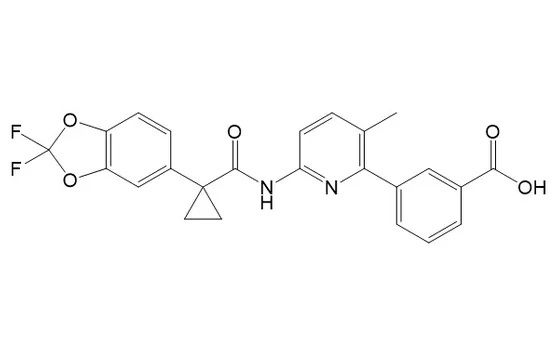
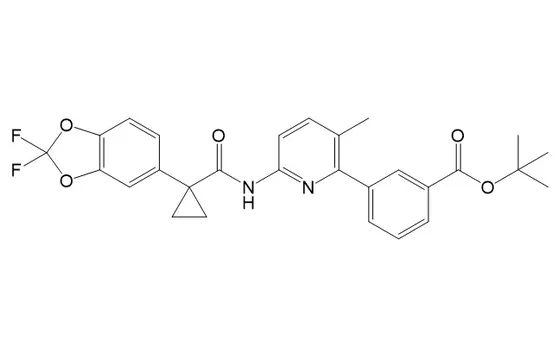
芦马卡托↗(Lumacaftor,CAS 936727-05-8,C24H18F2N2O5,分子量 452.41)是 F508del-CFTR 校正剂,2015 年 7 月在美国、11 月在欧盟获批 [1][2]。这个分子是两半拼起来的:3-(6-氨基-3-甲基吡啶-2-基)苯甲酸,加 1-(2,2-二氟-1,3-苯并二氧戊环-5-基)环丙烷甲酸,中间用一个酰胺键缝合 [3]。拼装方式决定杂质谱的形状——271 条编号杂质几乎都能落回四处官能团:联芳键、酰胺键、缩醛碳、游离羧酸。本目录收录 272 条(含本体),编号覆盖 1–275、缺 4 个号。
关键要点
- 联芳键由 Suzuki 偶联搭成,3-羧基苯硼酸因此是路线自带的基因毒性议题,已发表方法按 ppm 级控制 [5][6]。
- 无手性中心、无仲胺或叔胺氮:271 条里不会有对映体条目,也不落入 NDSRI 范围。
- 碱中酰胺断裂放出 3-(6-氨基-3-甲基吡啶-2-基)苯甲酸(228.25),最该单独建方法 [7]。
- 酸性醇溶液里的甲酯峰是稀释剂造的假象,不是降解产物 [7]。
分子上只有四处会漏东西
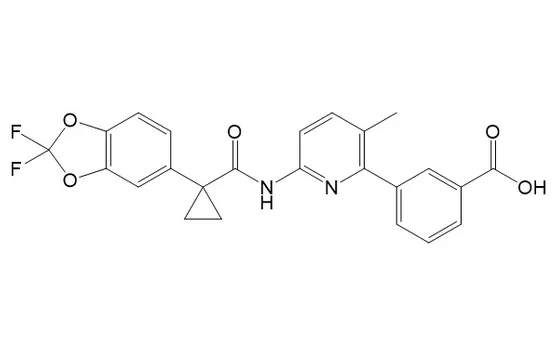
把结构摊开:吡啶环 3 位挂甲基、6 位挂酰胺氮,2 位接苯环;苯环 3 位是游离羧酸;环丙烷季碳上同时坐着二氟苯并二氧戊环与甲酰胺羰基。四处官能团彼此独立,各自改动一点即是一个编号杂质 [3]。
联芳轴值得单说。吡啶侧邻位有甲基和酰胺基,苯环侧是两个氢,两侧取代不对称、旋转受限;但结构数据未给立体描述符,分子无手性中心,也没人把阻转异构体当独立杂质。按构象问题看它更贴近实际。
剩下三处各有失效方式:酰胺键是两个大片段的唯一连接,断一次分子就一分为二;缩醛碳上的 CF2 夹在两个氧之间,是亲电中心,酸性下开环放出邻苯二酚片段;游离羧酸负责成盐、成酯、成酸酐这条支线。271 条的骨架就在这里。
硼酸残渣:这条路线绕不开的基因毒性议题
苯环与吡啶环之间那条键是 Suzuki-Miyaura 偶联搭的,硼酸组分必然以未反应试剂和过量投料残留留在工艺里;而硼酸类是常被报道 Ames 阳性的砌块,不能只按 Q3A 的 0.10% 鉴定阈值看 [6]。
公开文献点名研究了两个:3-羧基苯硼酸与甲基苯硼酸,LC-MS/MS 负离子 MRM,0.05–5 ppm 线性,控制线定在 1 ppm 以下 [6];另一项把环丙烷甲酸与 3-羧基苯硼酸一并按潜在基因毒性杂质建方法,LOD 0.075–0.10 ppm、LOQ 0.23–0.35 ppm [5]。常规 HPLC-DAD 在 0.05% 报告阈值下对应的绝对量比这些限度高出一到两个数量级,紫外看不见。
| 潜在基因毒性杂质 | 来源 | 已发表手段 | 已发表灵敏度 |
|---|---|---|---|
| 3-羧基苯硼酸 | 偶联的硼酸组分残留 | LC-MS/MS 负离子 MRM | LOQ 0.23 ppm |
| 甲基苯硼酸 | 试剂批次差异与交叉污染 | 同法测定 | 线性 0.05–5 ppm |
| 环丙烷甲酸(862574-88-7) | 酰化步骤未反应的酸 | 与硼酸同法控制 | LOQ 0.30 ppm |
表注:数据取自 [5][6],两文色谱柱与柱径不同,数值不可互换。
两个坑要避开。一是先做危害评估再谈限度:M7 的 TTC 1.5 μg/天是无专属限度者的默认值,换算浓度还得代进本品最大日剂量 [4],直接拿 1.5 μg 除以称样量是最常见的算错。二是三者都是极性小分子,C18 上保留很弱,先解决保留。
碱里断酰胺、醇里成酯:两条通道方向相反
强制降解做下来,路线很集中。碱性条件下酰胺水解,吐出 3-(6-氨基-3-甲基吡啶-2-基)苯甲酸(C13H12N2O2,分子量 228.25),是 β-断裂主导的产物,另有一个极性更强的次要降解物 [7]。酸性醇溶液里方向相反:羧酸被酯化成甲酯。这是陷阱——稀释剂用甲醇时,样品放久了凭空冒出酯峰,跟工艺、储存都无关 [7]。见到酸性条件下的酯峰,先换水-乙腈复测再决定要不要写进清单。
氧化给出的是另一类:苯环羟基化产物,分子量 468.41,比母体多一个氧 [7]。已发表方法用五氟苯基丙基柱(2.7 μm,100 × 4.6 mm)、0.1% 甲酸水与 0.1% 甲酸乙腈梯度、pH 2.5、1 mL/min、216 nm 检测,正是为了在同一梯度里兜住极性最大的芳香胺和极性最小的羟基化物 [7]。思路可照搬:210–230 nm 这几者都有苯环吸收,但极性跨度太大,等度方法难以兼顾。
有一条线要划清:228.25 若只按 Q3B 的鉴定阈值衡量,很可能因低于阈值被放过;但它带游离芳香伯胺,属于 M7 要单独评估的警示结构,得先做危害归类再定限度 [4][8]。这是本品种最容易被审评追问的一处。
三个环丙烷中间体,在成品杂质谱里留了回声
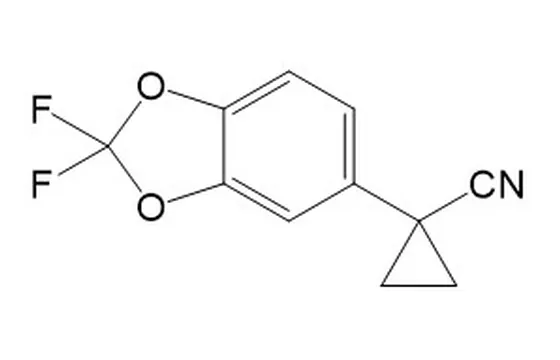
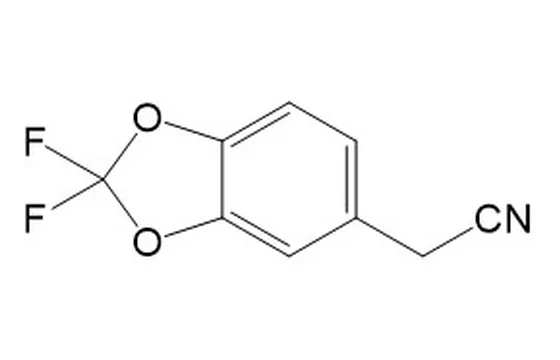
右半边那条工艺线短到可以把中间体全部画出来:2-(2,2-二氟苯并二氧戊环-5-基)乙腈(68119-31-3,C9H5F2NO2,197.14)经环丙烷化得相应甲腈(862574-87-6,223.19),碱性水解成甲酸(862574-88-7,C11H8F2O4,242.18),再与氨基吡啶缩合 [1]。
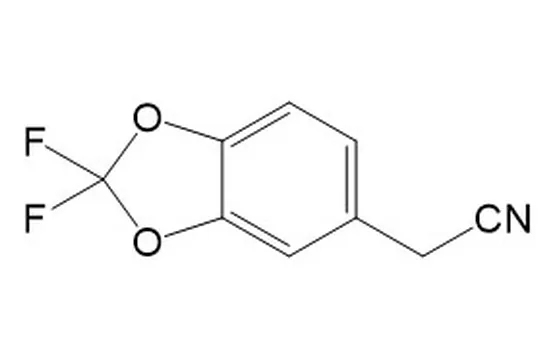
这三种物种出现在成品里是工艺残留而非降解产物——拿成品做强制降解永远做不出它们。识别不难:分子量 197 / 223 / 242,与母体 452 差得远,LC-MS 一眼分开;麻烦在紫外,三者都带苯环、210–230 nm 均有吸收,DAD 里以未知小峰出现,容易被误判成降解物。
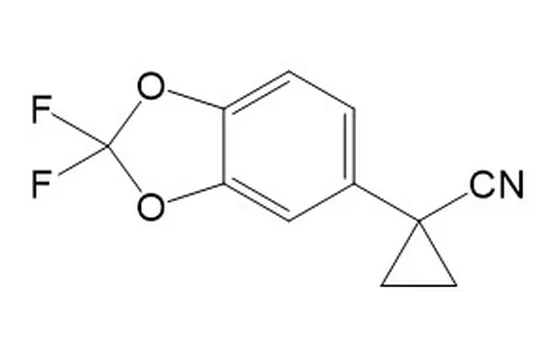
本目录能直接对上号:编号杂质 5 是 862574-87-6(腈),编号杂质 6 是 68119-31-3(乙腈),上下游都在。做溯源先拿这两条把工艺线钉住,比从编号 1 逐个排查快得多。
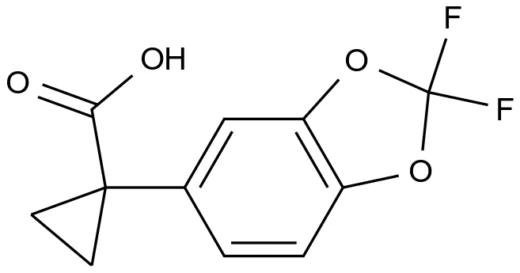
酰化这一步还要留意:酰氯法里未反应的酸会以 242.18 留下,而它已被文献按潜在基因毒性杂质处理 [5]。配对照品时别只当它是个工艺杂质。
1–275 的四个空号,和四条换了写法的条目
本页 272 个条目里,271 个带编号、1 个是原料药本体。编号从 1 到 275,空着 2、10、11、194;另有四条写作「鲁玛卡托杂质 12–15」,与全页译名不一致。
空号不等于缺货。这类编号来自目录自身的条目顺序,不是 ICH 也不是任何药典的体系,跨供应商不能换算;空号通常只是版本合并时并入别的编号,或本来没单独立项。稳妥的对齐方式是 CAS,其次才是编号。
译名那条更实际。同一个 API 有两种通行音译,采购单写「鲁玛卡托杂质 13」和「芦马卡托杂质 13」,检索出来是两个结果。自查时两种写法都要跑,否则会误判「12–15 缺号」——这四条都在,只是换了名字。
第三个动作是按盐型与构型过条目名:271 条全是扁平编号,无一条带盐型后缀或 R/S 标记,与分子无手性中心、以游离酸成药的实况一致。若外部清单上出现「芦马卡托对映体」之类条目,基本可判为命名套用。
三套现成结论,这个品种用不上
第一套是亚硝胺。分子里的氮只有酰胺氮与吡啶环氮,无仲胺无叔胺,仲胺亚硝化不成立,沙坦类、雷尼替丁↗、PPI 的排查表套过来只会得空结果。但别因此放过胺:228.25 是芳香伯胺,走的是芳香胺警示那条逻辑,与 NDSRI 是两件事。
第二套是手性。分子无手性中心,271 条里无对映体条目,与奥美拉唑↗(亚砜硫手性)、沙利度胺(碳手性)的杂质谱完全不同,搬手性方法过来是白费功夫。联芳轴虽取代不对称,但无立体描述符,不必按阻转异构体立项。
第三套是药典。本目录未标注该品种各论,方法只能自建或依已发表文献 [2]。注册数据也要看口径:截至 2026 年 10 月 20 日,CDE 受理库以「芦马卡托」检索 0 条,「伊伐卡托」也 0 条——只说明公开受理库查不到,不能读成国内无人开发,更不能读成获批家数 [9]。
横向对比也要克制。艾伐卡托(14 条)是喹啉酮甲酰胺,替扎卡托(32 条)是吲哚酮甲酰胺,三者都靠酰胺键收口,但断键放出的胺毫无共性:取代苯胺、氨基吡啶、吲哚胺。共享「酰胺」不等于共享杂质谱。
本目录收录该品种 271 条,含环丙烷线的腈与乙腈两个上游物种,可用于工艺溯源到降解归属的选型:[→ 查看芦马卡托全部条目](芦马卡托 271 条杂质清单)。
买齐芦马卡托杂质对照品前,值得先问清的六件事
芦马卡托和鲁玛卡托是同一个东西吗?两种写法都出现了。
1–275 之间缺了 2、10、11、194,是不是这几种买不到?
3-羧基苯硼酸一定要按基因毒性杂质控制吗?HPLC 看行不行?
强制降解用甲醇稀释多出一个酯峰,要写进降解产物清单吗?
酰胺水解出的 228.25 那个芳香胺,需要单独建方法吗?
这个品种有药典各论可以直接照抄吗?
参考资料与来源
- PubChem(美国国家生物技术信息中心),Lumacaftor 化合物记录(CID 16678941):CAS 936727-05-8、分子式 C24H18F2N2O5、分子量 452.41;同页核对中间体 CAS 68119-31-3、862574-87-6、862574-88-7 与分子量,访问日期 2026-10-20
- 欧洲药品管理局(EMA),Orkambi(芦马卡托/艾伐卡托)EPAR 公开评估报告:2015 年 11 月欧盟批准,含原料药杂质控制与稳定性讨论,访问日期 2026-10-20
- ChEBI(欧洲生物信息研究所),lumacaftor(CHEBI:90951):定义为 1-(2,2-二氟-1,3-苯并二氧戊环-5-基)环丙烷-1-甲酸与 3-(6-氨基-3-甲基吡啶-2-基)苯甲酸缩合而成的芳香酰胺,访问日期 2026-10-20
- ICH,ICH M7(R2)《评估和控制药物中 DNA 反应性(致突变)杂质以限制潜在致癌风险》:TTC 1.5 μg/天;含警示结构者须先做危害评估再定限度,访问日期 2026-10-20
- Annales Pharmaceutiques Françaises(Panchakarla R K 等,PMID 34896381),Liquid chromatography-mass spectrometric methods for trace quantification of potential genotoxic impurities in ivacaftor and lumacaftor:Luna C18 250 × 4.6 mm 5 μm、乙腈-0.1% 甲酸梯度、1.0 mL/min;LOD 0.075–0.10 ppm、LOQ 0.23–0.35 ppm,访问日期 2026-10-20
- Journal of Analytical Sciences, Methods and Instrumentation(SCIRP),A High Sensitive LC-MS/MS Method for the Simultaneous Determination of Potential Genotoxic Impurities Carboxy Phenyl Boronic Acid and Methyl Phenyl Boronic Acid in Lumacaftor:Poroshell HPH C18 150 × 4.6 mm 2.7 μm、0.1% 氨水-乙腈、0.25 mL/min、ESI 负离子 MRM、线性 0.05–5 ppm、控制线 1 ppm 以下,访问日期 2026-10-20
- Journal of Separation Science(2023,DOI 10.1002/jssc.202300228;站点对自动访问返回 403,故仅列文献信息不挂链接)Liquid chromatographic determination of lumacaftor in the presence of ivacaftor and identification of five novel degradation products:碱性降解得 3-(6-氨基-3-甲基吡啶-2-基)苯甲酸(228.25),酸性甲醇体系得甲酯,氧化得羟基化产物(468.41);Ascentis Express F5 2.7 μm 100 × 4.6 mm、0.1% 甲酸水/乙腈 pH 2.5、1 mL/min、216 nm
- ICH,ICH Q3A(R2)《新原料药中的杂质》与 Q3B(R2)《新制剂中的降解产物》:报告阈值 0.05%,鉴定与界定阈值 0.10% 或 1.0 mg/天(取低者),访问日期 2026-10-20
- 国家药品监督管理局药品审评中心(CDE),受理品种信息公开(检索词「芦马卡托」「伊伐卡托」均为 0 条受理记录;所得为公开受理记录,不等于获批家数;抓取日期 2026-10-20),访问日期 2026-10-20
以上内容为 CATO 佳途技术团队原创整理,引用的法规与公开资料已在文末标注来源,仅供技术参考,不构成质量标准或法规建议;具体方法、限值与申报要求以现行法规、药典正文及官方发布为准。页面下方为该品种全部杂质对照品条目,可按 CAS 号或货号进一步检索。
Lumacaftor — literature & synthetic routes
Citations below are aggregated from public scholarly databases by drug-substance name, for reference in impurity profiling, analytical method development and route selection for Lumacaftor. Titles link to the original records; copyright remains with the authors and publishers.
Impurity & degradation studies
- Liquid chromatographic determination of lumacaftor in the presence of ivacaftor and identification of five novel degradation products using high-performance liquid chromatography ion trap time-of-flight mass spectrometry
- Liquid chromatography-mass spectrometric methods for trace quantification of potential genotoxic impurities in ivacaftor and lumacaftor
Synthetic-route papers
Citations are indexed from public databases (Europe PMC incl. PubMed and patent records, WIPO PatentScope); we provide links only and do not reproduce full text.
Lumacaftor — impurity profiling notes
Once you have the 272 impurity entries for Lumacaftor, these are the questions that come up most in generic development. Classify the source of each impurity first, then decide which reference standards you actually need.
01Process impurities
Starting materials, intermediates, by-products, catalysts and residual solvents — traced back to the synthetic route and located with spiking studies during process development.
02Degradation impurities
Hydrolytic, oxidative, photolytic, thermal and polymeric degradants — identified through forced degradation, with the method proven stability-indicating.
03Pharmacopoeial impurities
Impurities already monographed with official designations (e.g. EP Impurity A, USP Related Compound B), normally compared item by item during filing.
04Genotoxic impurities
Structurally alerting compounds requiring ICH M7 hazard assessment and limit derivation (TTC 1.5 µg/day); these must be controlled with an authentic reference standard.
05Isotopically labelled standards
Deuterated, ¹³C- and ¹⁵N-labelled analogues used as internal standards in LC-MS/MS bioanalysis to compensate matrix effects and recovery variation.
06Metabolites & conversion products
In-vivo metabolites, forced-degradation products and process intermediates encountered in impurity profiling and stability studies.
Method development and standards usage
Target baseline resolution ≥1.5 between the main component and adjacent impurities; establish relative retention and relative response factors with authentic impurity standards rather than relying on self-comparison.
Impurities with markedly different UV response need correction, otherwise results are systematically biased. Where EP/USP publish a correction factor, follow the monograph.
Cover acid, base, peroxide oxidation, photostability (ICH Q1B) and heat/humidity; confirm peak purity by DAD or MS.
Apply ICH Q3A/Q3B reporting, identification and qualification thresholds so effort is not spent on insignificant peaks.
Most impurity standards should be stored at −20 °C, protected from light and moisture; prepare solutions fresh and record opening and preparation dates.
Comparing the impurity structure with the parent drug predicts retention behaviour, UV response and probable degradation routes, cutting trial and error.